Custom pouch minimum order quantity is not a single number that applies to every buyer. It is the smallest commercially workable production quantity for a defined specification: one size, one material structure, one pouch format, one artwork version, and one set of accessories. Change any of those variables and the practical MOQ may change too.
That distinction matters because procurement teams often ask, “What is your MOQ?” before the project has a stable specification. A supplier can give a headline number, but it may not describe the quantity that applies to the buyer’s actual pouch. A more useful question is: What production constraints determine the MOQ for each SKU, and which constraints can we simplify without weakening package performance?
This guide explains the main cost and production drivers behind custom pouch MOQ, how digital and conventional printing differ, how multiple SKUs affect the calculation, and how buyers can prepare a quotation request that produces a realistic answer.
Quick Answer: What Determines Custom Pouch MOQ?
The most common MOQ drivers are:
A low initial quantity is possible for some specifications, especially when a suitable digital-printing route and standard components are available. It is not automatically the lowest-cost or lowest-risk choice. The right target is a quantity that fits product demand while keeping the package manufacturable, testable, and economically repeatable.
- printing method and press setup;
- number of artworks or SKUs;
- material structure, web width, and available film specifications;
- pouch dimensions and converting format;
- zipper, spout, valve, handle, window, or other components;
- color and print-quality requirements;
- testing, compliance documentation, and inspection scope;
- acceptable overrun or underrun tolerance;
- shipment plan and whether inventory can be released in stages.
What Does MOQ Mean in Flexible Packaging?
MOQ means minimum order quantity, but the unit must be defined. A quotation may express it as finished pouches, meters or kilograms of printed film, or a production value. Buyers should also confirm whether the MOQ applies per size, per artwork, per material, or to the combined order.
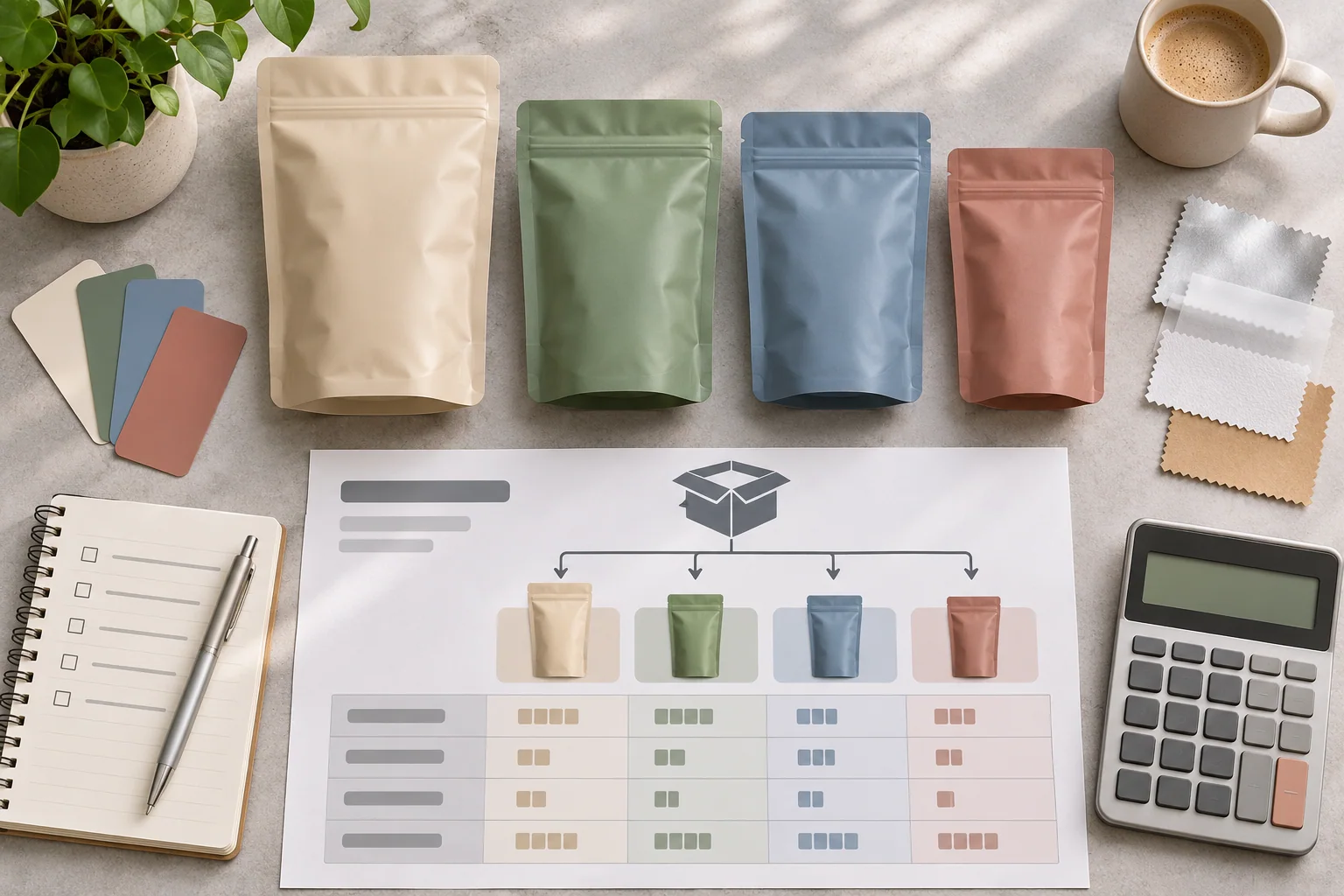
For example, an order containing four flavors is not necessarily one production item. If every flavor has different printed artwork, each version requires its own file preparation and print allocation. If two flavors also use a different pouch size, the order contains another converting setup. The supplier therefore needs to evaluate both the total volume and the volume per SKU.
Three quantities should be separated in the discussion:
These figures are rarely identical. A sample can answer important questions, but it does not always reproduce the exact printing, lamination, curing, or converting conditions of mass production.
- Sample quantity: prototypes or trial pouches used to review size, appearance, filling, or basic handling.
- Production MOQ: the minimum quantity for an actual commercial production run under an agreed specification.
- Economic order quantity: the quantity at which setup, material, conversion, freight, and inventory costs make sense for the buyer’s business.
Why There Is No Universal MOQ
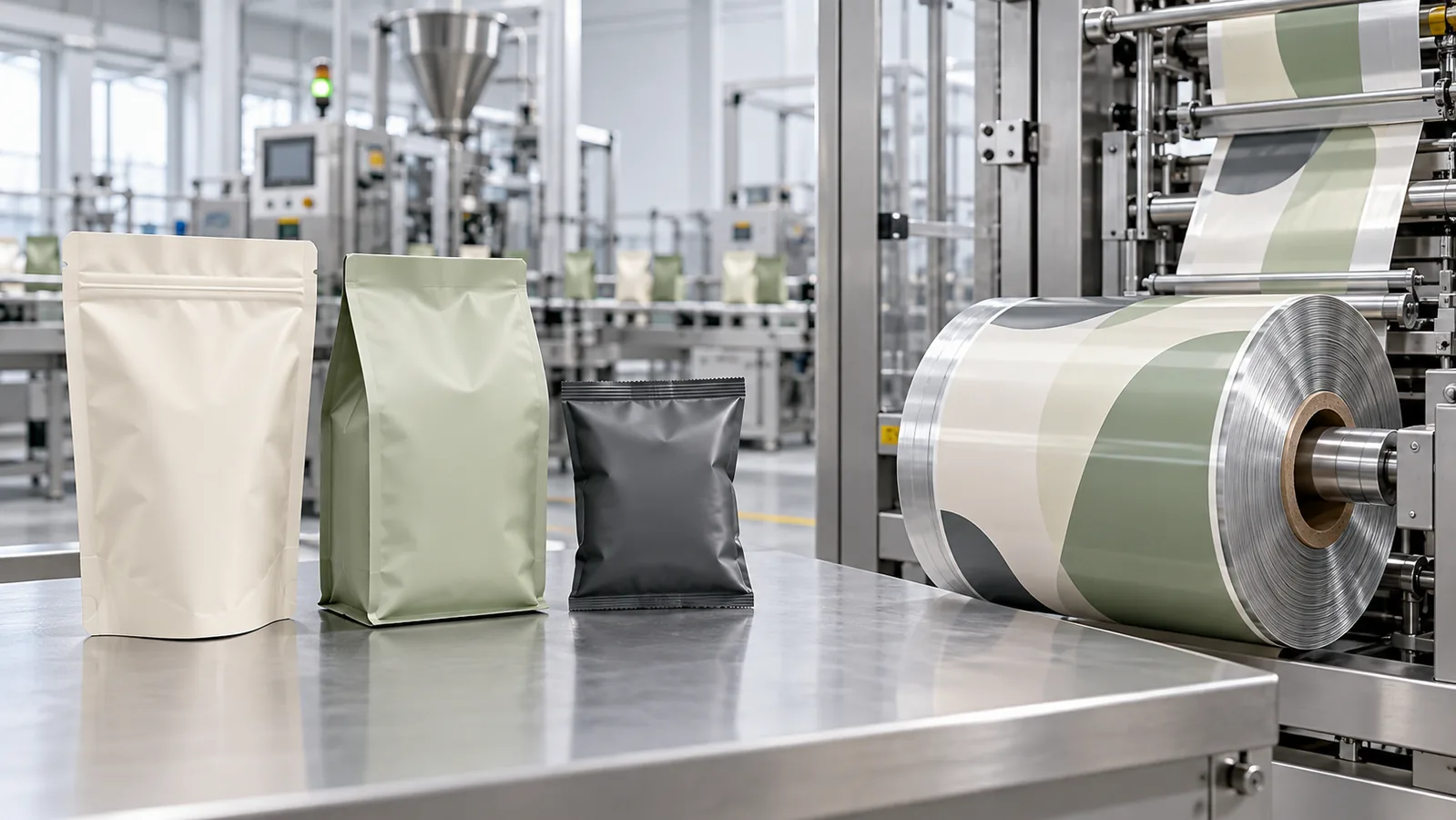
Flexible packaging is manufactured through a connected process. Film is sourced or produced, printed, laminated or coated when required, cured, slit, and converted into pouches. Each step has setup material, process waste, machine time, and minimum workable lengths. A specification that uses an uncommon film, a very narrow web, a special zipper, and several artworks cannot be evaluated like a standard pouch with one artwork.
MOQ also reflects risk allocation. The converter must secure enough material for stable production. The buyer needs enough finished packs to justify setup without carrying excessive inventory. A good quotation makes these assumptions visible instead of hiding them behind one generic number.
The Eight Main Drivers of Custom Pouch MOQ
1. Printing Method
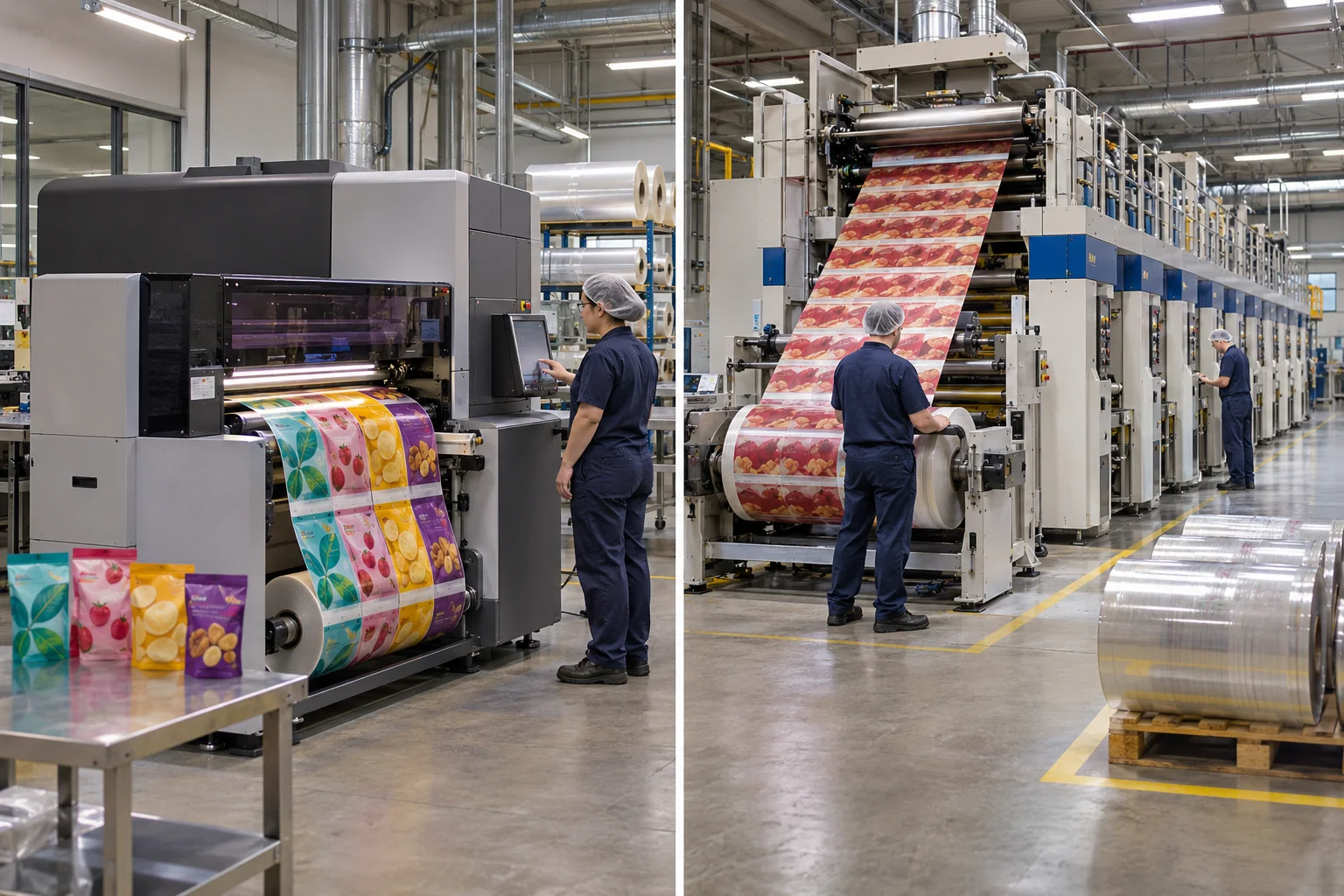
Digital printing can be attractive for launches, seasonal designs, market tests, and multiple low-volume SKUs because it generally avoids conventional printing cylinders or plates. Artwork changes can be handled efficiently when the job fits the press, material, color, and finishing capabilities.
Conventional printing, including gravure or flexographic routes, normally involves more setup but can become more economical at sustained volumes. It may also be selected for specific color, material, repeatability, or production-speed requirements. The lowest MOQ method is not automatically the best long-term method; buyers should compare both launch and repeat-order economics.
The actual threshold depends on the supplier’s equipment and the full specification. Ask for a comparison based on your project, not a universal crossover number.
| Decision factor | Digital route | Conventional route |
|---|---|---|
| Typical use | launches, trials, more versions | established, repeat volume |
| Artwork setup | no conventional cylinders or plates | tooling and press setup required |
| SKU flexibility | often stronger at shorter runs | improves when each SKU has volume |
| Unit economics | useful at lower quantities | often stronger as volume rises |
| Qualification need | confirm compatible films and finishing | confirm tooling, color, and run assumptions |
2. Artwork Count and SKU Allocation
Every printed version consumes planning and quality-control time. Multiple flavors may share size and material but still require separate artwork control, barcode checks, color review, and quantity allocation. Very small quantities per version can create more setup and reconciliation work than the combined order value suggests.
Buyers should provide a SKU table with artwork name, size, required quantity, barcode, and launch date. This prevents a quotation for “50,000 pouches” from being misunderstood when the real requirement is ten artworks at 5,000 each.
3. Material Structure and Availability
Material is not selected by thickness alone. Barrier, stiffness, sealability, puncture resistance, appearance, and processing temperature all matter. A common film combination available in the required web width may have a more practical starting quantity than a special structure produced only for one job.
The supplier also needs to account for material needed during printing setup, lamination, slitting, and pouch conversion. If the specification requires a special barrier coating, matte surface, paper layer, or less common sealant, the material supplier’s own production minimum can influence the finished-pouch MOQ.
4. Pouch Size and Machine Layout
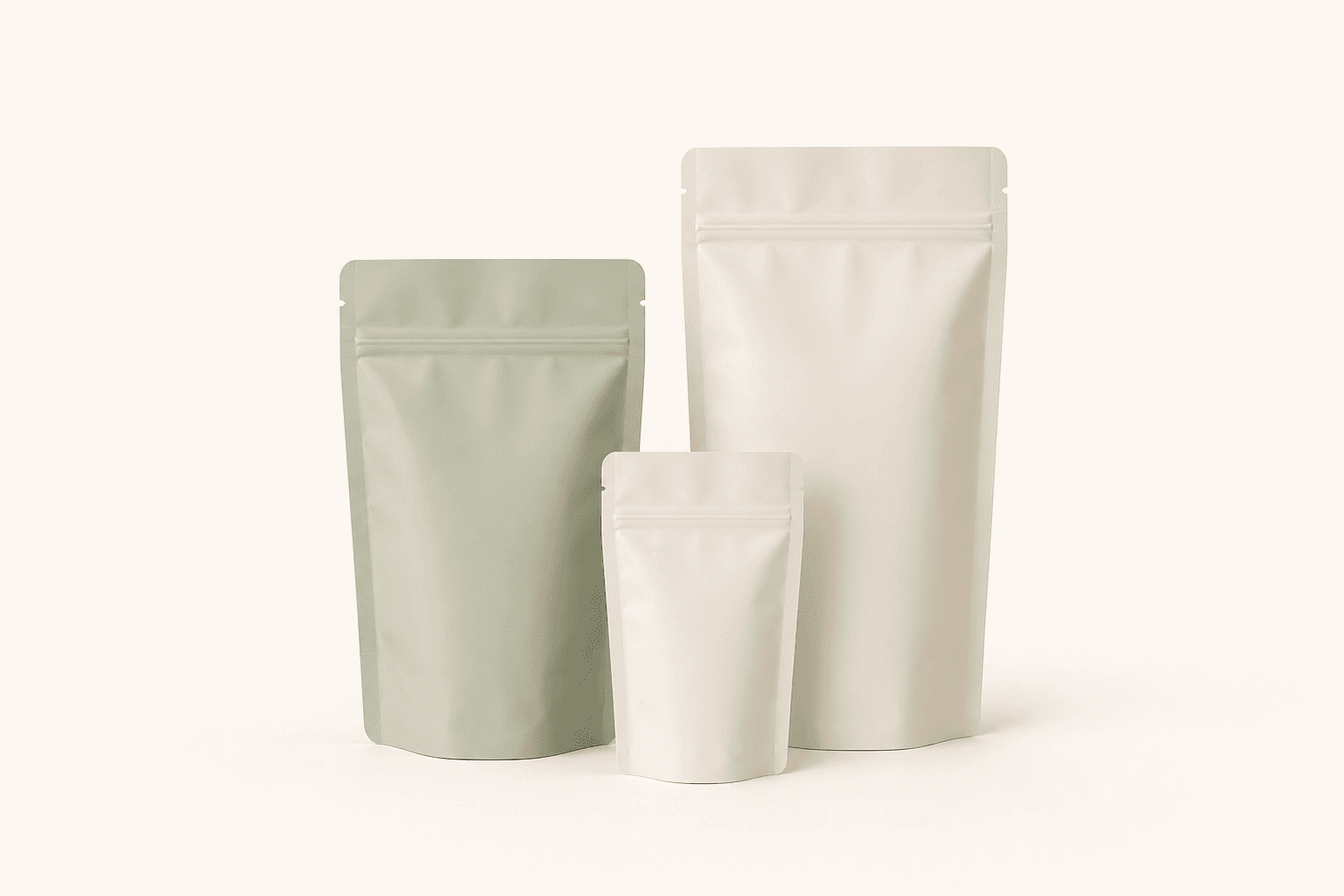
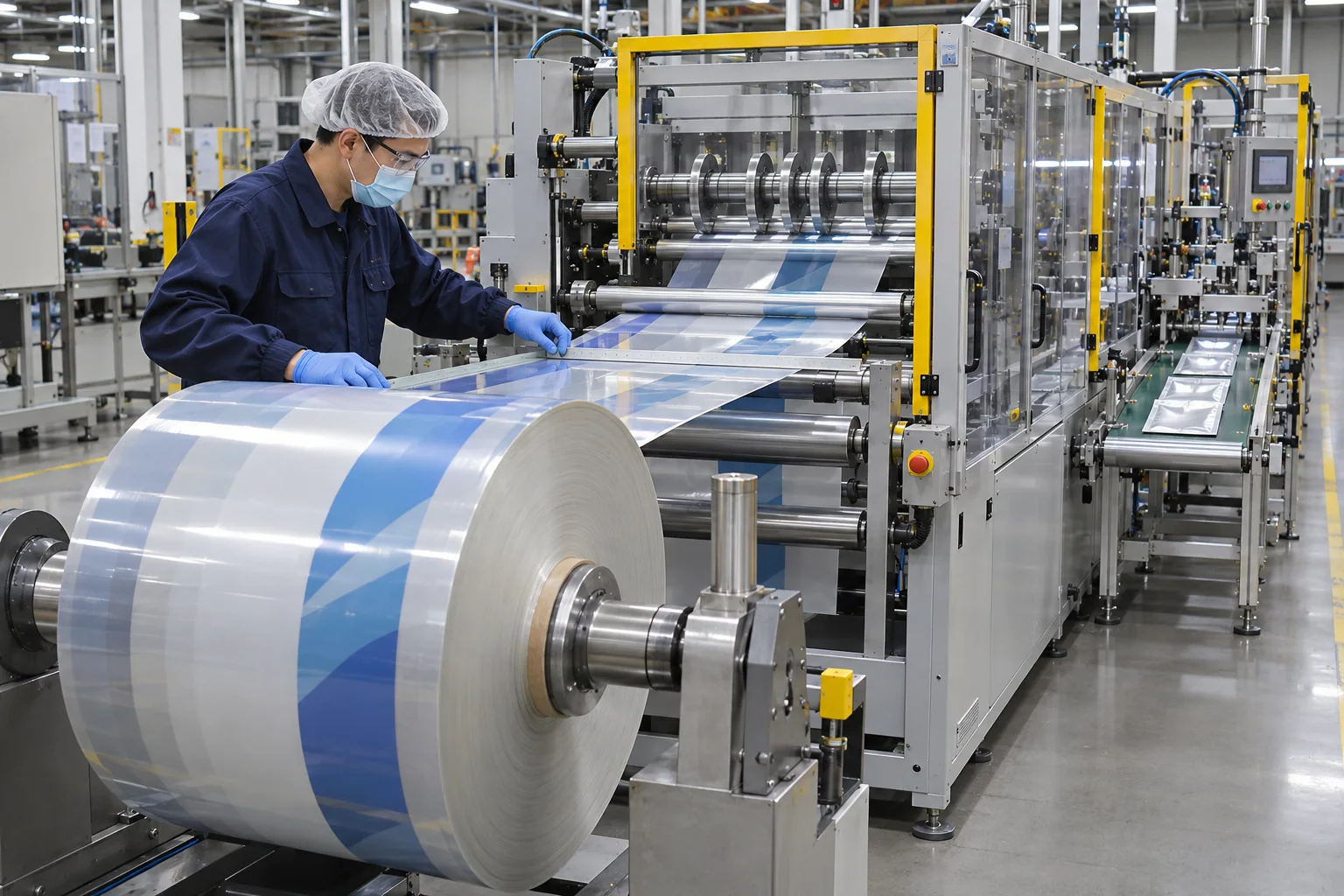
Pouch dimensions affect how many units can be arranged across the material web and how efficiently the web can be converted. A small dimensional change may improve or reduce material yield. It may also require a different web width, repeat length, zipper position, or cutting setup.
Do not reduce pouch dimensions only to reach an MOQ. First confirm that the pack still accommodates the fill weight, headspace, sealing zone, and consumer use. A lower procurement number is not useful if the package cannot run on the filling line or arrives overfilled.
5. Pouch Format and Conversion Complexity
A simple three-side-seal pouch, stand-up pouch, flat-bottom pouch, shaped pouch, or spout pouch does not use the same conversion process. Gussets, side seals, bottom seals, corner shapes, die-cut handles, laser scoring, and fitments add setup and control points.
Complex features can be entirely appropriate when they solve a product or user need. They should be specified intentionally. Adding features before the core format is validated can raise both MOQ and development risk.
6. Closures and Components
Zippers, sliders, valves, spouts, caps, and other components have their own specifications and supply constraints. Color, width, profile, resin family, dispensing geometry, and placement can affect availability. A custom-colored fitment may have a different starting quantity from a standard option.
When a low launch quantity is important, ask whether a proven standard component can meet the requirement. Never substitute a component without validating sealing, compatibility, leak resistance, and consumer use.
7. Print and Appearance Requirements
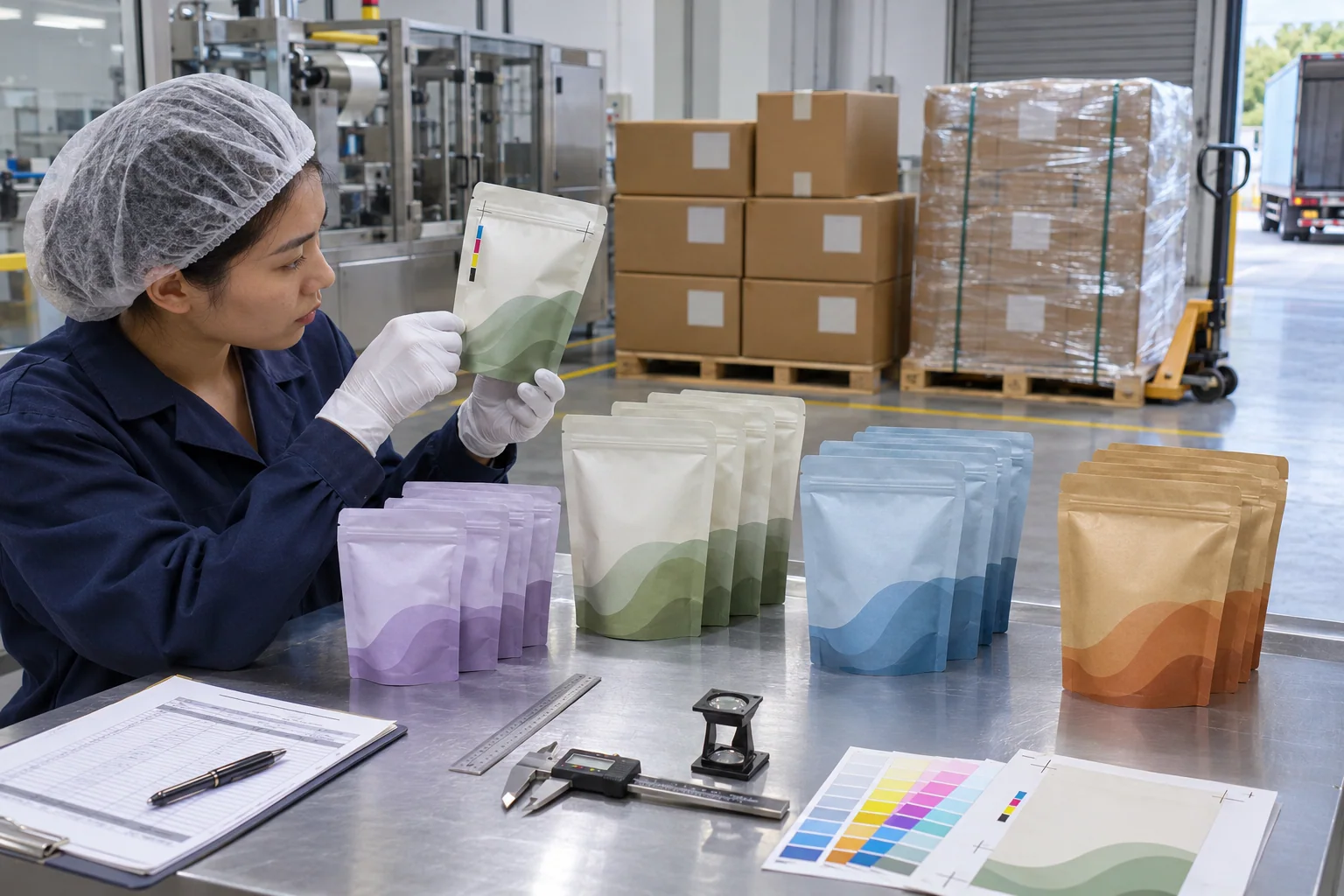
Spot colors, metallic effects, matte or gloss combinations, transparent windows, white-ink coverage, and strict color tolerances influence process planning. Brand consistency is important, but the acceptance method should be realistic. A physical color target, approved proof, substrate definition, and viewing conditions are more useful than requesting an undefined “exact match.”
8. Testing, Documentation, and Inspection
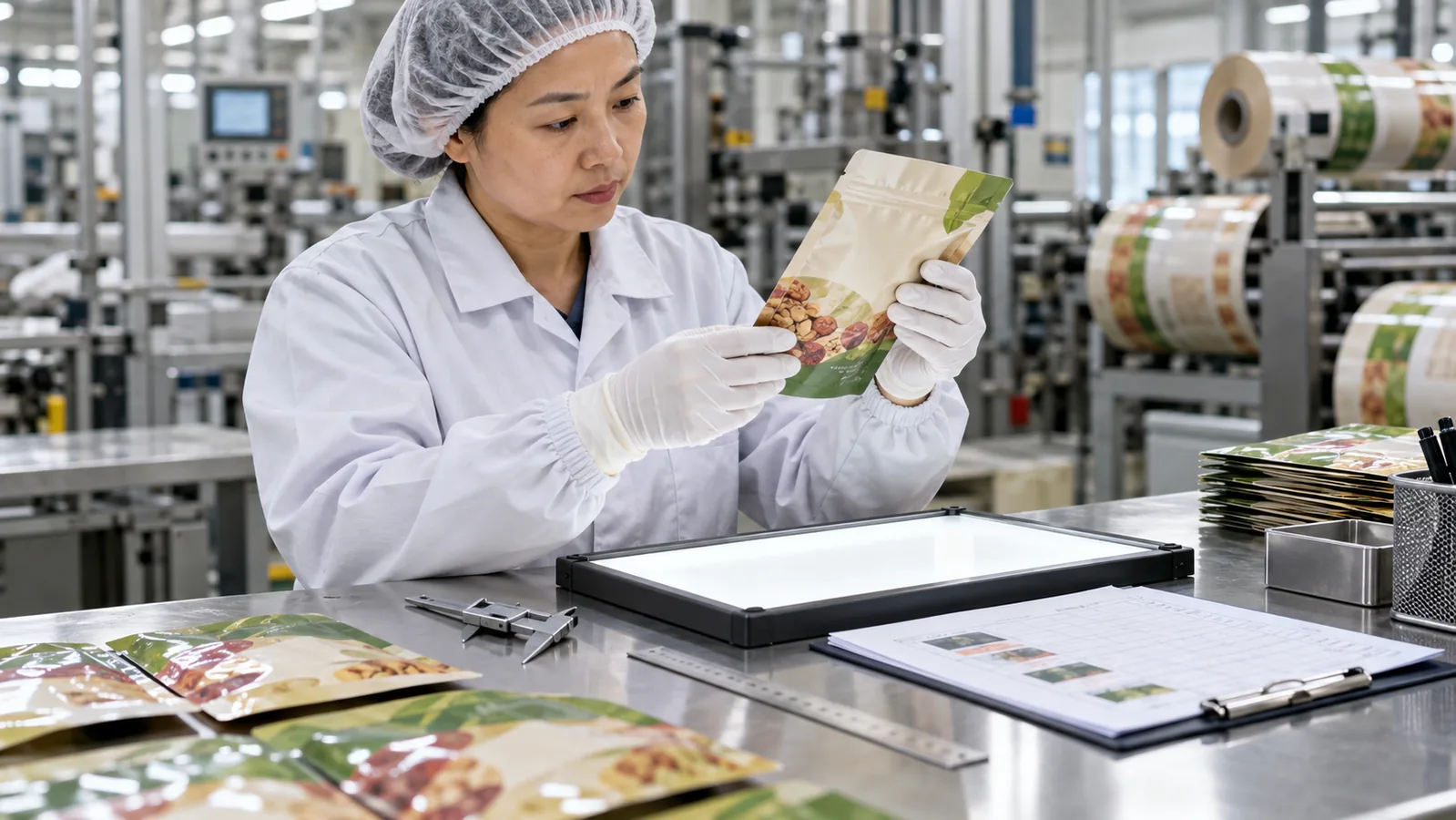
Testing does not usually create the largest quantity requirement, but it affects the total project plan. Buyers may need material specifications, food-contact documentation relevant to intended use, seal or leak checks, dimensional inspection, barcode verification, filled-product trials, or shipment inspection.
Enough samples and production material must be available for agreed tests without compromising sellable quantity. Define the testing scope before the purchase order so it can be included in timing and cost.
Ask for an MOQ Plan
Send FULL PACKING your pouch format, size, material requirement, number of artworks, quantity per artwork, and target launch date. We can identify which variables are driving the starting quantity and what can be simplified for quotation.
How to Compare MOQ With Total Landed Cost
MOQ should not be evaluated alone. A smaller run may reduce inventory exposure but increase unit cost and freight cost per pouch. A larger run may improve conversion economics but tie up cash and create redesign or obsolescence risk.
Build a comparison that includes:
The best choice may be different for a new product and a stable bestseller. A launch SKU benefits from learning flexibility. An established product may benefit more from repeat-order efficiency and planned inventory.
- artwork or tooling charges;
- finished-pouch unit price;
- sample and testing cost;
- export packing and freight;
- duties or local charges where applicable;
- storage and handling;
- expected spoilage or write-off risk;
- reorder lead time and safety stock;
- cost of a stockout during a product launch.
Seven Ways to Lower MOQ Without Creating New Risk
Standardize Size and Material Across SKUs
If products can safely share one pouch size and material structure, the manufacturer may be able to combine material planning and conversion more efficiently. This works only when every product’s barrier, sealing, and fill requirements are genuinely compatible.
Consolidate Artwork Versions
Consider whether minor market or flavor information can be handled through compliant labels during an early validation stage. This is not suitable when labeling rules, appearance, or application conditions make a label unreliable. It should be treated as a launch strategy, not a universal solution.
Use Standard Closures and Fitments
Standard zipper or spout specifications can reduce component constraints. Select from qualified options and test with the actual product and filling method.
Phase the Launch
Start with the strongest SKUs instead of launching every proposed version simultaneously. Real sales data can then guide the second production order. This reduces forecast fragmentation and gives the team a cleaner learning cycle.
Ask About Digital Printing
Digital may make shorter, multi-version runs feasible when the specification fits. Confirm material compatibility, color expectations, pouch finishing, and repeat-order strategy rather than assuming every structure is available digitally.
Improve Forecast and Reorder Planning
A twelve-month demand view helps the supplier propose practical batch sizes and helps the buyer plan cash flow. Forecasts do not need to be guarantees, but they should separate confirmed launch volume from potential repeat demand.
Discuss Split Deliveries or Inventory Release
In some supply relationships, a commercial production run may be manufactured together and released in agreed shipments. This can improve production efficiency while reducing the buyer’s immediate receiving load. It requires written agreement on ownership, storage period, payment, release timing, inspection status, and risk. It is not available or appropriate for every project.
Sample Quantity Is Not Production MOQ
Buyers should use the right sample for the question they need to answer.
No single sample proves every attribute. A prototype made through a different process should not be treated as evidence that production color, seal behavior, or barrier will be identical.
- A plain size sample can check capacity, proportion, zipper position, and basic filling.
- A digitally printed prototype can help review layout and appearance.
- A material sample can support preliminary touch and barrier discussions.
- A production trial can assess the intended structure, printing route, and converting conditions more closely.
- Filled-product shelf-life work evaluates the product-package system over time.
A Better RFQ: Information the Supplier Needs
Prepare one line per SKU and include:
If information is unknown, mark it as open instead of guessing. A capable supplier should help separate fixed requirements from variables that still need testing.
- product name and physical form;
- fill weight or volume;
- oil, moisture, aroma, oxygen, light, or chemical sensitivity;
- filling temperature and filling method;
- current pouch size or target dimensions;
- pouch format and closure;
- preferred material or required performance;
- number of artwork versions;
- quantity per version and annual estimate;
- printing and finish requirements;
- compliance documents required for the destination market;
- shipment destination and target delivery date;
- inspection or test requirements;
- acceptable overrun or underrun policy.
Three Practical Buying Scenarios
A Startup Launching Several Flavors
The main risk is artwork fragmentation and uncertain demand. A useful plan may be to prioritize fewer launch SKUs, standardize size and material, consider a compatible short-run printing route, and schedule a review after initial sales. The package still needs proper filling and shelf-life validation.
An Established Brand Adding a Seasonal Design
The base pouch specification is already proven, but the artwork has a short selling window. The buyer should compare a short-run route with the cost and timing of a conventional run, including the financial risk of leftover seasonal stock.
A Buyer Moving From Stock Bags to Fully Printed Pouches
The team should not compare only the unit price. It should include labeling labor, label inventory, application consistency, print quality, lead time, and expected repeat volume. A phased transition may protect continuity while the printed specification is qualified.
Red Flags in an MOQ Conversation
Be cautious when:
Clarity is a better signal than an unusually low headline number.
- a supplier gives a final MOQ before understanding size, structure, artwork count, and format;
- the quoted quantity is not defined per SKU or per order;
- samples are presented as production-equivalent without explaining the process;
- a lower quantity requires an unapproved material substitution;
- component availability is assumed but not confirmed;
- testing and overrun terms are absent;
- the quote does not state what changes would trigger requotation.
Preguntas Frecuentes
What is a typical MOQ for custom printed pouches?
There is no reliable universal figure. The practical quantity depends on printing method, pouch size, material, format, components, and quantity per artwork. Request a project-specific answer with the assumptions stated.
Can different designs be combined to meet one MOQ?
Sometimes, particularly when designs share the same size, material, and finishing route. Each artwork still requires file control and quantity allocation, and the applicable rule depends on the printing process and supplier.
Does digital printing always have the lowest MOQ?
Digital printing often supports shorter or more varied runs, but not every film, finish, color target, or pouch format fits every digital workflow. Compare capability, qualification, unit economics, and repeat-order needs.
Can I order a sample before meeting the production MOQ?
Usually there are sample routes for size, material, or artwork review. Ask what the sample represents and what it does not. A prototype may not reproduce the final production process.
Why can the delivered quantity differ from the ordered quantity?
Flexible packaging production can produce a controlled overrun or underrun because of setup, process control, and quality rejection. The permitted tolerance and billing method should be agreed in writing before production.
How can I reduce MOQ for several flavors?
Use a common qualified size and structure where possible, reduce initial artwork count, consider a suitable short-run printing route, and phase the launch. Do not compromise barrier, sealing, labeling compliance, or usability merely to reduce quantity.
Should I choose the supplier with the lowest MOQ?
Not on that factor alone. Compare specification accuracy, testing, quality controls, landed cost, lead time, repeatability, communication, and how changes are managed.
Conclusión
Custom pouch MOQ is the result of a production system, not an arbitrary sales rule. Printing, SKU count, material, dimensions, conversion, components, quality requirements, and shipment planning all contribute to the answer.
Buyers get better results when they define the unit of MOQ, separate sample and production needs, provide quantities by SKU, and compare total landed cost rather than one headline number. The strongest low-MOQ strategy simplifies the specification where it is safe to do so while protecting the package functions the product actually needs.
Technical References
Production capabilities and economic thresholds vary by converter, equipment, material, and job. Obtain a project-specific quotation and approved specification before ordering.