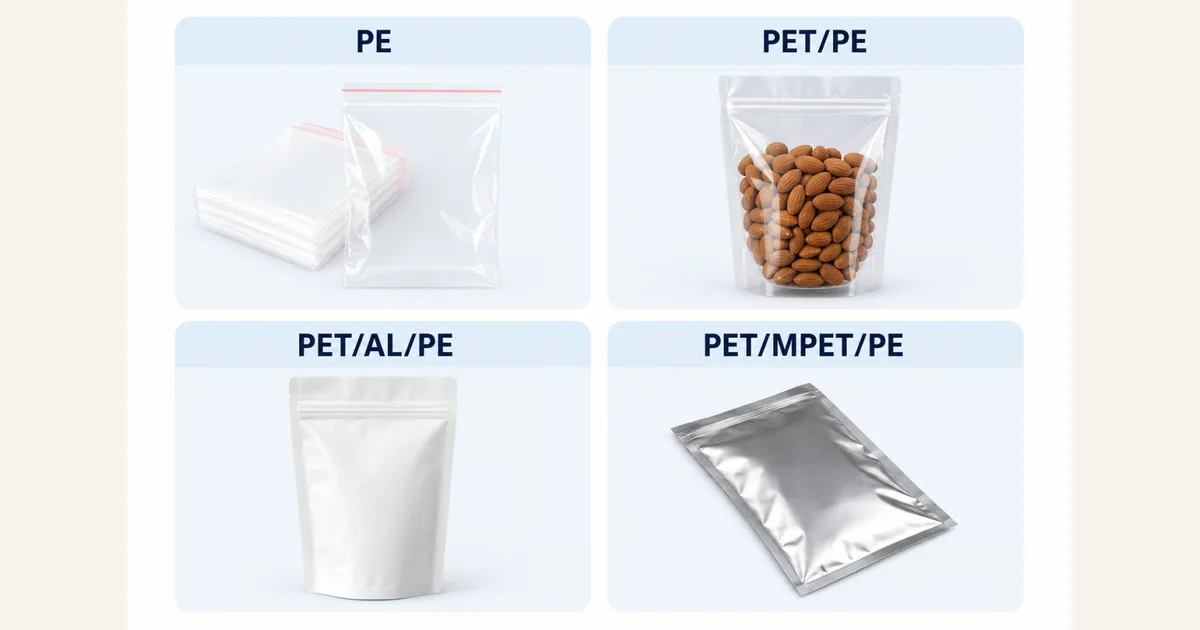
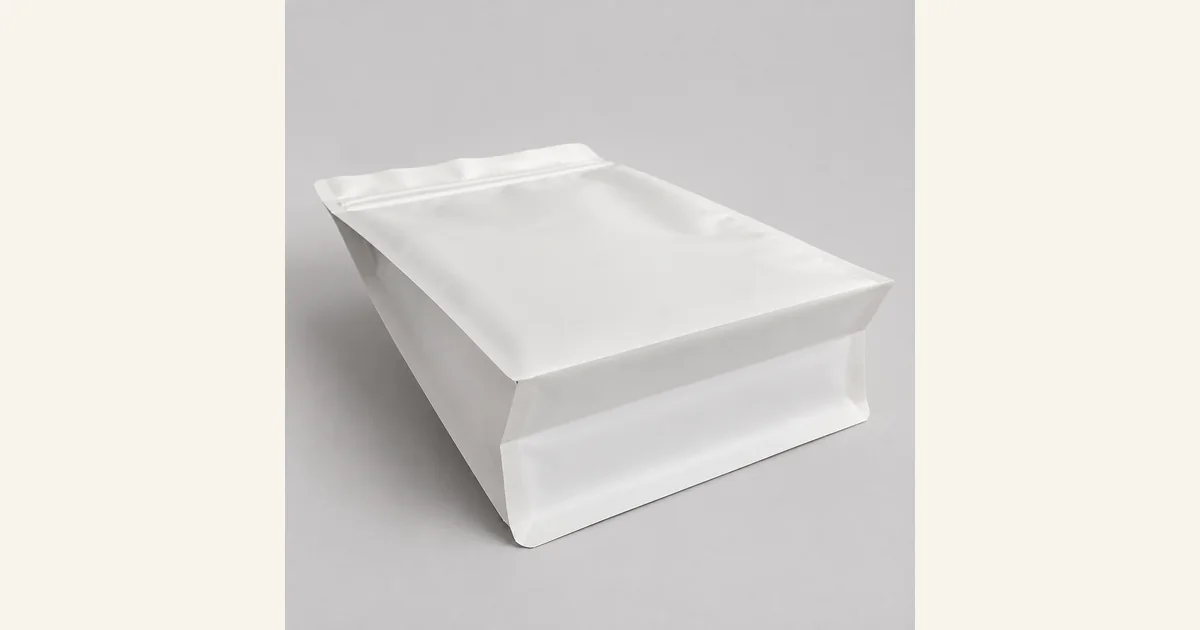
PET/PE is a common composite structure in flexible food packaging. It combines PET film and PE film to support printability, strength, moisture resistance, and heat sealing.
The finished performance depends on the selected film grades, thicknesses, lamination quality, pouch format, and processing conditions.
What is PET/PE?
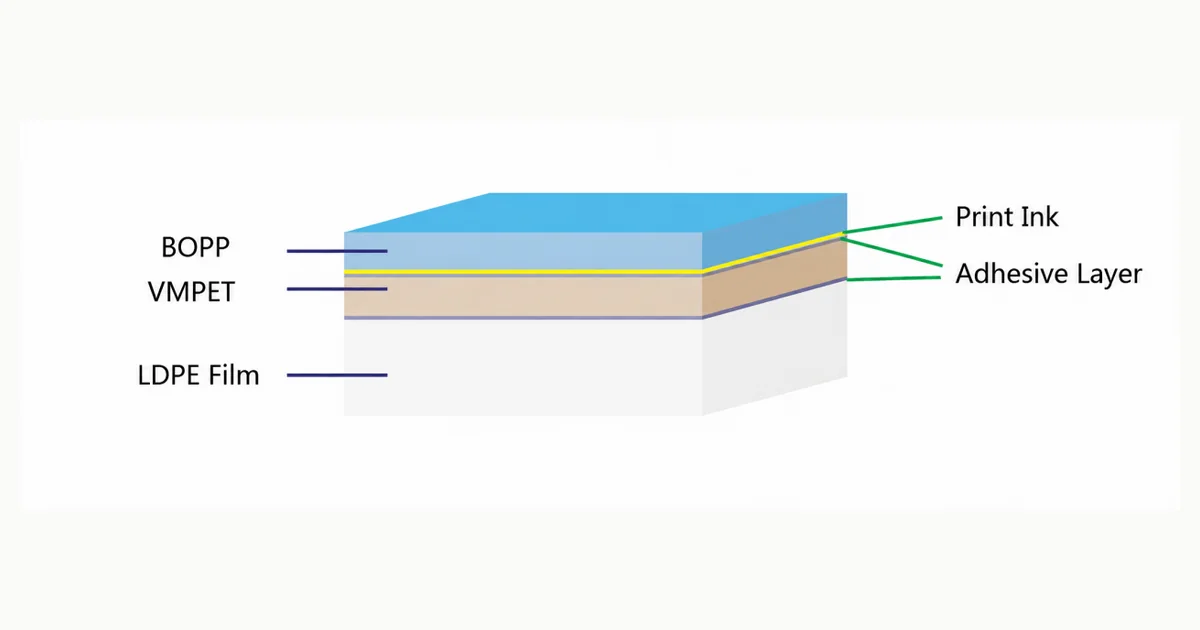
PET/PE is formed by laminating PET film and PE film together.
PET typically serves as the outer layer, providing printability, strength, and dimensional stability. PE typically serves as the inner layer, supporting heat sealing and moisture resistance.
Combining these two materials meets the basic requirements of many food packaging applications.
What are the advantages of PET/PE?
PET/PE provides a relatively simple laminate with a balanced combination of surface, mechanical, and sealing functions.
Printability
The smooth PET surface is suitable for high-quality printing of brand graphics, product images, and required packaging information.
Mechanical strength
PET supports strength and dimensional stability, helping the packaging maintain its form during production, transport, and use.
Heat-sealing performance
PE acts as the inner heat-sealing layer and supports the formation of a reliable seal when the structure and sealing conditions are properly matched.
Moisture resistance
PE provides moisture resistance, making PET/PE a common choice for various dry food applications.
Which foods are suitable for PET/PE packaging?
PET/PE is commonly considered for products that need dependable printing, strength, moisture resistance, and heat sealing without a separate high-barrier layer.
- Rice and grains
- Flour and powdered foods
- Biscuits and snacks
- Dried goods
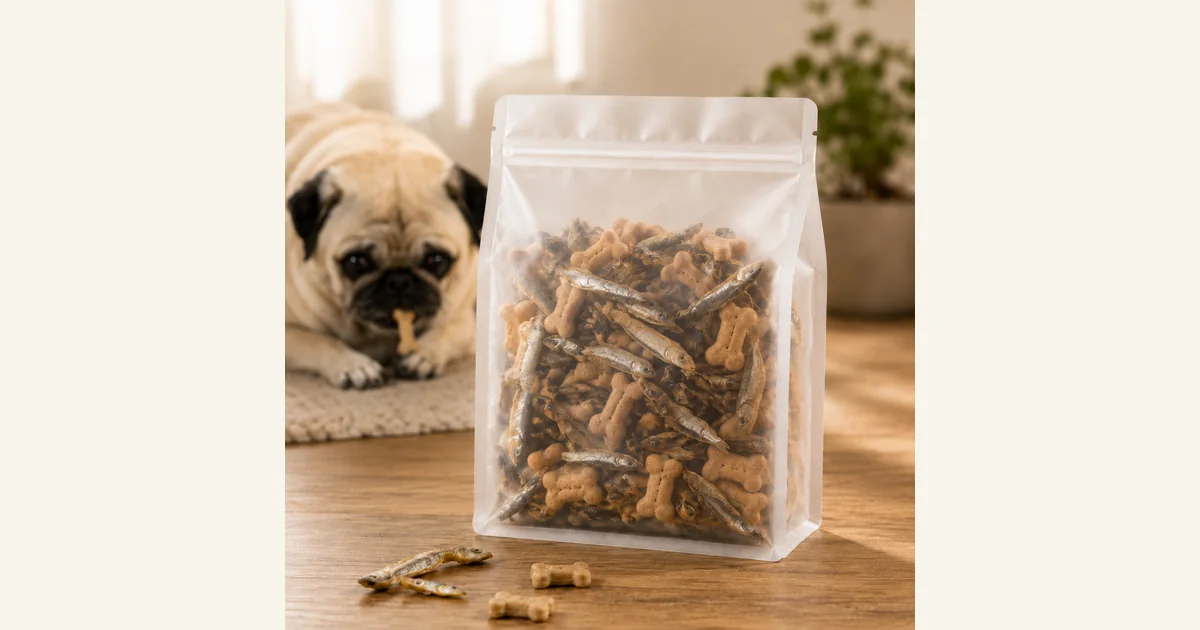
- Selected pet food and pet treat products
Is PET/PE suitable for high-barrier packaging?
PET/PE meets the needs of many standard food packaging applications, but it is not suitable for every high-barrier requirement.
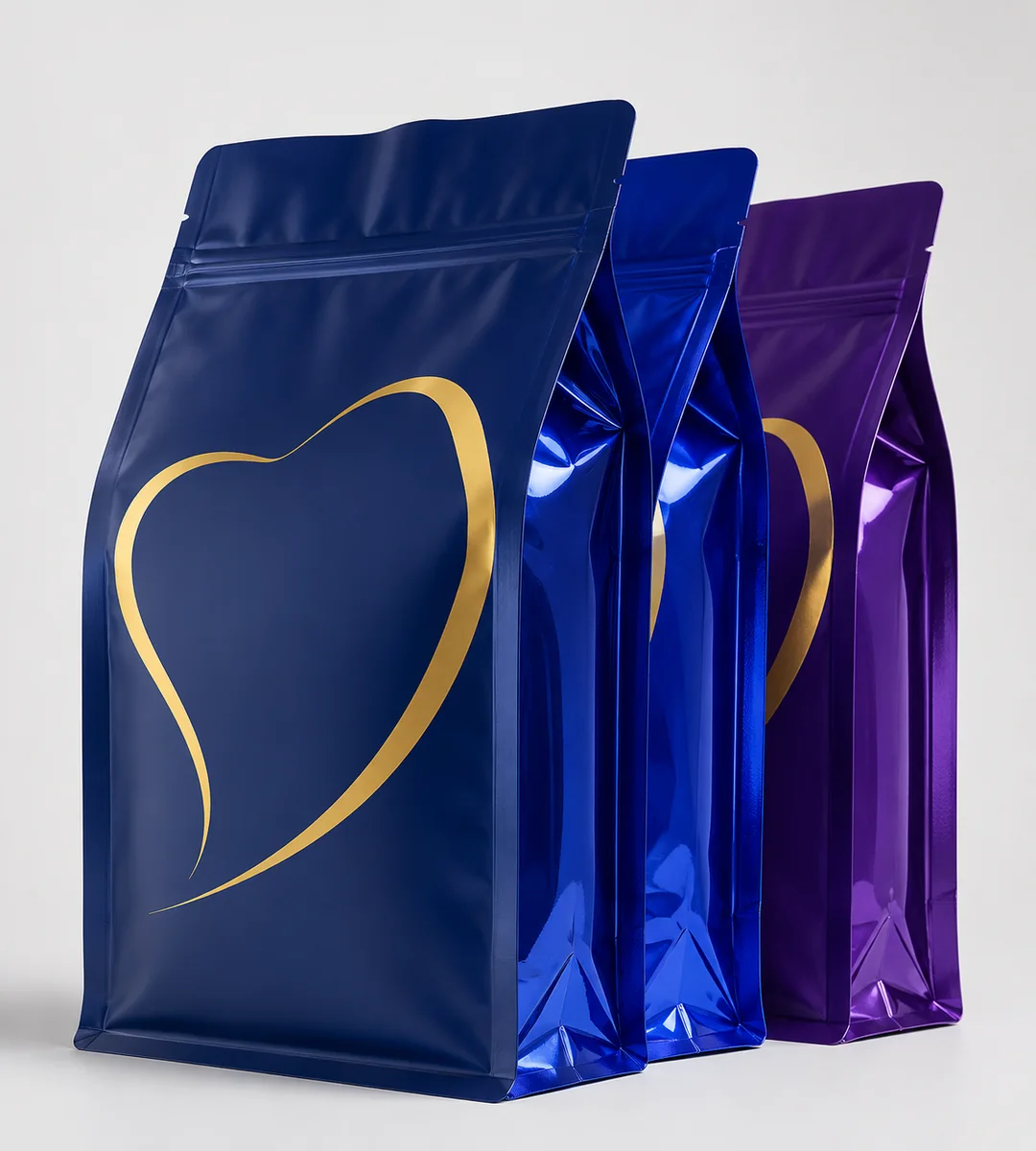
PET/PE is a basic two-layer direction. PET/VMPET/PE adds a metallized barrier layer, while PET/AL/PE adds aluminum foil for more demanding oxygen, moisture, and light barrier requirements.
The structure should be selected according to the food characteristics, shelf-life target, filling conditions, and required packaging performance.
Summary
The main advantage of PET/PE is its simple structure and balanced performance. PET supports printing and strength, while PE supports heat sealing and moisture resistance.
For many dry foods, PET/PE can provide a practical balance of packaging performance and cost when validated for the intended application.