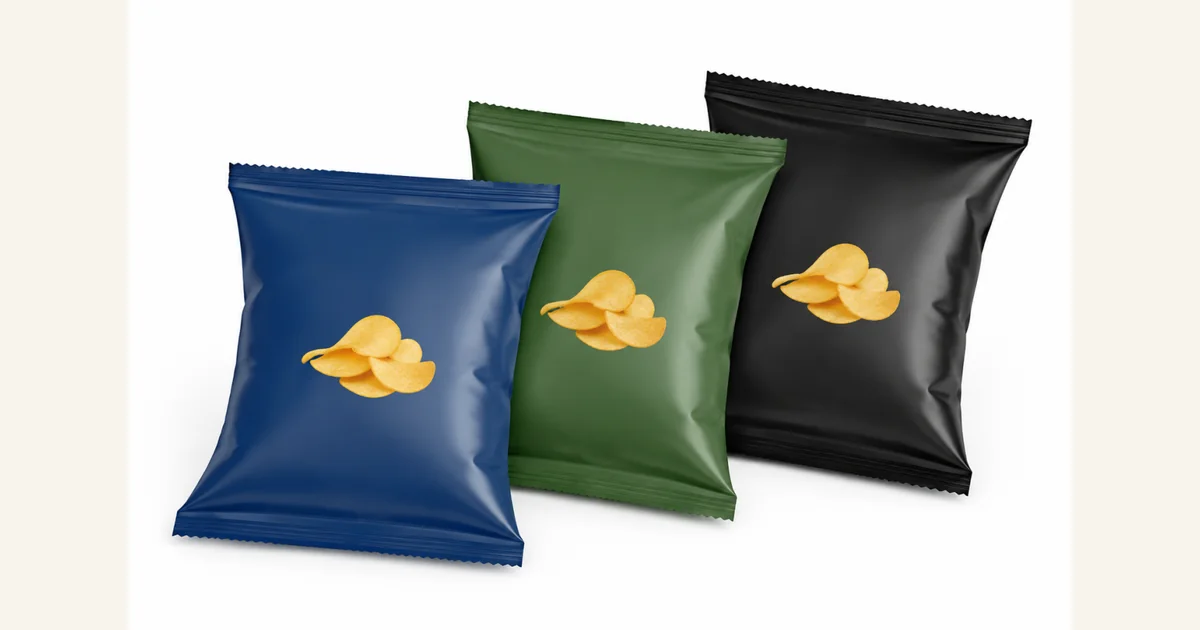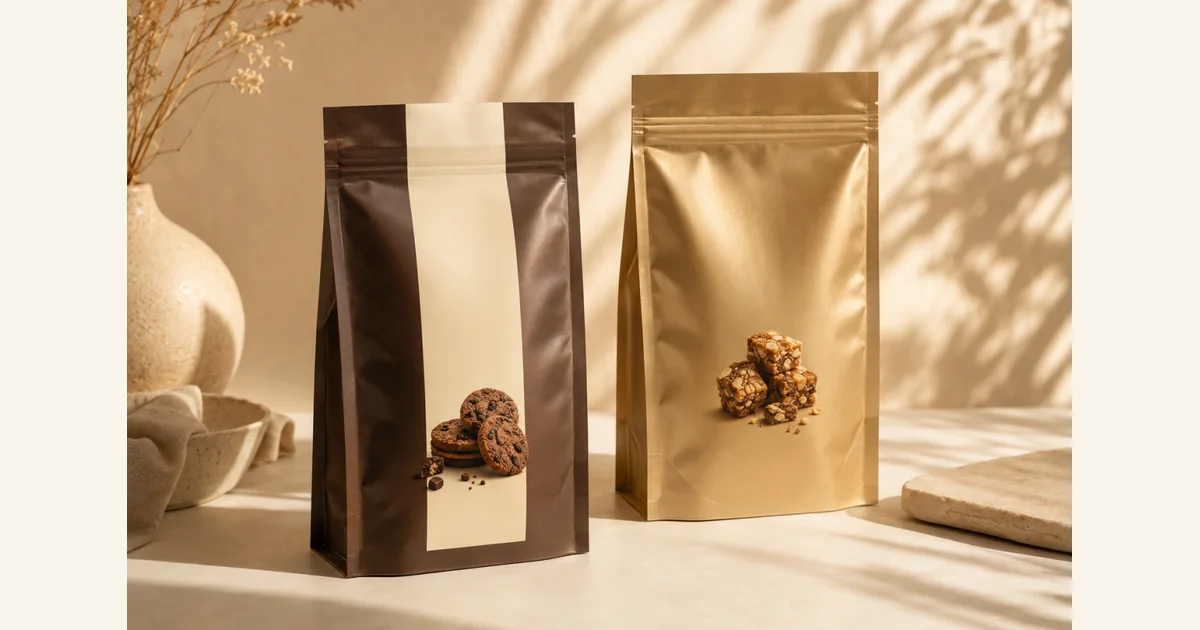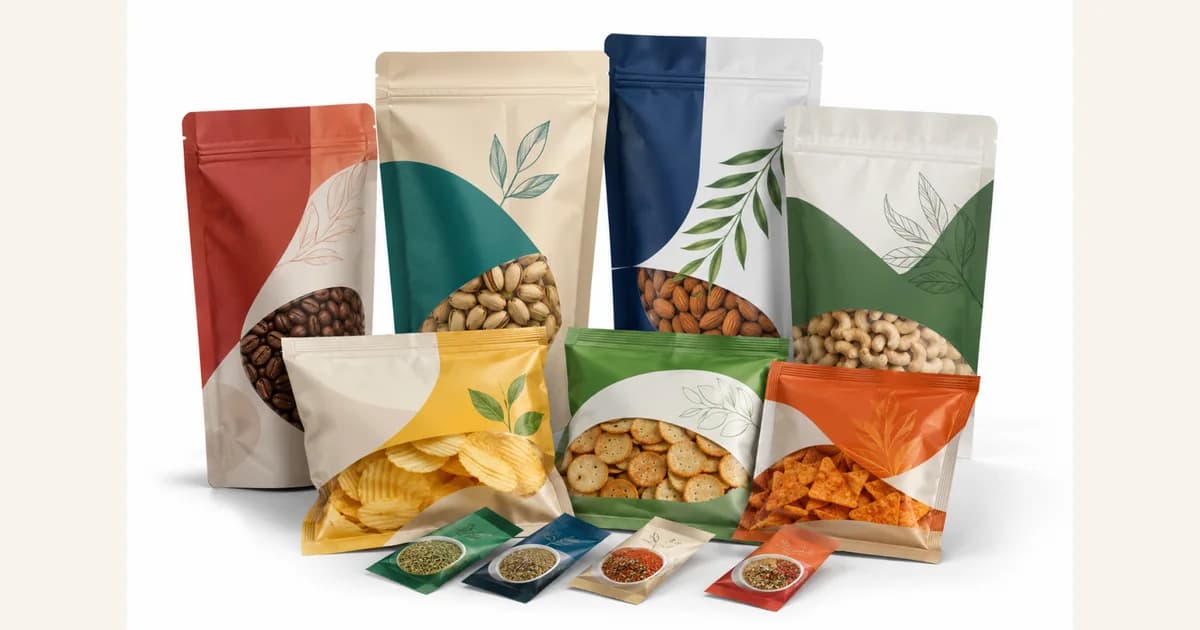
A single film rarely provides every function required by flexible food packaging. Printability, barrier protection, mechanical strength, heat resistance, and heat sealing are therefore often combined by laminating films with complementary properties.
This guide explains the role of common film layers and reviews frequently used laminate directions. The examples are not universal specifications; the final structure must be confirmed for the actual product, filling process, storage environment, and target shelf life.
Why are food packaging films laminated?
Different films contribute different properties. A laminate allows the outer, middle, and inner layers to perform defined jobs while functioning as one package.
- BOPP supports clarity, moisture resistance, stiffness, and print presentation
- PET supports strength, dimensional stability, and selected temperature requirements
- BOPA supports toughness, puncture resistance, flexibility, and gas barrier
- PE supports flexibility, moisture resistance, and heat sealing
- CPP supports clarity, heat sealing, and selected thermal-process structures
- VMPET adds metallic appearance and barrier support
- Aluminum foil supports demanding oxygen, moisture, and light-barrier requirements
- EVOH supports enhanced oxygen barrier in an appropriate structure
The basic logic of a multilayer structure
A typical design direction is: an outer layer for printing and strength, a middle layer for barrier or toughness, and an inner layer for heat sealing and product contact. Adhesive, ink, coatings, and process controls also affect finished performance.
Every layer must be compatible with the others and with the intended filling, sealing, storage, and distribution conditions.
Common flexible food packaging film combinations
The following combinations are widely discussed in the packaging industry. They describe common design directions rather than guaranteed specifications for every food product.
BOPP / CPP
BOPP can provide clarity, printability, stiffness, and moisture resistance, while CPP supplies heat-sealing performance. This economical direction is considered for biscuits, confectionery, snacks, and instant noodles when it meets the complete package requirements.
BOPP / PE
BOPP contributes printability and stiffness, while PE contributes flexibility, moisture resistance, and heat sealing. It is considered for selected frozen foods, lightweight snacks, and dry-food applications.
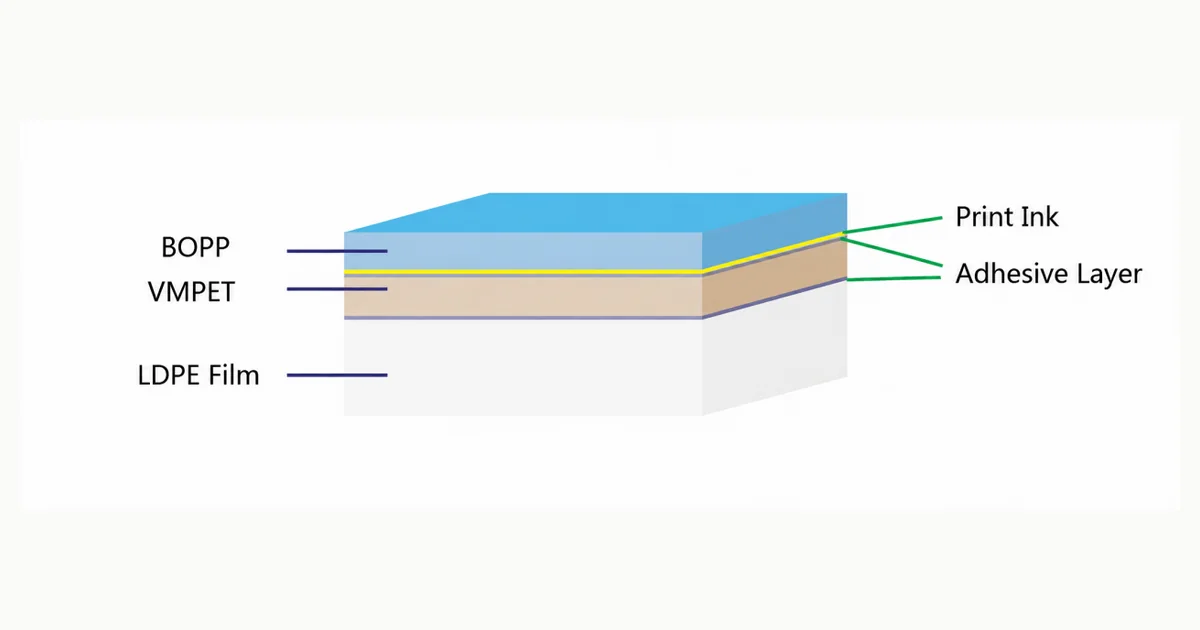
BOPP / VMPET / PE
BOPP provides the print surface, VMPET adds metallic appearance and barrier support, and PE forms the sealant layer. Typical directions include puffed snacks, biscuits, tea, and coffee packaging.
PET / PE
PET can provide strength, dimensional stability, and a printable outer surface, while PE supports heat sealing. This direction is considered for selected vacuum, meat, and clear food packaging applications after product and process evaluation.
PET / VMPET / PE
PET provides strength and printability, VMPET supports barrier and metallic appearance, and PE provides the seal. This combination is considered for coffee, milk powder, and selected premium snack packaging.
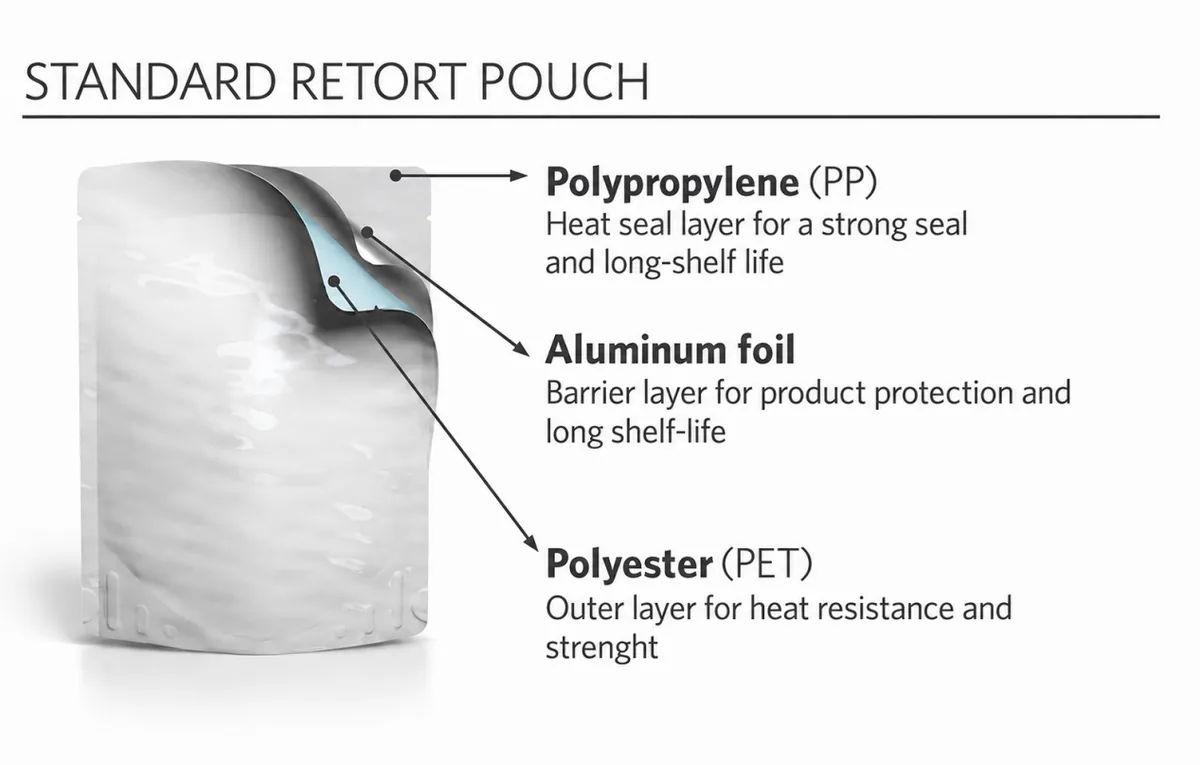
PET / Aluminum Foil / PE
PET contributes outer-layer strength, aluminum foil provides a demanding barrier and light-blocking layer, and PE provides heat sealing. The structure is considered for selected high-barrier products; any thermal-process application requires a structure specifically designed and validated for that process.
BOPA / PE
BOPA contributes toughness and puncture resistance, while PE provides heat sealing and moisture resistance. This direction is considered for vacuum packaging, frozen food, meat products, and rice packaging.
BOPA / CPP
BOPA provides strength and puncture resistance, while CPP provides heat sealing. Selected grades may be used for sauces, prepared foods, or thermal-process applications when the complete laminate is suitable and validated.
PET / BOPA / Aluminum Foil / PE
This multilayer direction combines PET strength, BOPA puncture resistance, aluminum-foil barrier, and PE sealing. It is considered for selected meat, seafood, and other mechanically demanding high-barrier food products.
BOPA / EVOH / PE
EVOH supports oxygen barrier, BOPA provides strength and puncture resistance, and PE provides heat sealing. This direction is considered for prepared foods, meat products, and other oxygen-sensitive products where the complete structure meets the processing and storage requirements.
How to choose the right film structure
No single laminate is suitable for every food. The selection process should start with the product and process rather than copying a structure used for another application.
- Product characteristics: moisture, oil, oxygen sensitivity, aroma, hard edges, and product weight
- Packaging process: filling temperature, sealing method, vacuum, freezing, or validated thermal processing
- Shelf-life and distribution: storage temperature, light exposure, humidity, transport, and handling
- Appearance: transparency, metallic effect, stiffness, print quality, and surface finish
- Commercial requirements: package size, order quantity, converting feasibility, and total cost
Conclusion
Flexible food packaging laminates combine materials so that printing, barrier, strength, heat sealing, and handling requirements can be addressed within one package.
The structures in this guide are starting points, not universal specifications. Confirm the actual product, filling process, storage conditions, target shelf life, and required testing before approving a laminate for production.