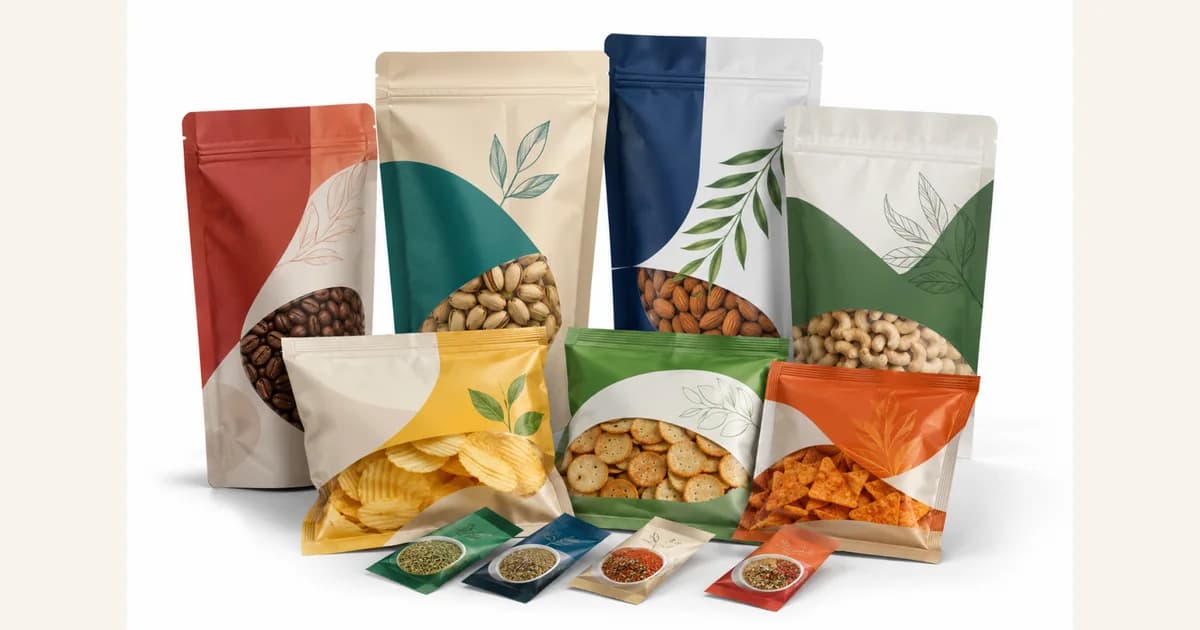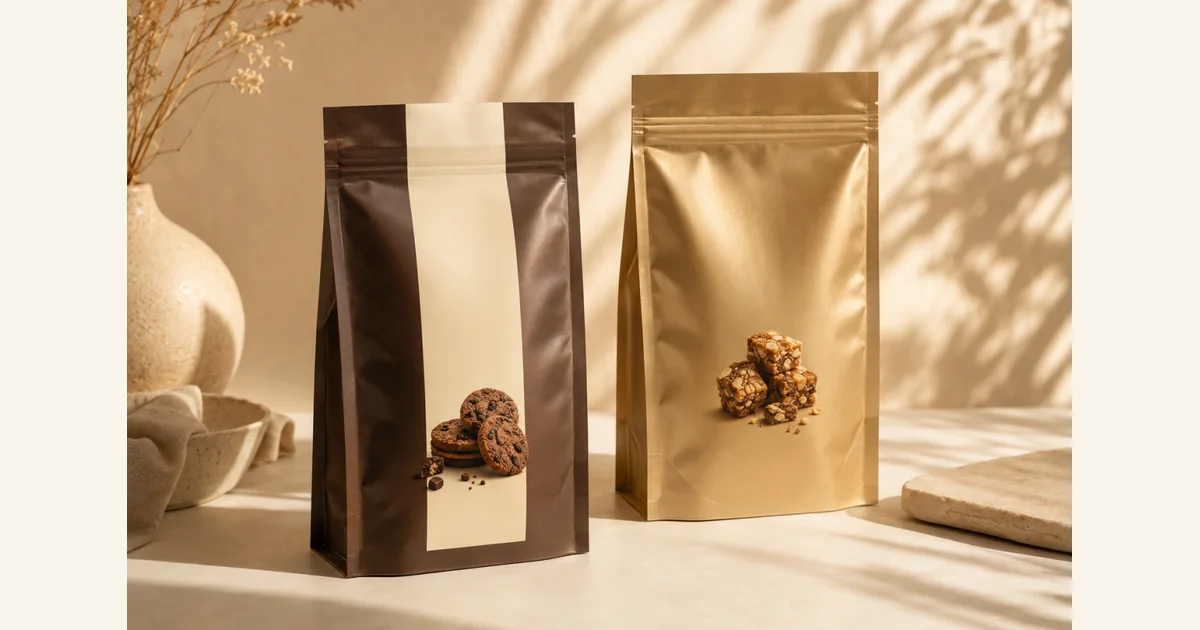
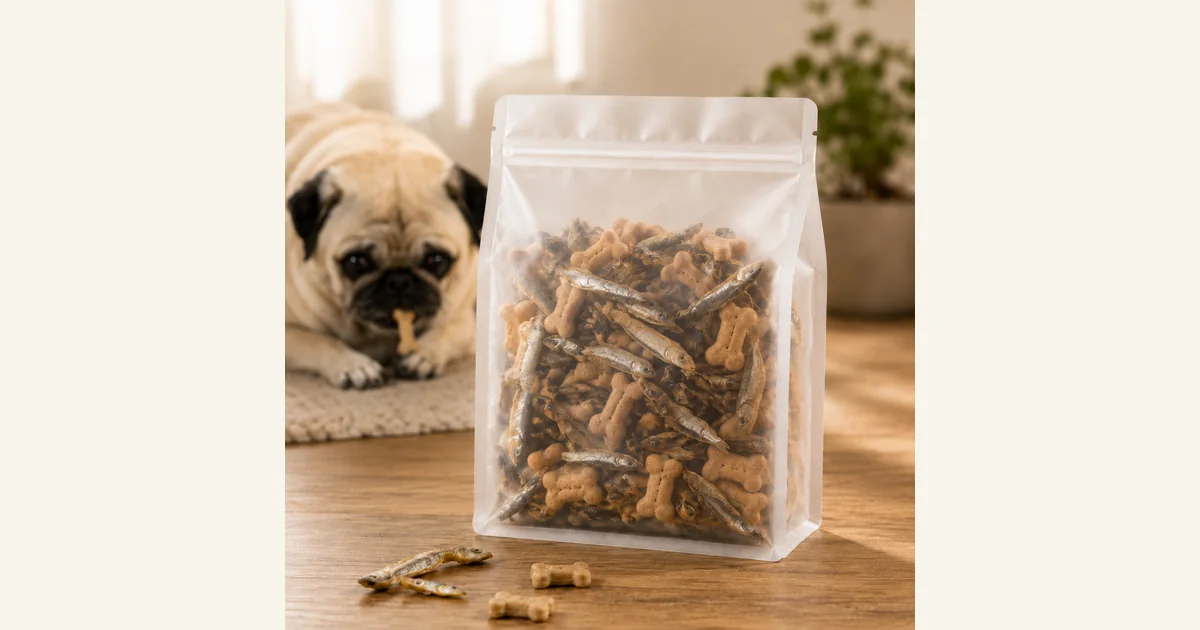
A food packaging bag may appear to be a single film, but many flexible packages are made by laminating two, three, or more film layers together.
Each layer serves a specific purpose. The complete structure works as a system to support printing, strength, barrier performance, toughness, and sealing.
Outer layer: printing and strength
The outer layer commonly uses PET or BOPP. It is the surface most visible to consumers and protects the printed graphics.
- Supports print quality
- Adds packaging strength or stiffness
- Helps maintain the package appearance
- Protects printed graphics within an appropriate laminate
Middle layer: barrier properties and toughness
Not every food package requires a separate middle barrier layer. For products sensitive to oxygen, moisture, or light, VMPET or aluminum foil may be incorporated.
- VMPET can contribute light-blocking and barrier performance.
- Aluminum foil can provide stronger oxygen, water-vapor, and light barrier performance.
- BOPA can add toughness and puncture resistance.
Inner layer: heat sealing
The inner layer commonly uses a heat-sealable material such as PE. Its primary function is to form a reliable seal at the pouch opening and sealed edges.
The sealant selection and sealing conditions are important because inadequate sealing can compromise the performance of the entire package.
How do the different layers work together?
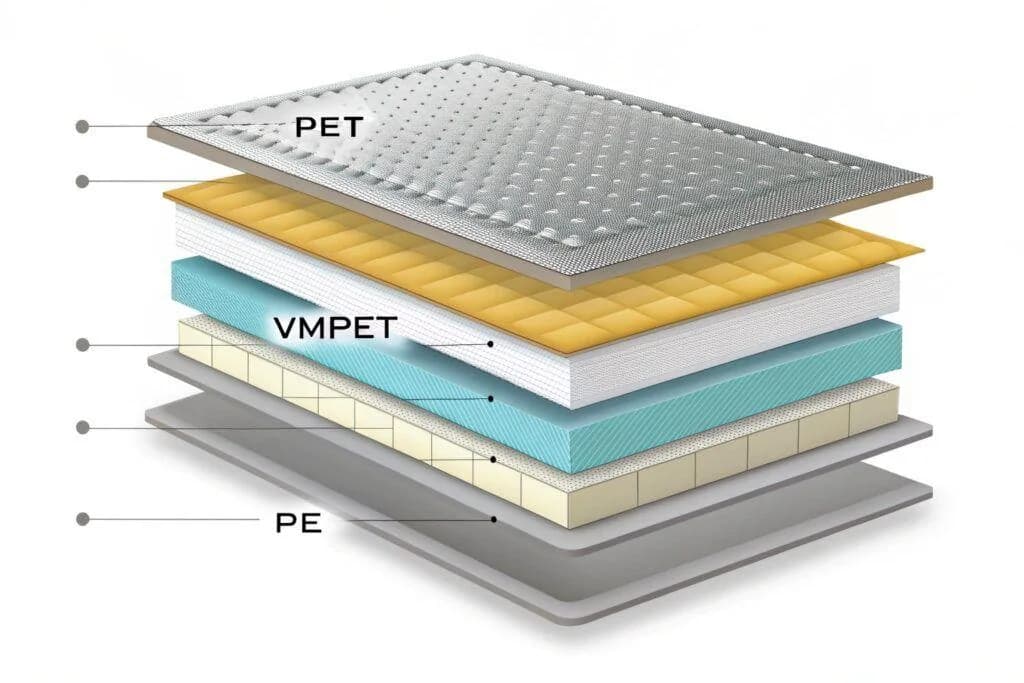
Consider PET/VMPET/PE as an example. PET supports printing and strength, VMPET contributes barrier performance and light protection, and PE supports heat sealing and moisture resistance.
Combining these films creates a complete packaging structure in which each layer performs a defined task.
Are more layers always better?
No. Standard food products may need only a PET/PE structure, while products with more demanding oxygen and light requirements may use PET/VMPET/PE.
Adding unnecessary materials increases cost and production complexity. Packaging design should focus on selecting the right combination rather than simply adding more layers.
Summary
The materials in a composite food packaging bag perform different functions. The outer layer supports printing and strength, an optional middle layer provides barrier or toughness, and the inner layer enables heat sealing.
Selecting the structure according to the food, shelf-life target, filling method, and distribution conditions helps balance product protection, packaging performance, and cost.