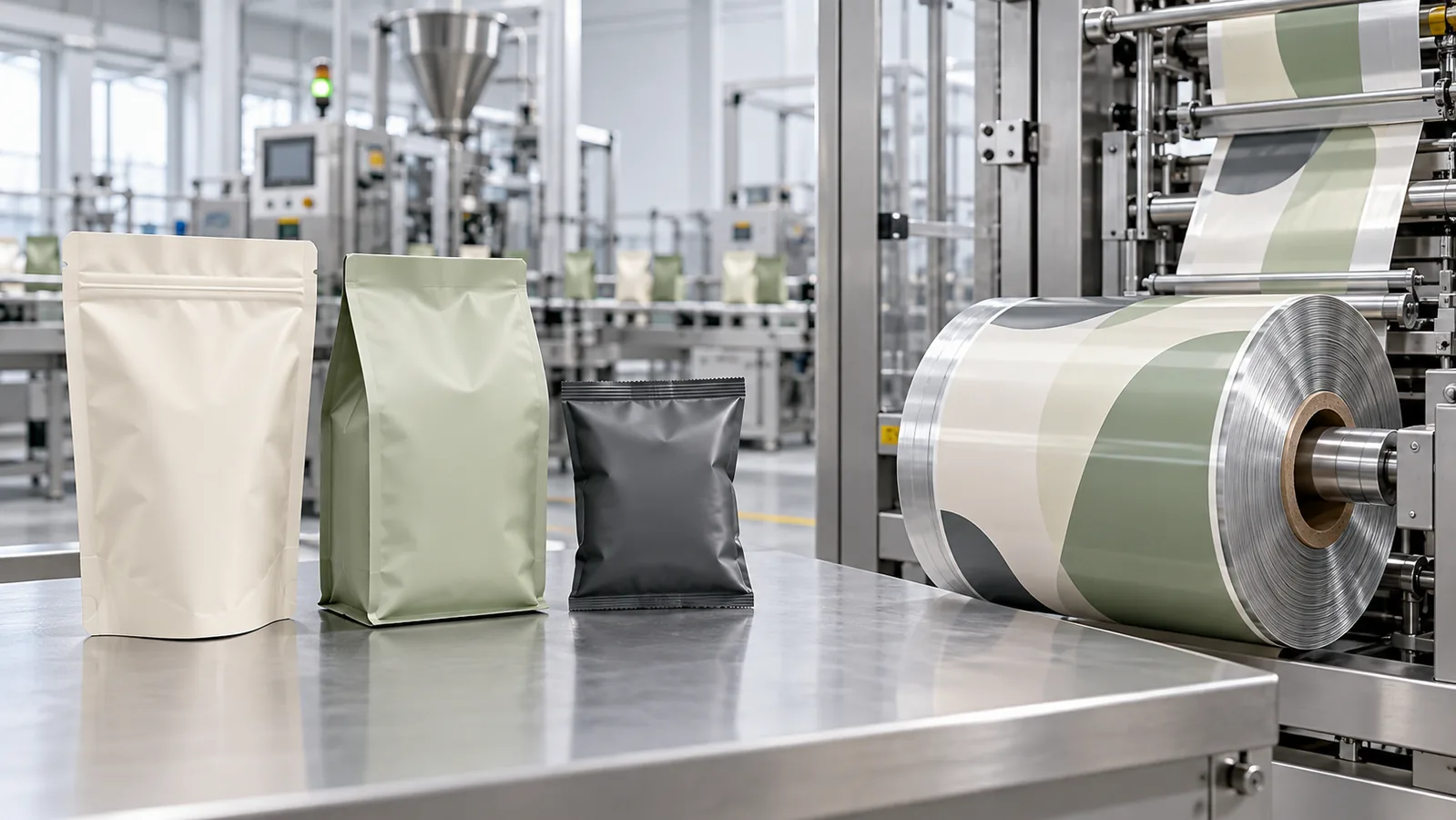
Choosing between pre-made pouches and rollstock is not only a packaging-material decision. It affects the filling machine, production speed, labor, changeovers, package features, quality control, inventory, and total cost of every finished pack.
Choose pre-made pouches when you need a ready-converted format, flexible changeovers, premium pouch features, or a practical route for moderate production volumes. Choose rollstock when you have compatible form-fill-seal equipment, repeatable high-volume demand, and enough technical control to form, fill, and seal the package on your own line.
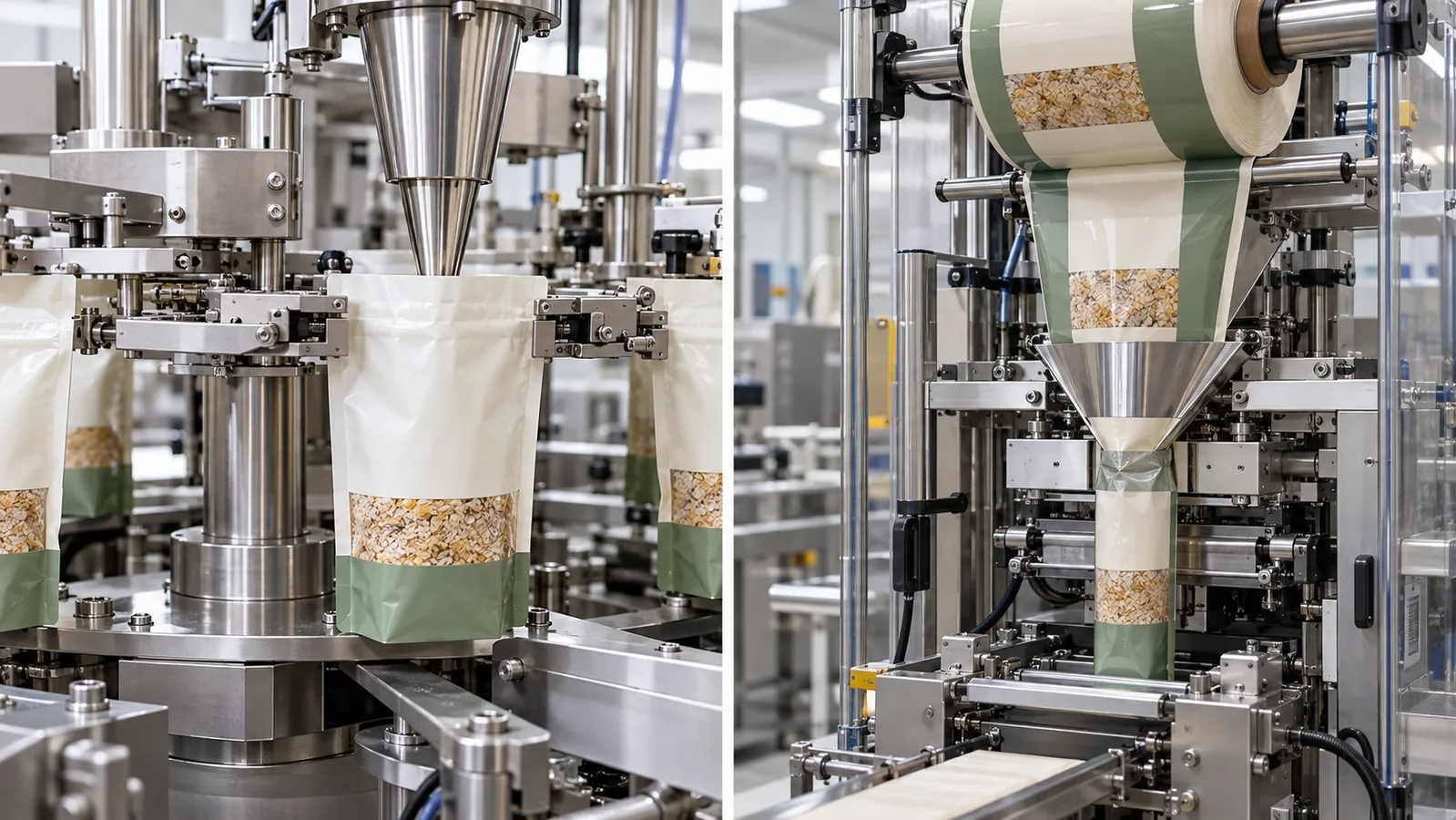
Pre-made pouches arrive in their converted format, while rollstock is formed and sealed on compatible packaging equipment.
Neither option is automatically cheaper or better. A valid comparison must use the same product requirements, barrier target, pack dimensions, artwork count, filling conditions, and annual volume. This guide explains the differences and provides a decision process for food brands, distributors, and manufacturers.
What are pre-made pouches?
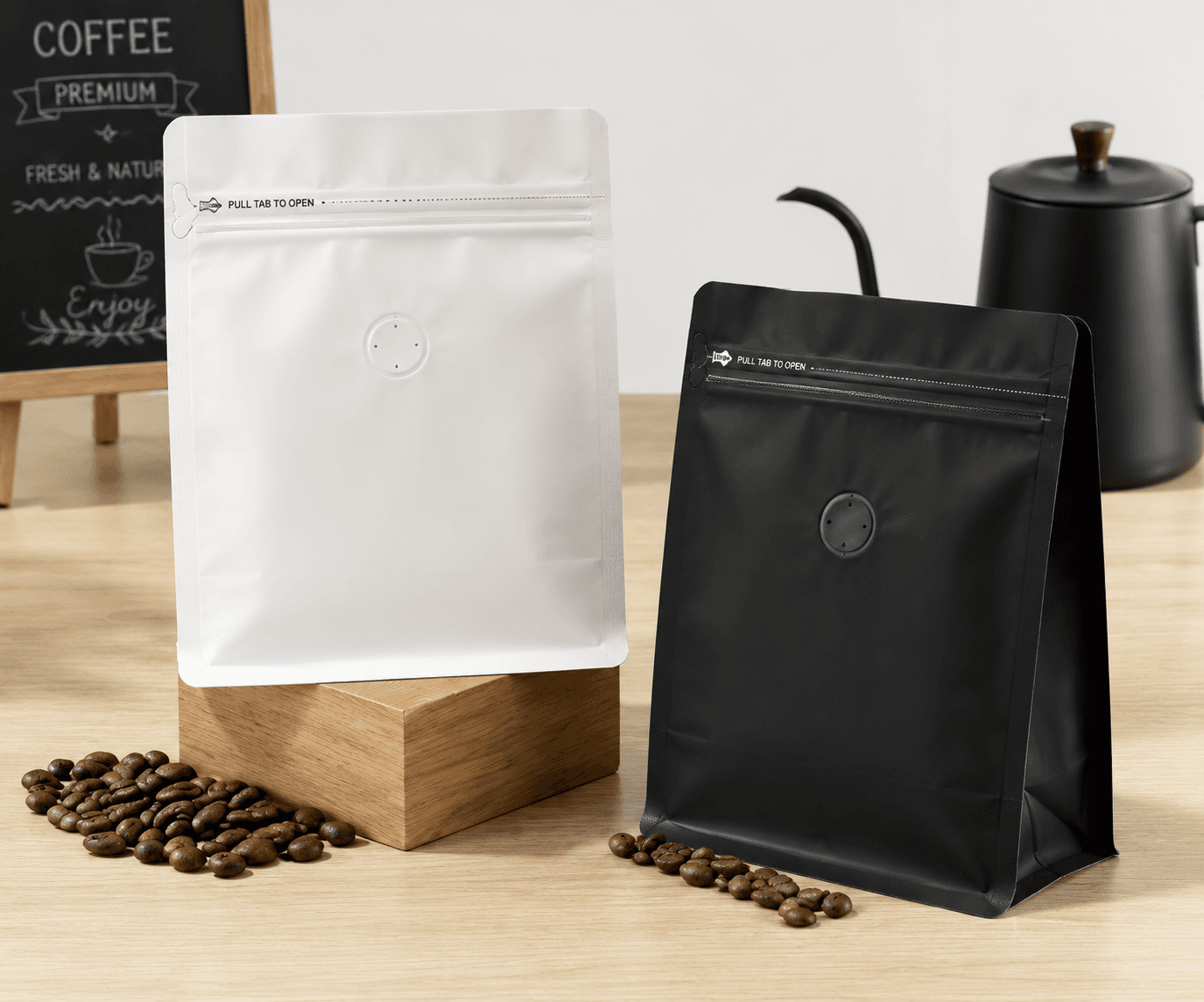
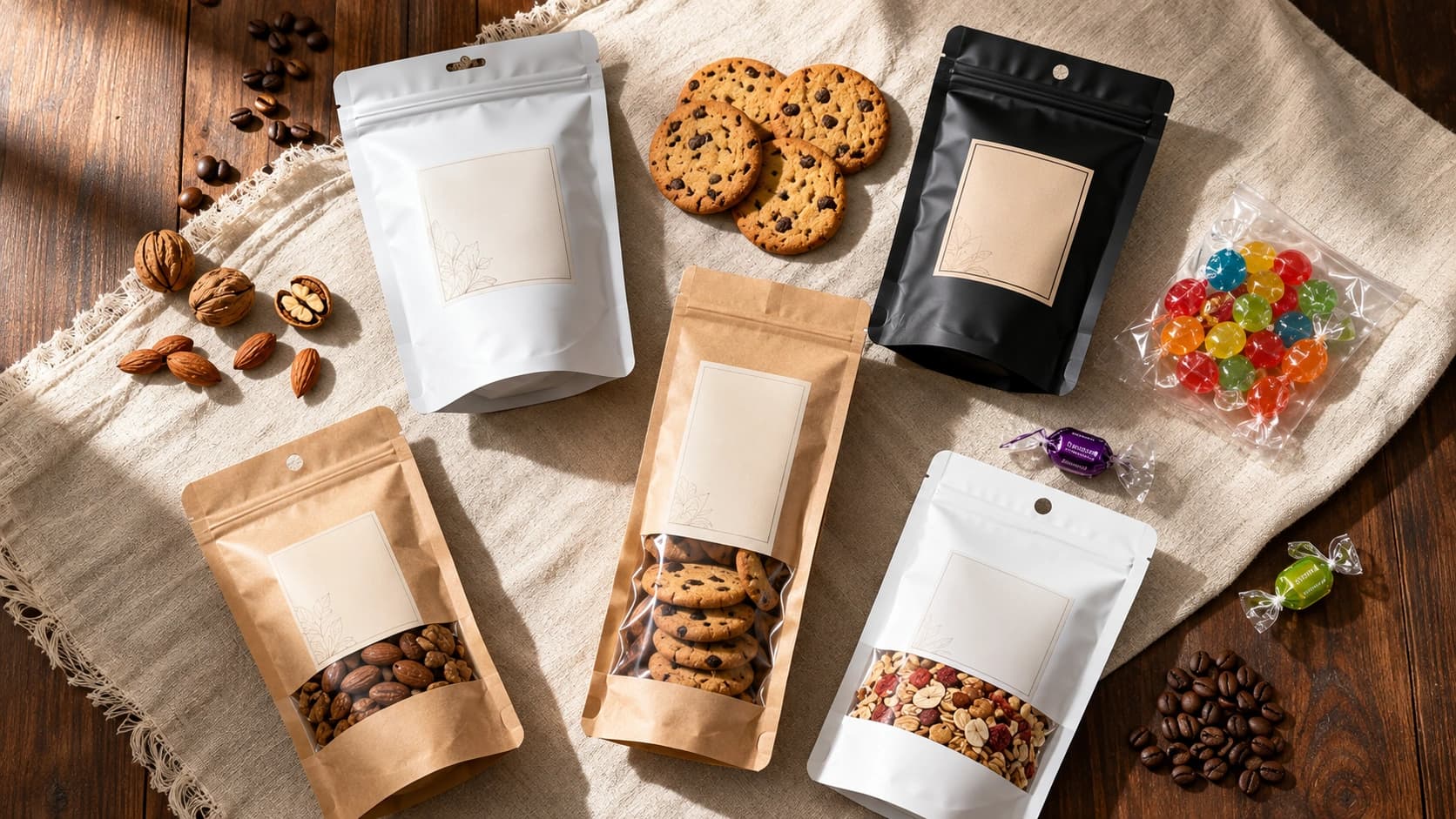
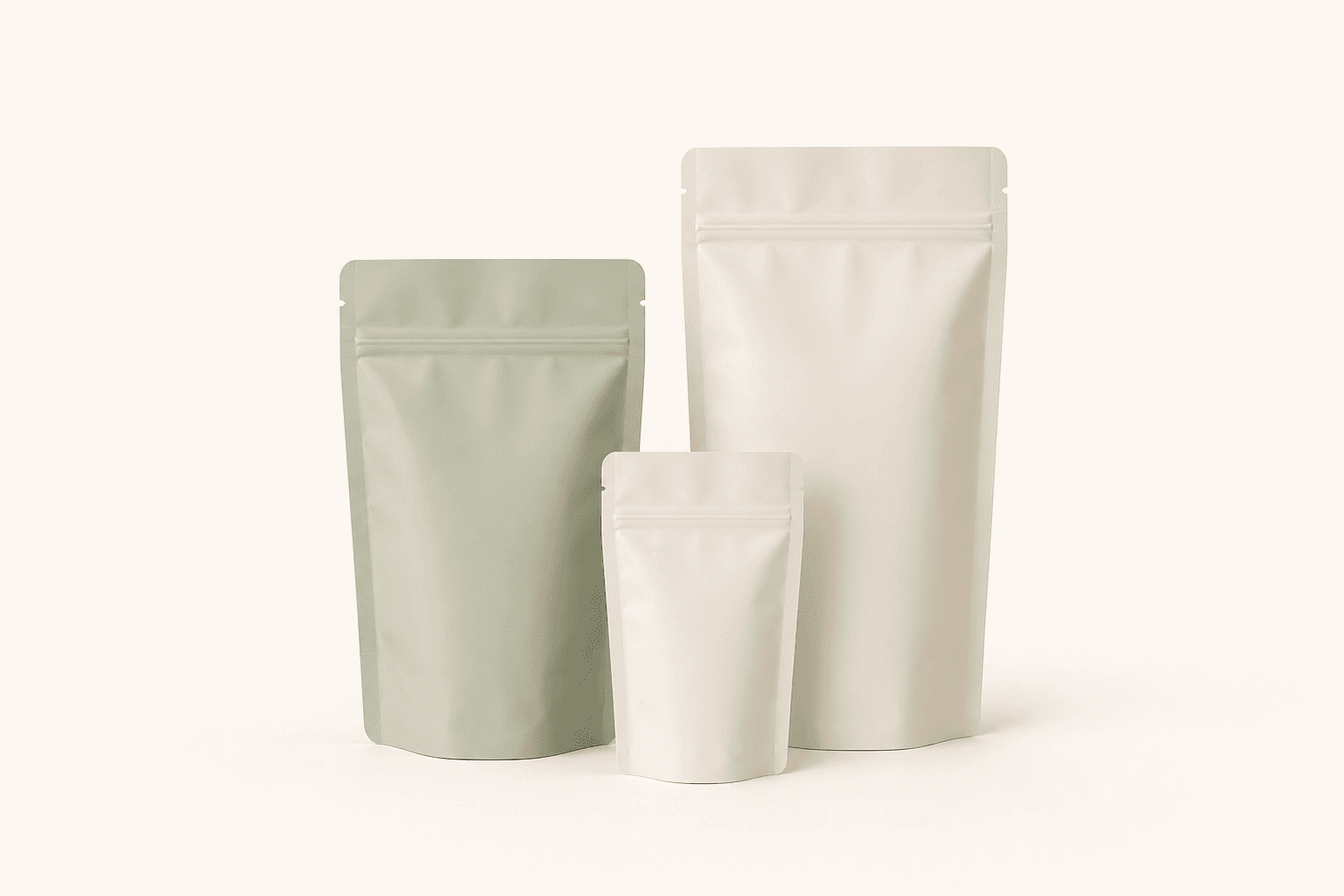
Pre-made pouches are converted into their final shape before they arrive at the food packing facility. The packaging manufacturer prints and laminates the material, then makes the pouch with the required seals, gussets, zipper, valve, spout, tear notch, or other approved features. One side or opening remains available for product filling and final sealing.
Common pre-made pouch formats include:
At the food plant, the pouch is picked up, opened, filled, and sealed. This can be done manually, semi-automatically, or on an automatic pre-made pouch machine.
The main advantage is that complex converting has already been completed. The packer does not need to form the basic pouch shape from a continuous web during filling. However, the packer still needs compatible handling, opening, filling, and top-sealing conditions.
- Stand-up pouches
- Flat-bottom and eight-side-seal pouches
- Three-side-seal pouches
- Side-gusset and back-seal bags
- Spout pouches
- Shaped pouches
What is rollstock?
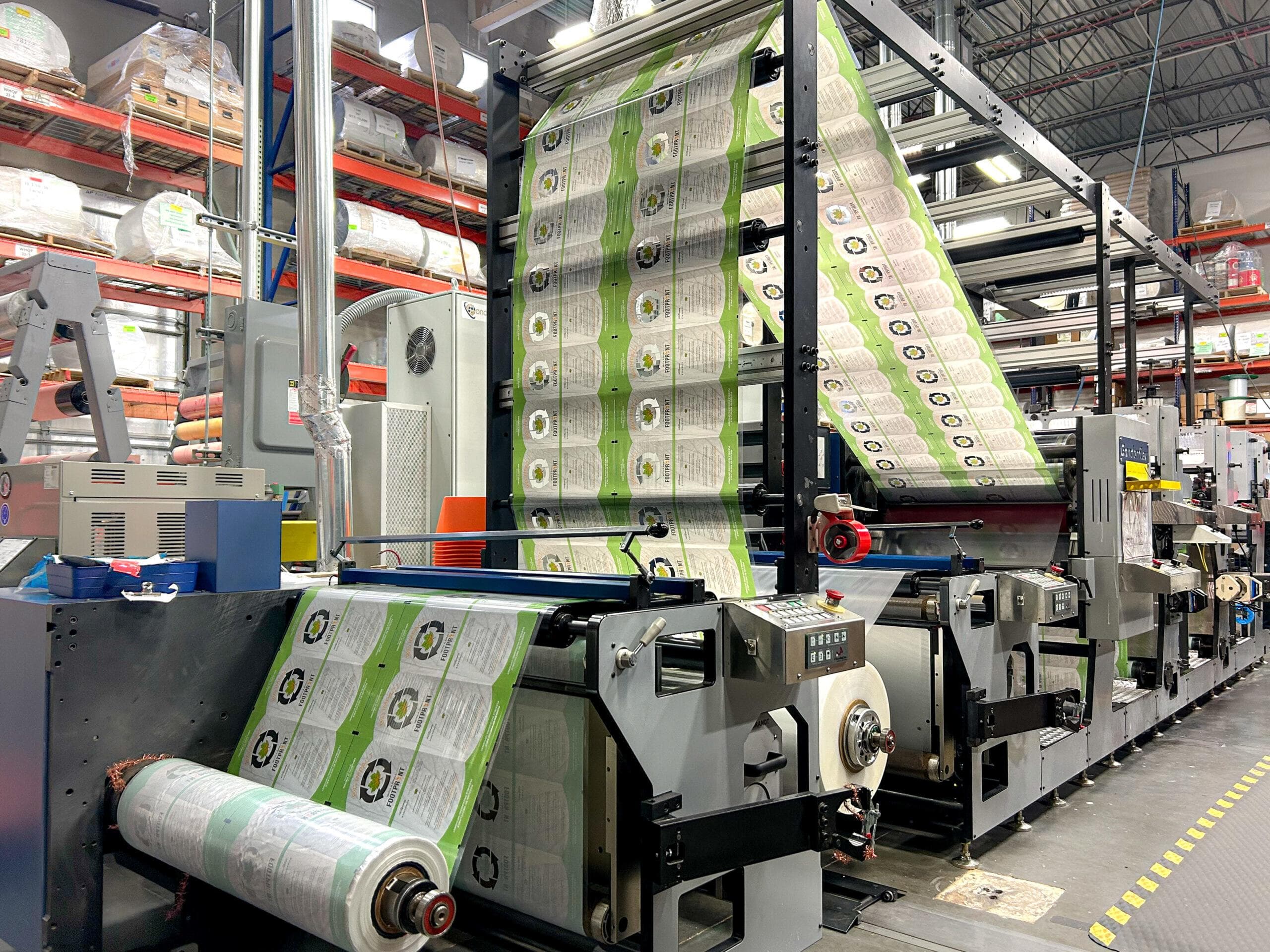
Custom printed rollstock is flexible packaging film supplied on a roll. The food manufacturer's form-fill-seal machine unwinds the web, forms it around or through machine components, creates the package seals, fills the product, and closes the pack.
Depending on the equipment, rollstock may be used on:
The roll is not a generic input. Web width, roll diameter, core size, unwind direction, print repeat, registration marks, sealant layer, coefficient of friction, splice rules, and material stiffness must match the machine and finished package.
- Vertical form-fill-seal machines for snacks, powders, grains, confectionery, and frozen products
- Horizontal form-fill-seal machines for bars, bakery items, or individually wrapped foods
- Sachet and stick-pack machines for powders, seasonings, sauces, and single portions
- Pouch-making form-fill-seal systems for selected stand-up or shaped formats
Quick comparison
This table is directional. The correct answer depends on the actual line and package.
- Package formation — Pre-made pouches: Completed by the pouch manufacturer; Rollstock: Completed on the food packer's machine
- Equipment — Pre-made pouches: Manual, semi-automatic, or pre-made pouch filler; Rollstock: Compatible form-fill-seal machine required
- Production speed — Pre-made pouches: Depends on pouch handling and machine; Rollstock: Can support high throughput on a stable line
- Complex features — Pre-made pouches: Zippers, valves, spouts, gussets, and shapes can be pre-applied where compatible; Rollstock: Features depend heavily on machine capability
- Changeovers — Pre-made pouches: Often practical for multiple SKUs and formats; Rollstock: Can be efficient, but web and machine changeovers require control
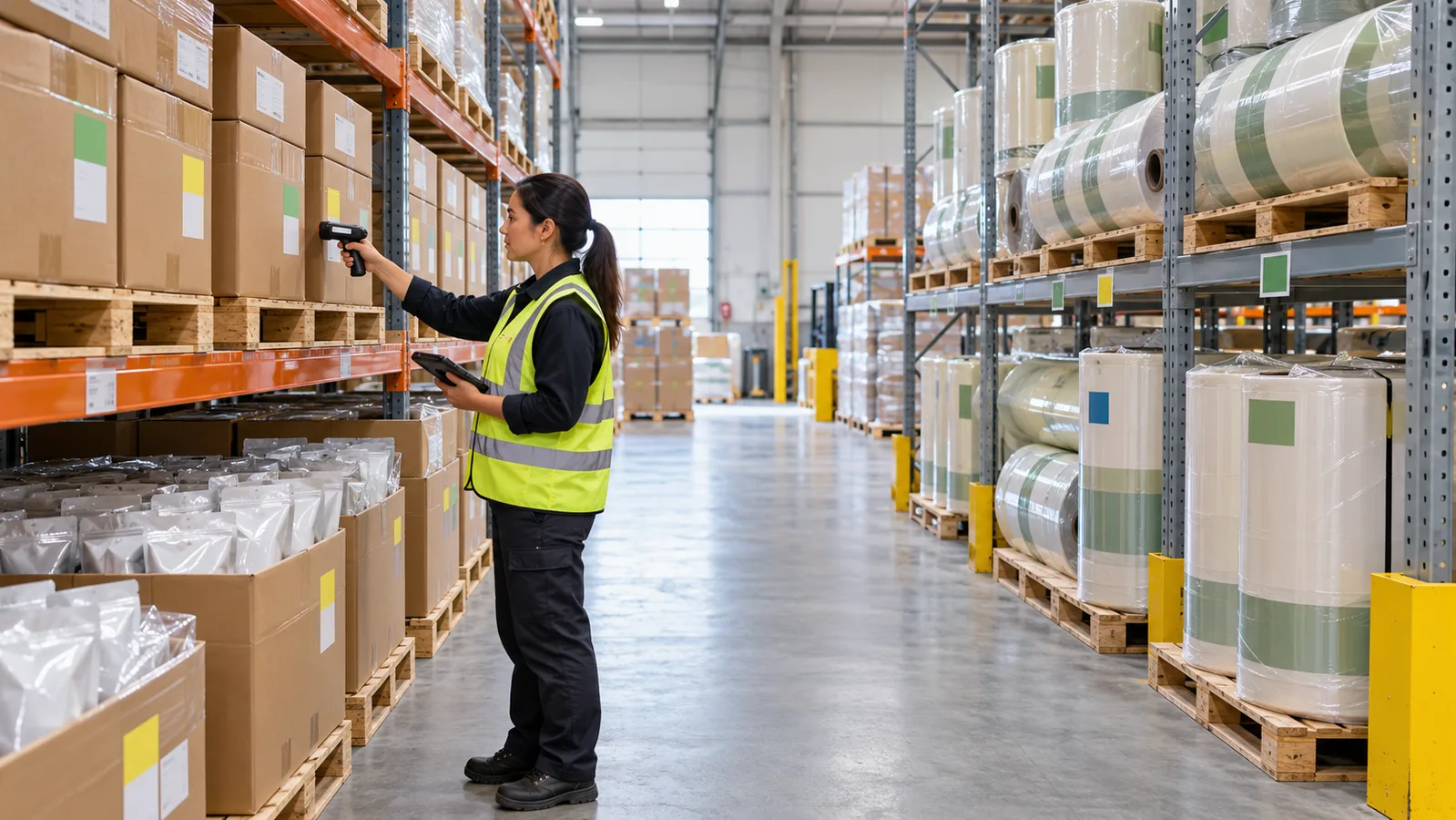
- Packaging storage — Pre-made pouches: Converted pouches occupy more space than flat rollstock; Rollstock: Roll format is compact before use
- Conversion control — Pre-made pouches: Pouch supplier controls forming and most seals; Rollstock: Food packer controls package forming and seals
- Typical fit — Pre-made pouches: Launches, premium formats, multiple SKUs, moderate volumes; Rollstock: Established products, repeat volume, automated production
- Main technical risk — Pre-made pouches: Pouch opening, feeding, filling, and final top seal; Rollstock: Web tracking, forming, registration, sealing, cutting, and line setup
1. Start with the equipment you have—or plan to buy
Equipment is usually the first decision gate. A food factory with a proven vertical form-fill-seal line should not move to pre-made pouches based only on appearance. A growing brand without packaging equipment should not select rollstock simply because the material price per square meter appears lower.
For pre-made pouches, confirm:
For rollstock, confirm:
Send the packaging supplier the machine make, model, technical drawing, and current successful material specification where available. Small dimensional or surface differences can affect a high-speed line.
- Minimum and maximum pouch width and height
- Pickup method, vacuum-cup area, and gripper position
- Opening method and required mouth width
- Zipper, valve, or spout compatibility
- Filling nozzle or chute clearance
- Final seal-jaw width, pressure, temperature, and dwell time
- Coding, checkweighing, inspection, and discharge arrangements
- Forming-tube or forming-set dimensions
- Maximum and minimum web width
- Core internal diameter, roll diameter, and roll weight
- Unwind direction and printed side
- Print repeat and registration-mark specification
- Fin-seal or lap-seal design
- Sealing-jaw pattern and temperature range
- Film tension, tracking, stiffness, and friction requirements
- Splice detection and acceptable splice construction
2. Compare realistic production speed
Rollstock is often associated with faster production because forming, filling, and sealing occur continuously. That can be true on a stable, properly specified line. However, rated machine speed is not the same as sustained output.
Actual output depends on product flow, dose accuracy, web tracking, registration, seal time, inspection, planned stops, changeovers, and rejects. A line rated for a high number of packs per minute may run more slowly with a difficult powder, fragile snack, thick laminate, or demanding seal.
Automatic pre-made pouch machines can also deliver efficient production, especially when pouch opening and feeding are consistent. Their practical advantage may be faster format flexibility rather than maximum speed.
Compare good finished packs per hour—not the machine brochure speed. Include startup waste, rejected packs, cleaning, roll or pouch loading, artwork changeovers, and operator time.
3. Evaluate order volume and SKU complexity
Annual volume alone does not describe the project. Ten million packs in one size and artwork are different from ten million packs divided across 30 flavors, seasonal designs, and regional labels.
Rollstock can be attractive for stable, repeatable runs because the web is compact and feeds directly into automated equipment. Pre-made pouches can be attractive when several SKUs share one pouch construction or when the business needs to change products without a long forming-line setup.
Ask the supplier to quote by:
FULL PACKING uses project-specific MOQ because size, structure, printing, features, and number of artworks affect production. A single universal MOQ would not describe every order accurately.
- Pouch or roll specification
- Individual artwork
- Quantity per SKU
- Total combined quantity
- Printing method
- Setup or cylinder costs
- Material and converting minimums
- Reorder conditions
4. Compare total cost, not film price
The lowest quoted package price may not create the lowest finished-product cost.
For pre-made pouches, include:
For rollstock, include:
A rollstock structure may use material efficiently but require a capital-intensive line. A pre-made pouch may cost more per pack but reduce equipment complexity or support a higher-value presentation. Calculate cost per accepted, filled, sealed, and shipped unit.
- Finished pouch price
- Zipper, valve, spout, or other feature cost
- Pouch packing and freight volume
- Pouch-loading labor or automation
- Opening and feeding rejects
- Final sealing and inspection
- Printed film price and yield
- Form-fill-seal machine investment or contract-packing cost
- Forming parts and setup
- Startup and changeover waste
- Operators, maintenance, and downtime
- Registration, sealing, and cutting rejects
- Unused printed inventory after an artwork change
5. Consider package format and consumer features
Pre-made pouches offer broad access to structured formats and pre-applied components. A brand may select a flat-bottom pouch with multiple print panels, a stand-up pouch with a zipper, or a spout pouch for controlled pouring.
Rollstock is well suited to formats the installed machine is designed to produce. A vertical line may efficiently make pillow bags or gusseted back-seal packs. More complex features can be possible, but only when the equipment is designed and validated for them.
Do not select a feature without testing its value and production impact. A zipper should reclose after normal product use. A tear notch should open the correct layer path. A spout must suit product viscosity, filling, closing, and dispensing. A window changes the visual and barrier design.
The finished package—not the supply format—must meet the food's protection, use, and market needs.
6. Define who controls each critical seal
With a pre-made pouch, the pouch manufacturer creates most structural seals. The food packer creates the final closing seal after filling. Both sets of seals matter.
With rollstock, the food packer's machine forms the longitudinal and end seals. This gives the packer direct process control, but it also creates more sealing variables to manage.
In either case, a sealing window should be established for the actual material and line. Temperature, pressure, dwell time, jaw pattern, speed, and seal-area contamination influence performance. A clean hand seal does not prove that a dusty or oily product will seal reliably at production speed.
Where appropriate, quality evaluation may include seal appearance, seal-strength measurement, leak testing, burst or pressure testing, and filled-package handling trials. Methods and acceptance criteria should be agreed for the project rather than copied from an unrelated product.
7. Plan changeovers, cleaning, and artwork control
Food plants frequently underestimate the cost of SKU changes.
A pre-made pouch changeover may involve loading a new pouch, adjusting guides and grippers, changing the filler recipe, verifying the code, and confirming sealing settings. If different pouch widths or closures are used, mechanical adjustments may be required.
A rollstock changeover may involve replacing the roll, threading the web, setting tension and tracking, loading registration parameters, adjusting forming parts, confirming print position, and producing startup samples. A size change may require a different forming set.
For allergen or flavor changes, the food-contact equipment cleaning plan may dominate both options. For artwork changes, line clearance is critical: remove the previous SKU's pouches, rolls, labels, and cartons before releasing the next product.
8. Compare inventory and artwork risk
Printed packaging becomes obsolete when recipes, claims, barcodes, legal text, branding, or market requirements change. The risk increases when many SKUs are ordered at once.
Rollstock is compact to store, but an obsolete roll can contain a large number of impressions. Pre-made pouches require more warehouse volume, but quantities are visible and can be issued by bundle or carton.
Use controlled artwork revisions and identify every pouch bundle or roll with the SKU, version, lot, and quantity. Before reordering, confirm that the approved file and specification are still current.
For a new product, consider whether a smaller validated run is more valuable than the lowest theoretical unit price. Packaging left after a label change is not a saving.
Planning a new filling setup? Send the product, target pack size, annual volume, SKU count, current equipment, preferred format, shelf-life target, and destination market. FULL PACKING can review the packaging requirements and discuss the next sample or quotation step.
9. Test the complete packing process
Samples should answer specific questions in sequence.
For pre-made pouches
- Use a stock pouch to review general format and features.
- Use a custom-size blank to check capacity, opening, headspace, stability, and carton fit.
- Use production-equivalent material when barrier, stiffness, print, or sealing behavior must be confirmed.
- Run the pouch on the intended filling and sealing equipment.
- Record feeding, opening, filling, sealing, rejects, and operator observations.
For rollstock
For both routes, fill the actual food where possible. Evaluate the package after relevant storage, handling, and transport conditions. Shelf life should be validated with the finished product, filling process, package, and intended distribution environment.
- Confirm machine drawings and a current successful web specification.
- Review web width, repeat, eye mark, unwind, core, and roll limits.
- Trial representative material at realistic speed.
- Check web tracking, registration, forming, seals, cutting, coding, and finished-pack dimensions.
- Evaluate startup waste and stability across the run—not only the first acceptable pack.
Decision guide by business situation
- New food brand without packaging machinery — Strong starting option: Pre-made pouch; Reason to investigate it: Lower equipment barrier; flexible route to a retail-ready format
- Manufacturer with an established high-speed VFFS line — Strong starting option: Rollstock; Reason to investigate it: Uses installed forming and sealing capability
- Premium coffee with zipper and valve — Strong starting option: Pre-made pouch; Reason to investigate it: Components and structured formats can be integrated before filling
- High-volume snack in a pillow bag — Strong starting option: Rollstock; Reason to investigate it: Efficient continuous packing on a compatible line
- Many seasonal designs and moderate volume — Strong starting option: Compare both carefully; Reason to investigate it: MOQ, changeover, and obsolete inventory may decide the result
- Contract packer serving different customers — Strong starting option: Depends on installed equipment; Reason to investigate it: Machine capability and changeover economics come first
- Liquid refill product — Strong starting option: Pre-made spout pouch or suitable FFS system; Reason to investigate it: Fitment, filling, sealing, and leak control must be evaluated together
Questions to ask before requesting a quote
Prepare the same brief for every supplier:
The answers allow a supplier to recommend a construction and quote on a comparable basis.
- What food will be packed?
- What is the target fill weight or volume?
- What pouch or finished pack format is required?
- What are the dimensions, or must they be developed?
- How will the product be filled and sealed?
- Which machine make and model will be used?
- What shelf life, storage, and distribution conditions apply?
- What barrier, closure, valve, spout, finish, or easy-open features are required?
- How many SKUs and artworks are included?
- What is the quantity per SKU and expected annual volume?
- Which food-contact documents are required for the destination market and intended use?
- What sample, line-trial, inspection, and shipping requirements apply?
Frequently asked questions
Is rollstock cheaper than pre-made pouches?
Rollstock may have a lower packaging-conversion cost for stable, high-volume production, but it requires compatible form-fill-seal equipment and process control. Compare total filled-pack cost, including equipment, labor, waste, downtime, features, inventory, and rejects.
Are pre-made pouches suitable for automatic filling?
Yes, when the pouch dimensions, opening, closures, material, and tolerances match the pre-made pouch machine. A production trial should confirm pickup, opening, filling, sealing, and discharge at the target speed.
Which option is better for a product launch?
Pre-made pouches are often a practical starting point for brands that do not own form-fill-seal equipment or need premium features. The decision still depends on the contract packer, order quantity, SKU count, and required format.
Can rollstock make stand-up pouches?
Selected form-fill-seal systems can create stand-up formats, but not every machine can. Confirm the finished geometry, gusset formation, zipper capability, web specification, and realistic line speed with the equipment manufacturer and packaging supplier.
Which option creates less packaging waste?
The answer depends on material use, startup waste, rejects, product loss, obsolete inventory, and end-of-life conditions. Rollstock may use material efficiently on a stable line, while poor setup can generate substantial startup waste. Measure the complete system rather than judging the supply format alone.
Can the same material structure be used for both?
Not automatically. Even if the layer names are similar, rollstock and pre-made pouches may require different stiffness, friction, seal initiation, hot tack, thickness, or machinability. Approve the construction for the specific equipment and finished package.
Conclusion
Pre-made pouches and rollstock are two different production systems. Pre-made pouches move most package conversion to the packaging manufacturer and can support flexible changeovers and complex retail formats. Rollstock moves forming and sealing onto the food manufacturer's line and can support efficient high-volume automation when the process is stable.
The best choice is the one that produces consistent, accepted finished packs at the required volume and quality—not the option with the lowest isolated film or pouch price. Compare equipment, output, SKU complexity, features, sealing responsibility, changeovers, inventory risk, and total cost using the actual product and line.
Get a Packaging Recommendation for Your Filling Process
Share your product, fill weight, equipment, preferred pack format, quantity per SKU, shelf-life target, destination market, and artwork status. FULL PACKING will review the information and help define the next specification, sample, or quotation step.
Send Your Requirements | Compare Packaging Formats