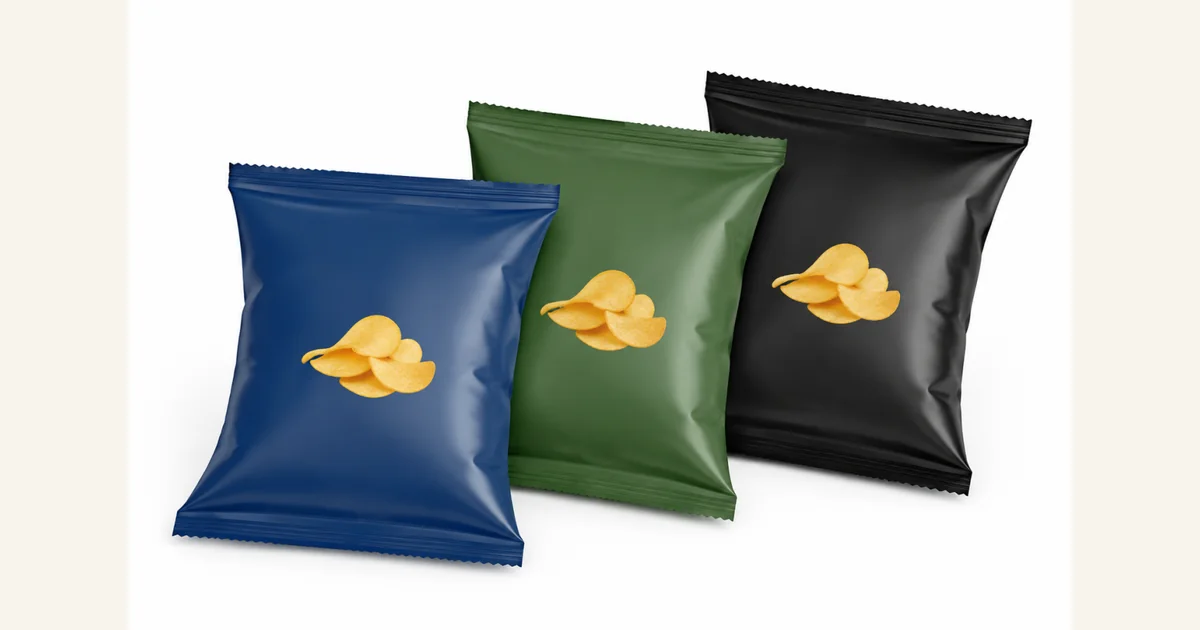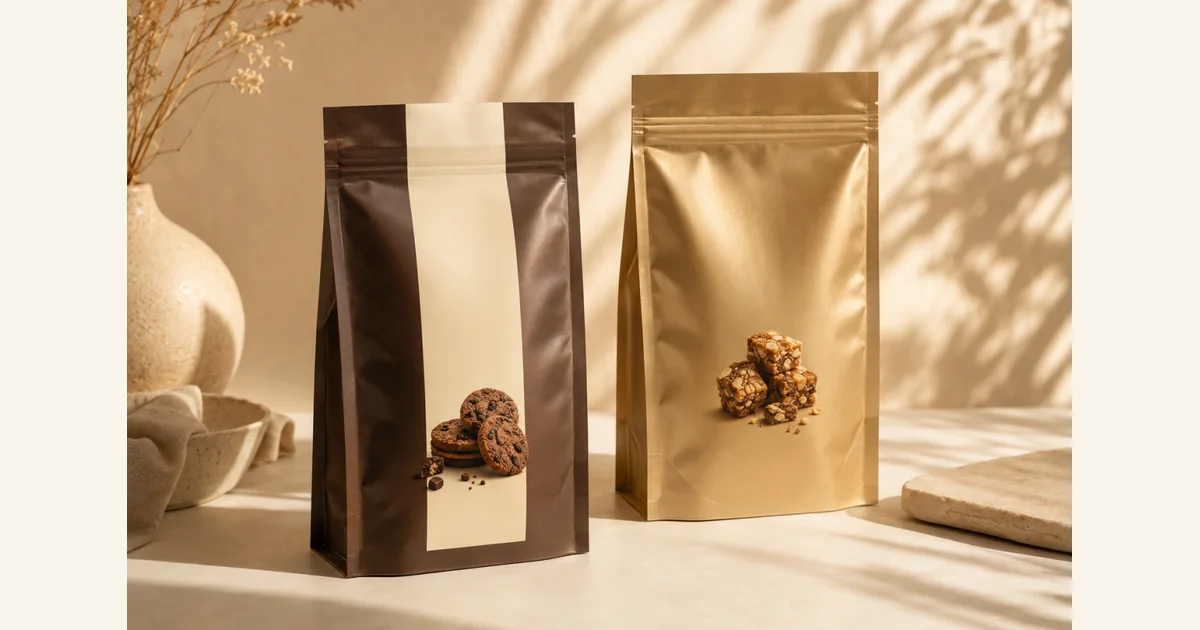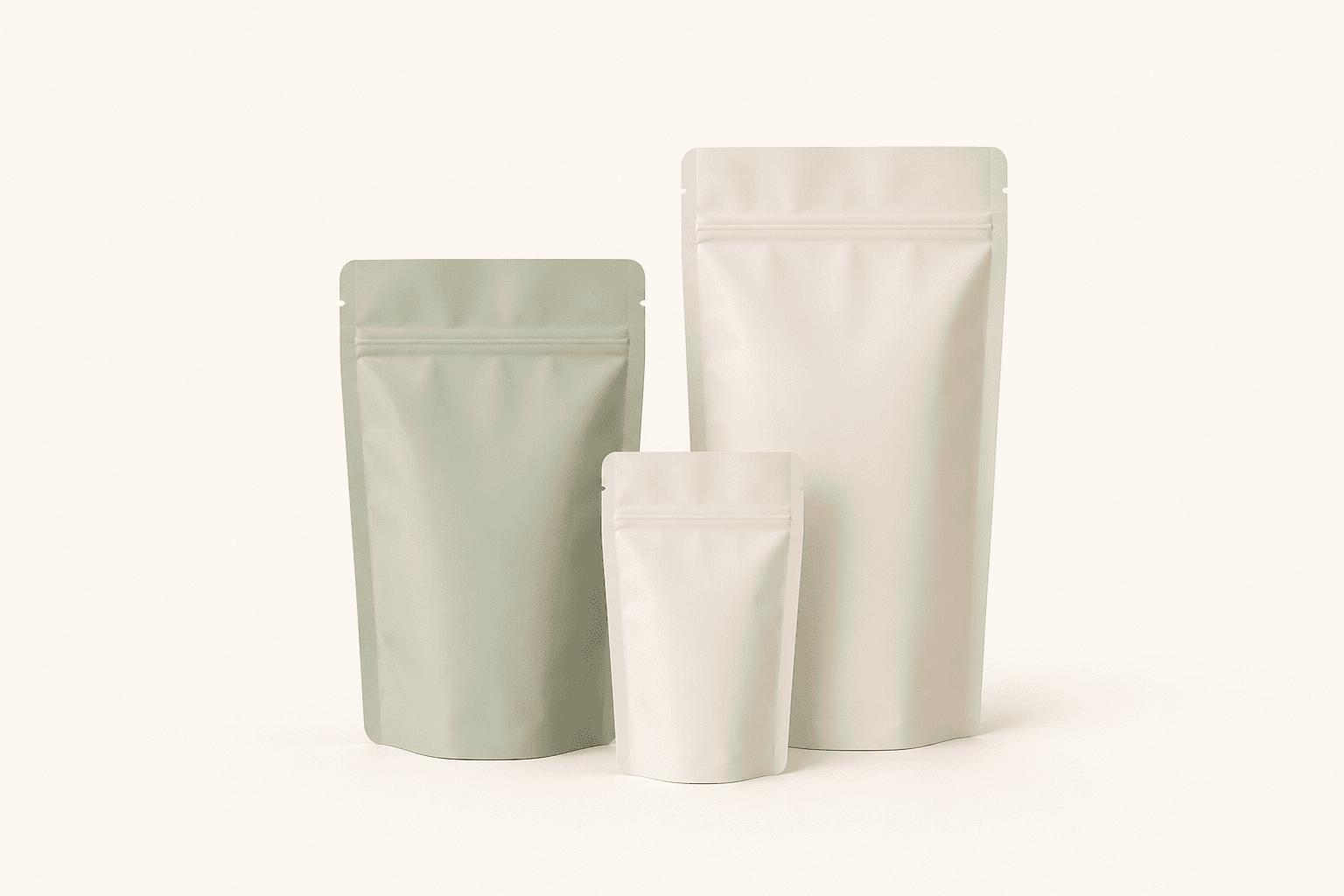
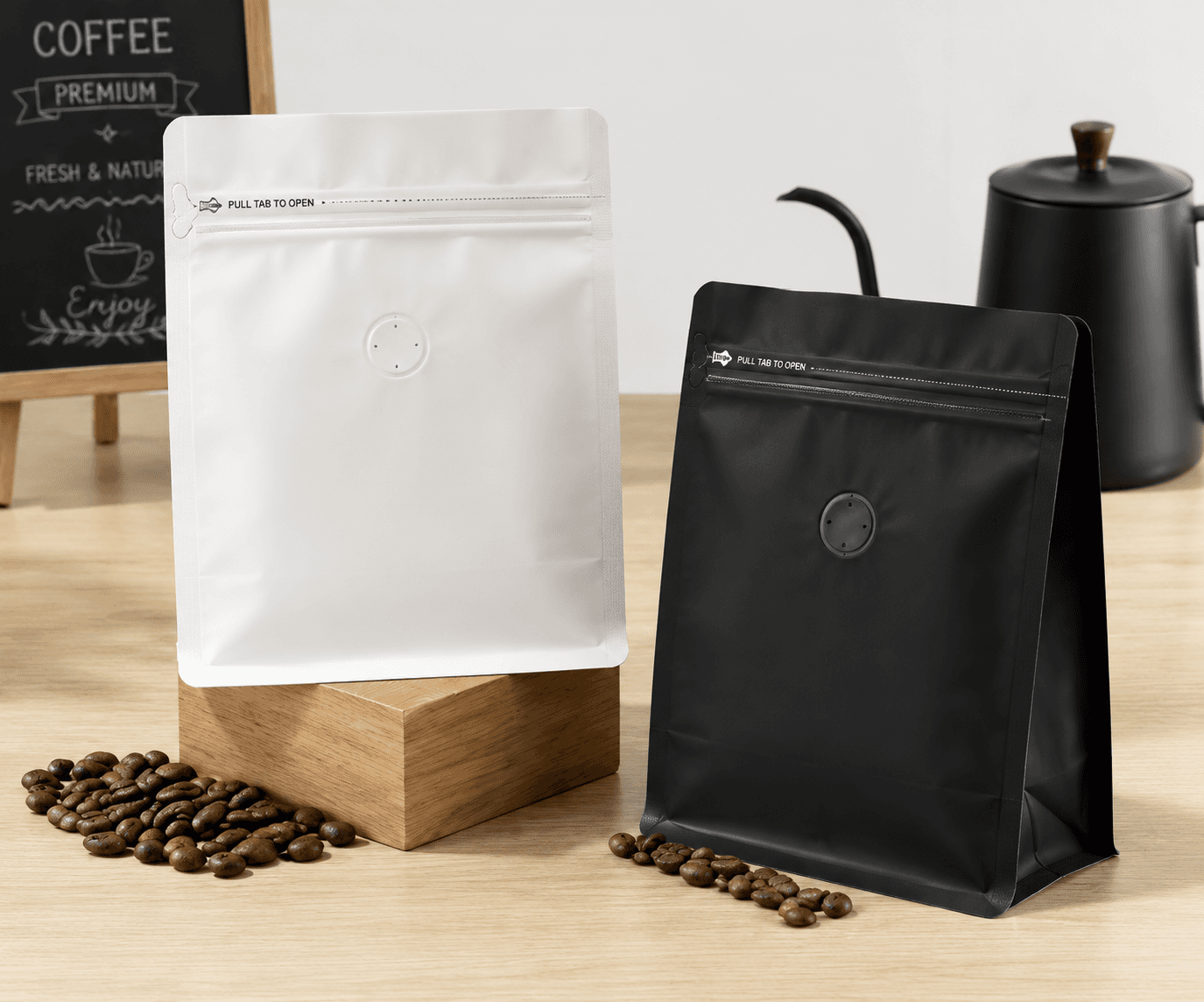
Choose a stand-up pouch when versatility, familiar presentation and cost efficiency are the priorities. Choose a flat-bottom pouch when stronger shelf stability, heavier fills and five-panel branding justify the added complexity.
The safest decision comes from comparable material specifications and samples filled with the actual product.
How the two structures differ
A stand-up pouch uses an expandable bottom gusset and broad front and back panels. A flat-bottom pouch has a rectangular base and side gussets, creating a box-like form with five printable panels.
Shelf stability and fill behavior
A flat-bottom pouch normally maintains a more defined footprint. A stand-up pouch depends more on gusset geometry and how the contents settle. Neither should be sized from product weight alone.
Coffee beans, powders, nuts and lightweight snacks occupy different volumes at the same net weight. Test density, headspace and behavior after transport.
Compare the complete cost
Stand-up pouches are often more economical because construction is simpler. A complete comparison also includes film area, barrier, printing, accessories, filling speed, carton pack-out, damage risk and MOQ by design.
Artwork and shelf communication
Stand-up pouches work well when the message fits on front and back panels. Flat-bottom pouches create side-panel space for origin, flavor, instructions and compliance copy. Obtain the final dieline before completing artwork.
Filling and installation preparation
Confirm pouch opening, maximum dimensions, zipper clearance, top-seal area, jaw settings and contamination risk. Automated operations should trial representative material on the intended equipment.
Best format by application
Flat-bottom pouches are a strong candidate for premium coffee and dense fills. Stand-up pouches are often an efficient default for snacks, dried fruit, powders and multi-SKU programs. Pet products should be checked for drop, puncture and zipper retention.
Decision checklist
Choose the format only after both candidates have been compared with the real product, equivalent materials and the intended filling and shipping process.
- Test actual fill and density
- Compare equivalent barrier structures
- Check filling and sealing clearance
- Review carton pack-out
- Approve the final dieline after geometry
Conclusion
For many products the stand-up pouch is the practical starting point. For dense, premium or information-heavy products, a flat-bottom pouch can justify its added complexity. Filled samples provide better evidence than empty catalog photographs.