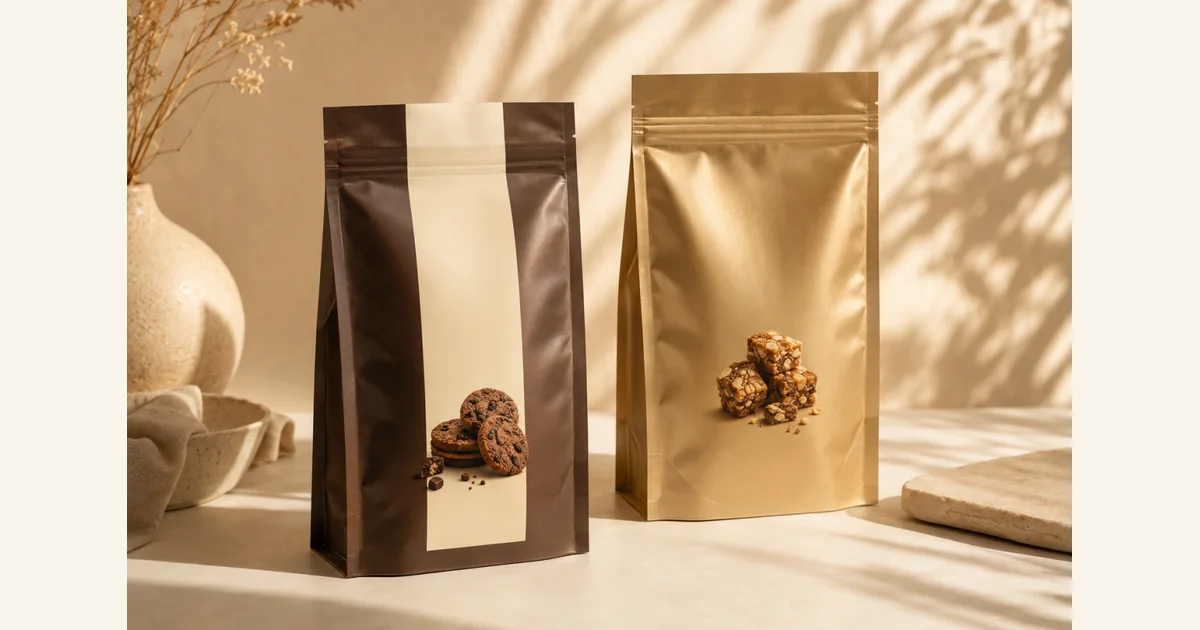
Composite food packaging bags are made by bonding two or more layers of different films together.
Instead of relying on a single material, manufacturers combine films with distinct properties to create packaging with a more complete balance of printability, strength, barrier performance, and heat sealing.
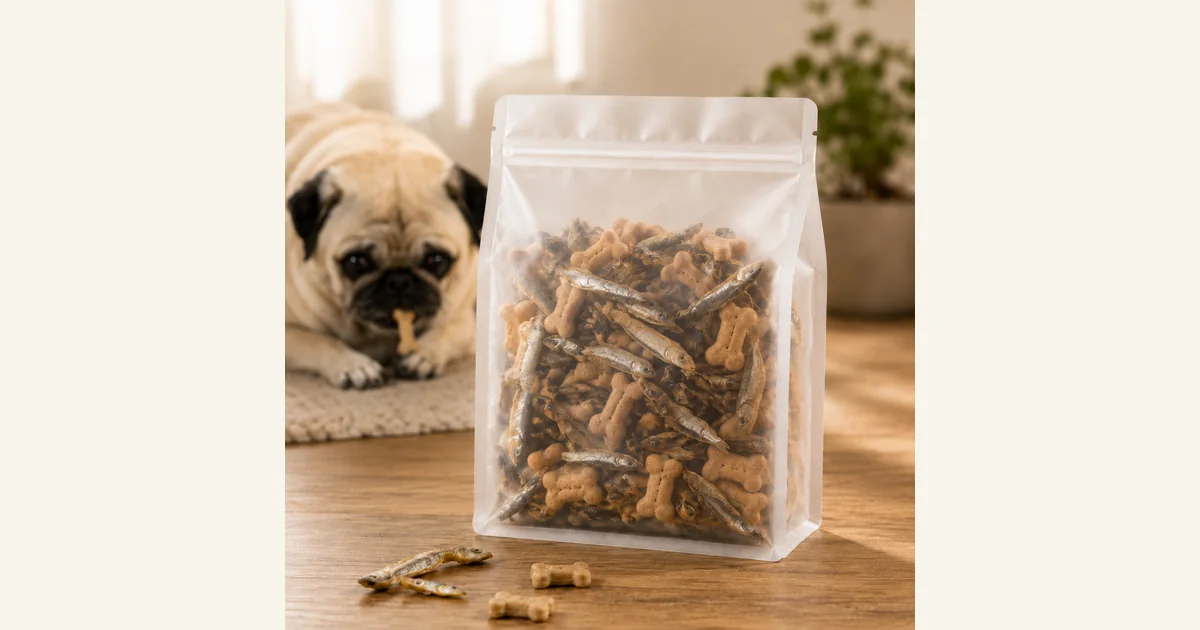
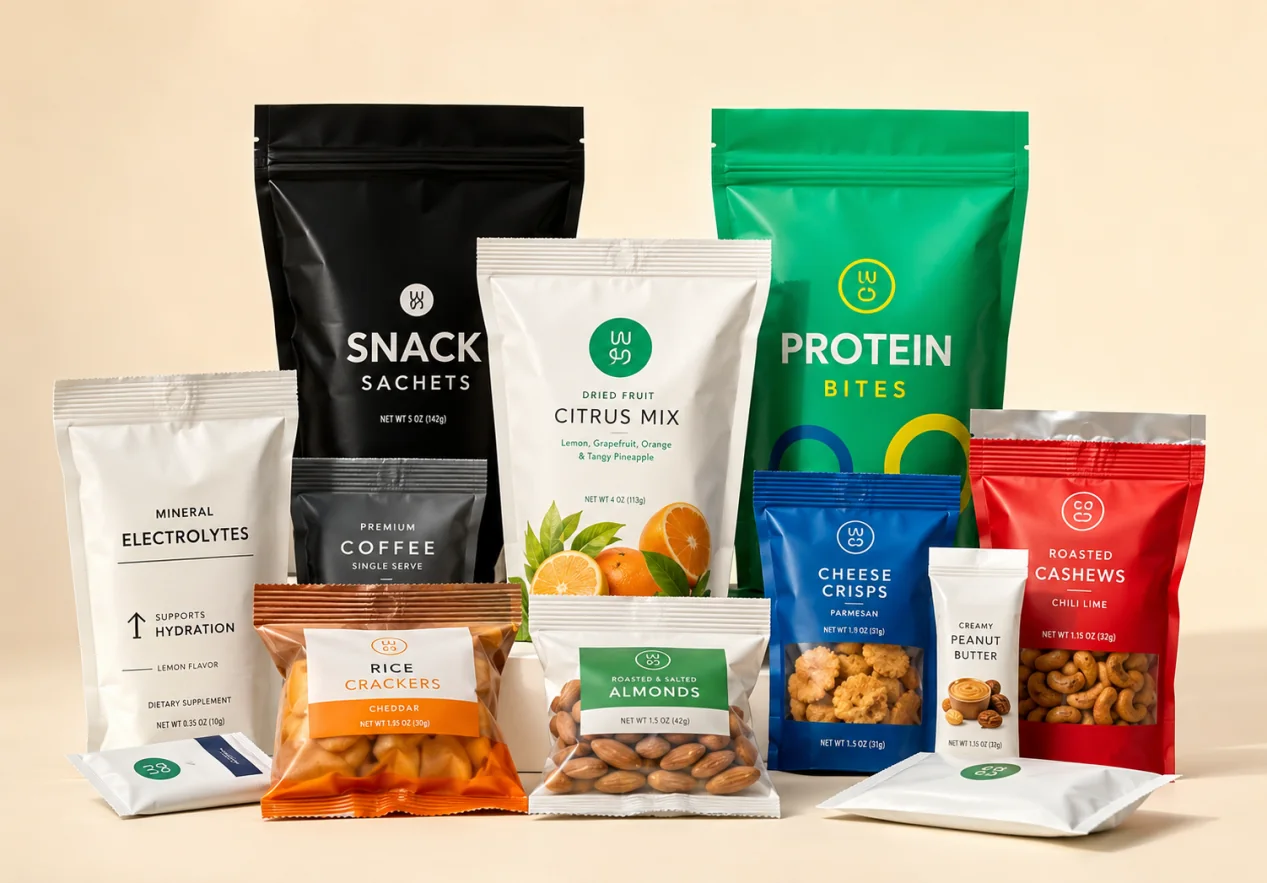
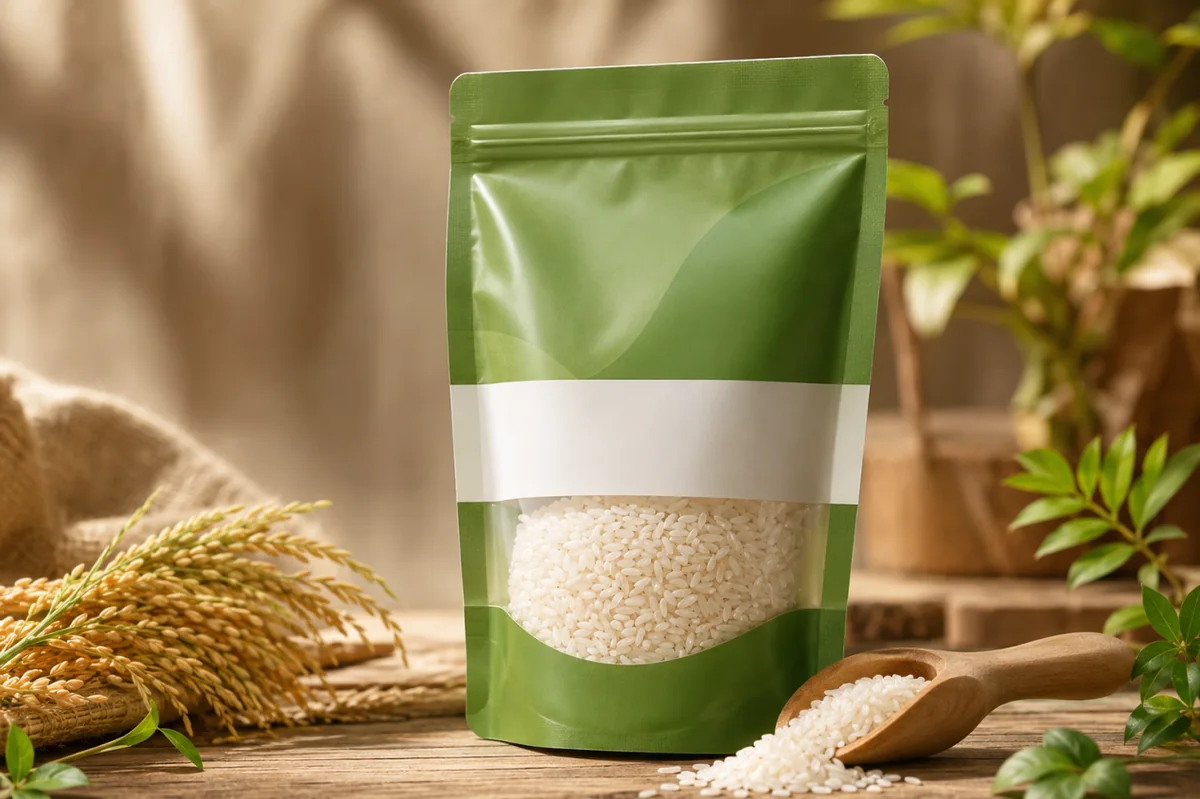
Composite bags are widely used for snacks, coffee, rice, frozen foods, pet food, powdered foods, and many other products.
What is lamination?
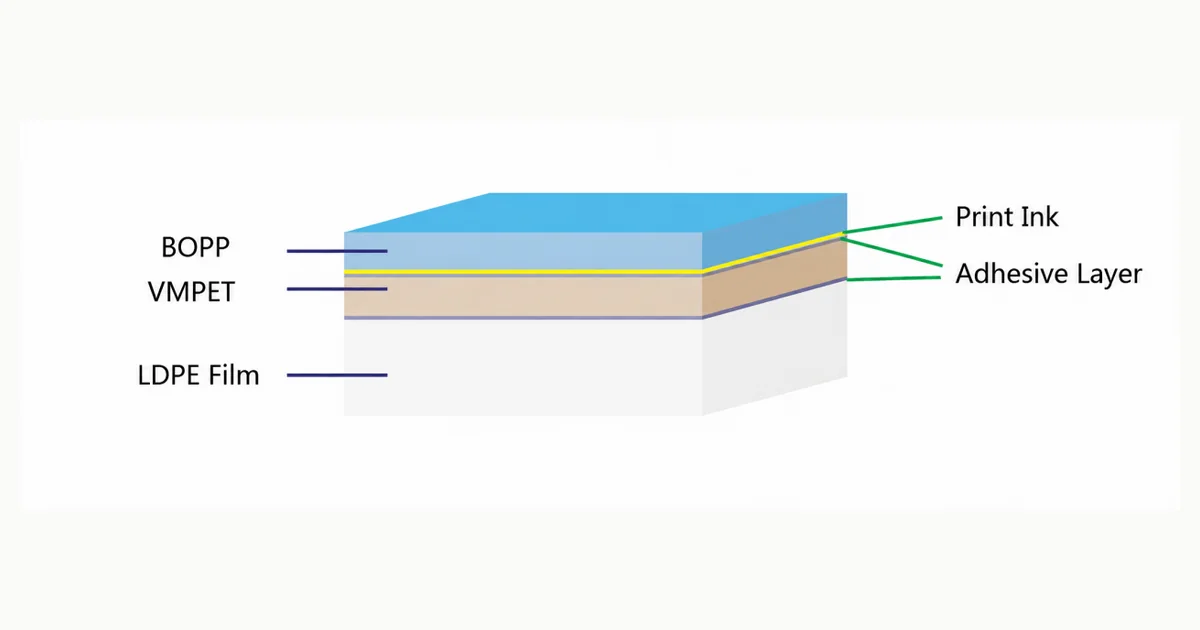
Lamination is the process of bonding two or more film layers together. Each layer serves a specific function.
A simple structure might be PET/PE: PET provides strength and printability, while PE provides heat sealing. A higher-barrier structure might be PET/VMPET/PE, where VMPET contributes additional oxygen and light barrier performance.
Why laminate food packaging bags?
Different films offer different advantages. One may be suitable for printing but not heat sealing, while another may seal reliably but provide limited barrier performance.
Combining materials allows the finished packaging to address several functional requirements.
- Print quality and graphic protection
- Mechanical strength and dimensional stability
- Moisture and oxygen barrier performance
- Light protection where required
- Puncture resistance
- Reliable heat sealing
Common composite structures
PET/PE is used for many dry foods because PET supports printing and strength while PE supports heat sealing.
BOPP/PE is commonly considered for snacks, biscuits, and dry foods where transparency, gloss, and moisture resistance are useful.
PET/VMPET/PE is used when enhanced light and oxygen barrier performance is required.
PET/AL/PE incorporates aluminum foil and can provide stronger oxygen, moisture, and light barrier performance.
These examples are general structure directions. The actual films, grades, thicknesses, adhesives, and processing conditions must be confirmed for the specific product.
How are composite packaging bags manufactured?
The process begins by preparing films according to the confirmed requirements. The customer artwork is printed onto the appropriate film, and the separate layers are then bonded through lamination.
After lamination, the material undergoes a curing stage before bag making. The finished laminate is slit, cut, and heat-sealed into the required pouch format.
During production, print appearance, lamination integrity, dimensions, seal performance, and the finished bag appearance are checked against the confirmed project specifications.
Are more layers always better?
Not necessarily. Some dry foods may require only a two-layer structure. Adding unnecessary layers can increase material costs and production complexity.
The appropriate structure depends on the product. Standard dry foods may use PET/PE, while coffee or other oxygen-sensitive products may require VMPET or aluminum foil as part of a suitable laminate.
Conclusion
Composite food packaging bags achieve multiple functions by combining different materials. The outer layer supports printing and strength, an optional middle layer provides barrier or toughness, and the inner layer enables heat sealing.
The key is not simply adding layers, but selecting materials that match the food, filling process, shelf-life target, and distribution conditions.