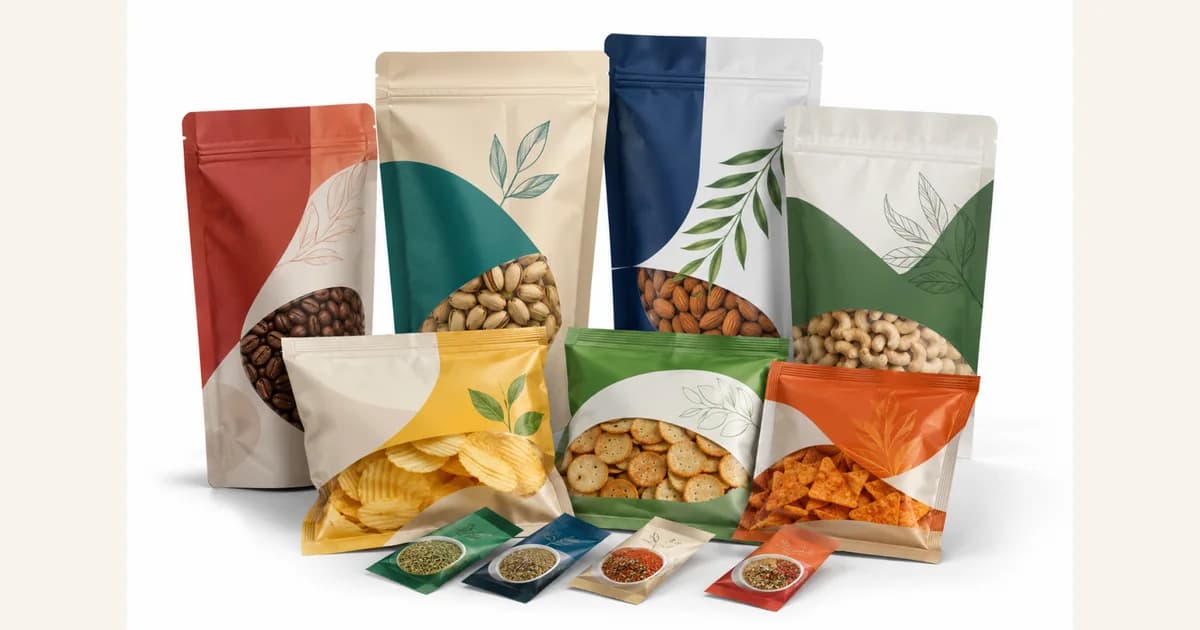
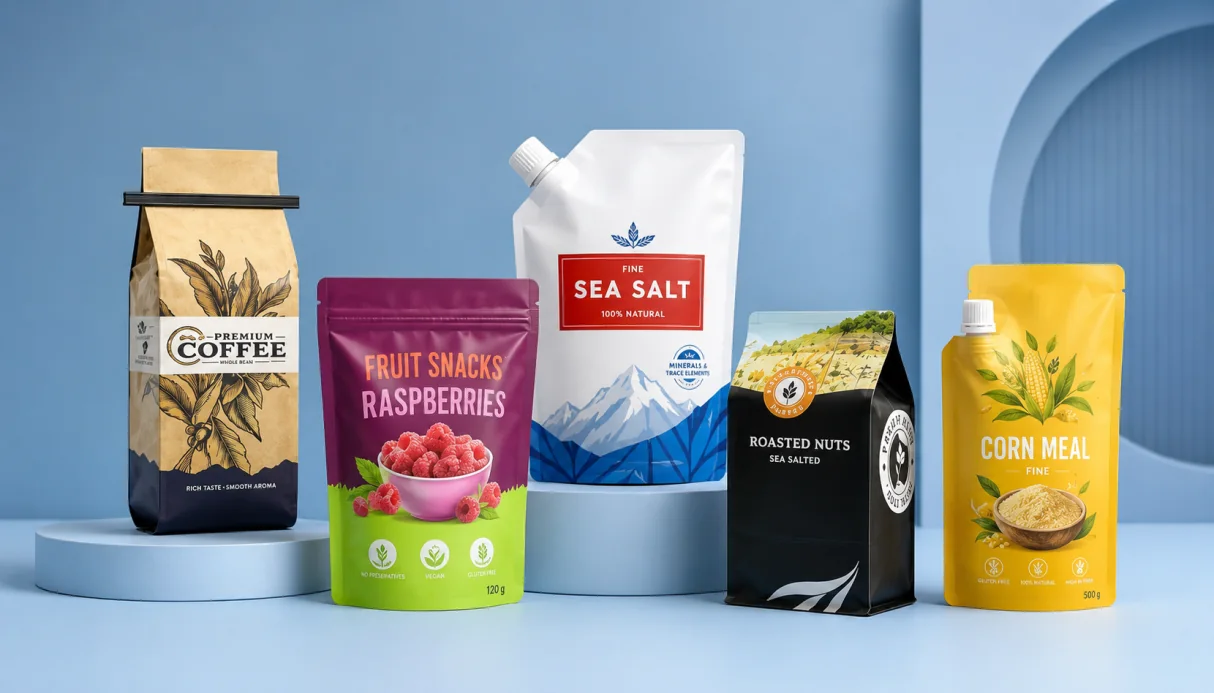
Flexible packaging is widely used for snacks, coffee, tea, nuts, frozen food, prepared foods, seasonings, and many other food categories.
Its popularity is not based on price alone. Compared with glass, metal, and many rigid formats, a well-designed flexible package can offer practical advantages in protection, shipping, customization, product fit, and consumer convenience. The correct result still depends on selecting a structure that suits the actual product and process.
1. Barrier options tailored to the food
Food can be affected by oxygen, moisture, light, grease, and aroma transfer during storage. By combining suitable materials, flexible packaging can provide the level of protection required for the product and target shelf life.
The barrier should be specified rather than assumed. A dry snack, roasted coffee, frozen product, and sauce can require very different structures even when the outer bag shape looks similar.
2. Lower packaging weight for shipping and storage
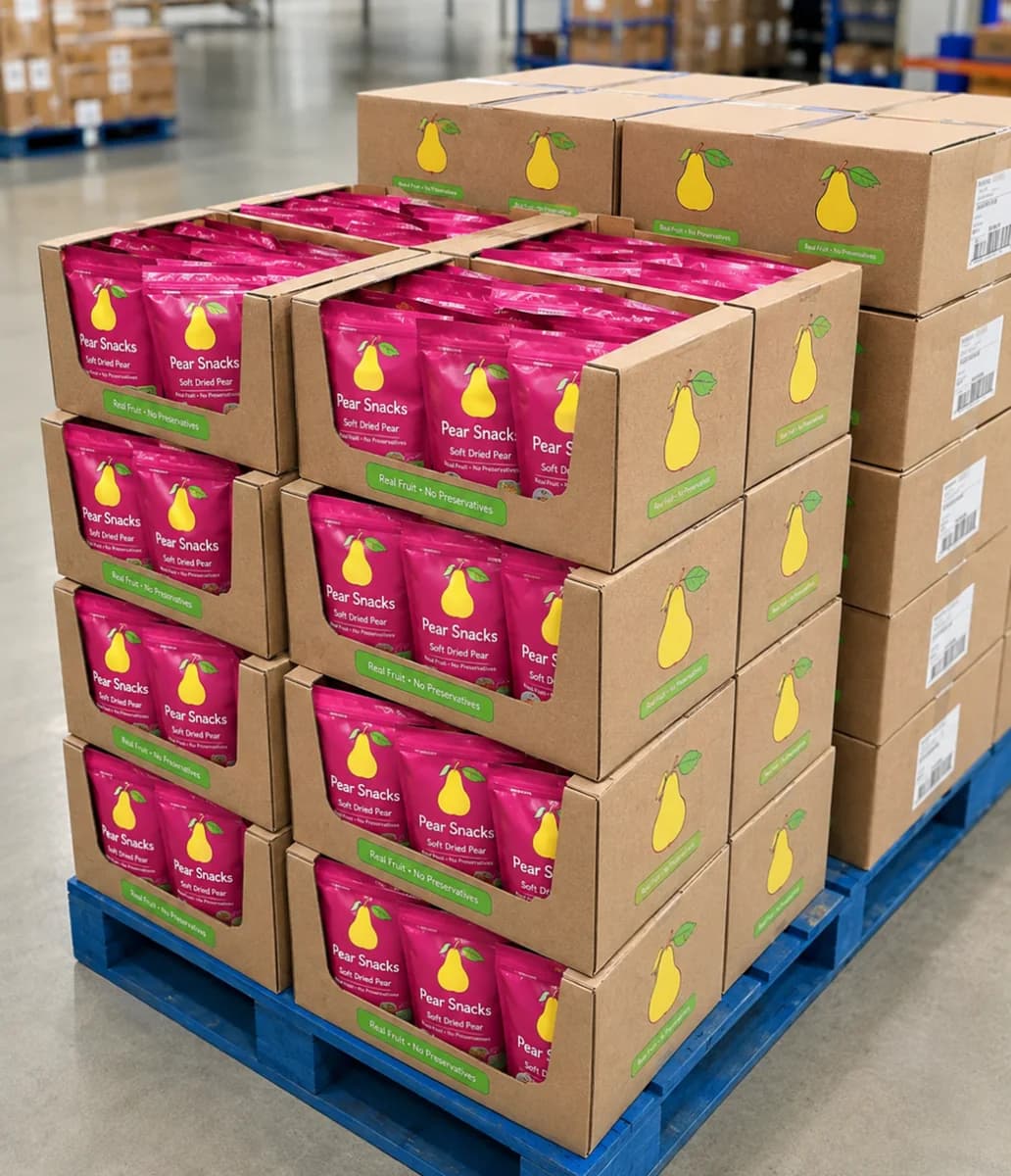
Flexible packaging is generally lighter and easier to store than rigid formats such as glass jars and metal cans. Empty packaging can also take up less warehouse space before filling.
For companies shipping large quantities or distributing over long distances, lower packaging weight and more efficient pack-out can reduce the space and weight contributed by the package itself. Filled-product tests and carton trials remain important before final approval.
3. Flexible formats and custom brand presentation
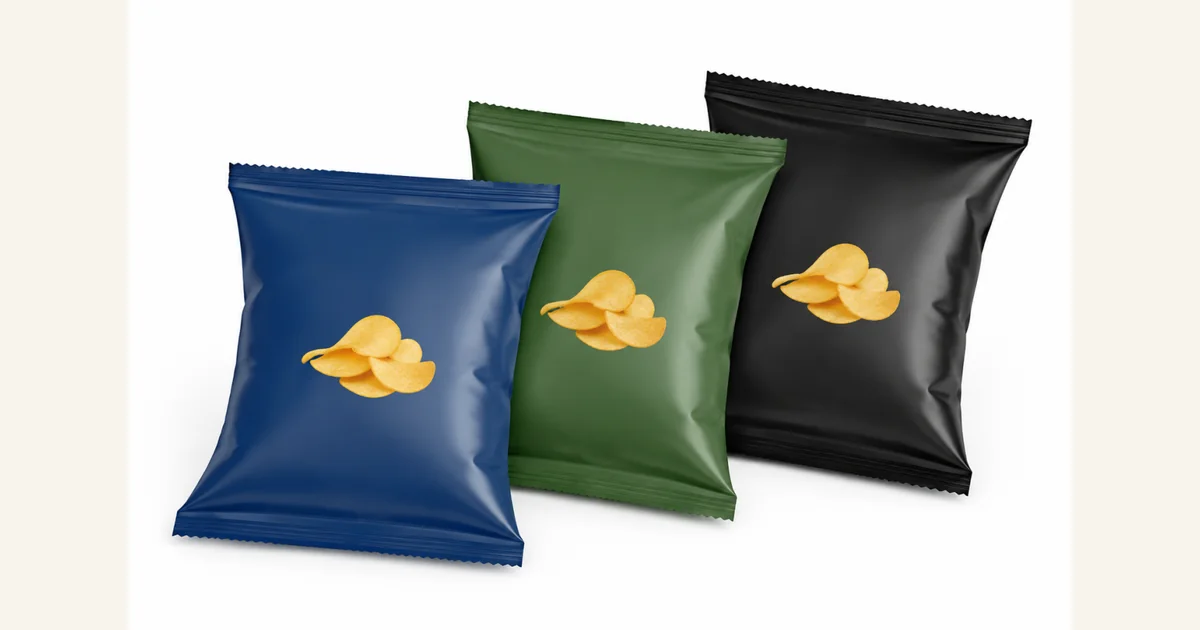
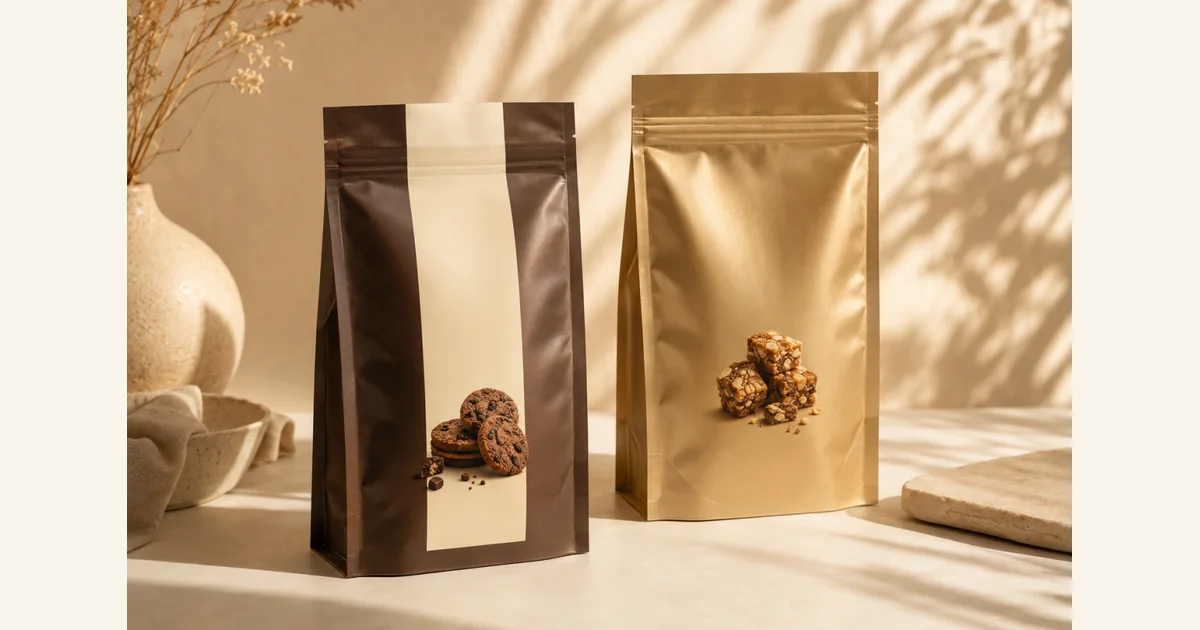
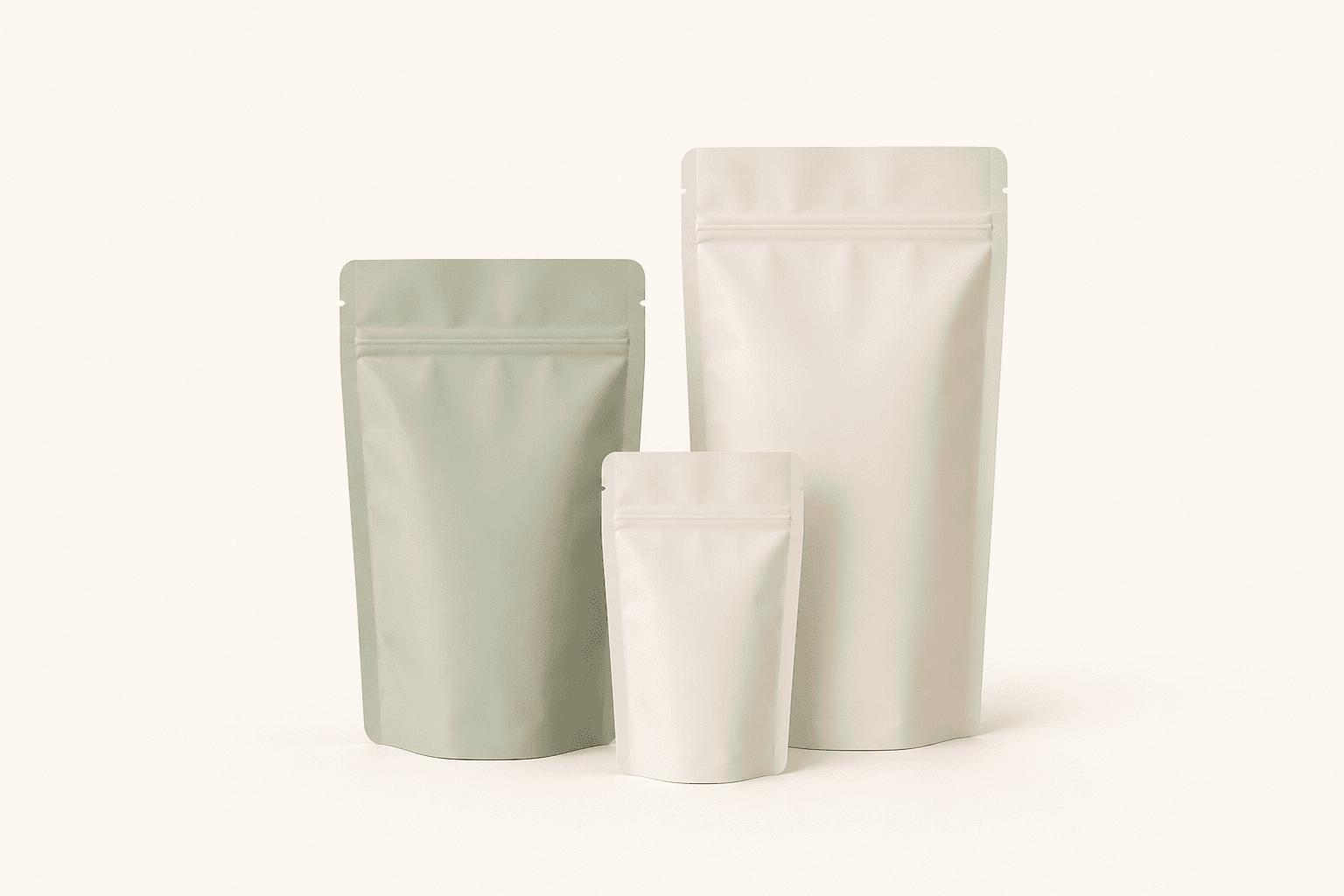
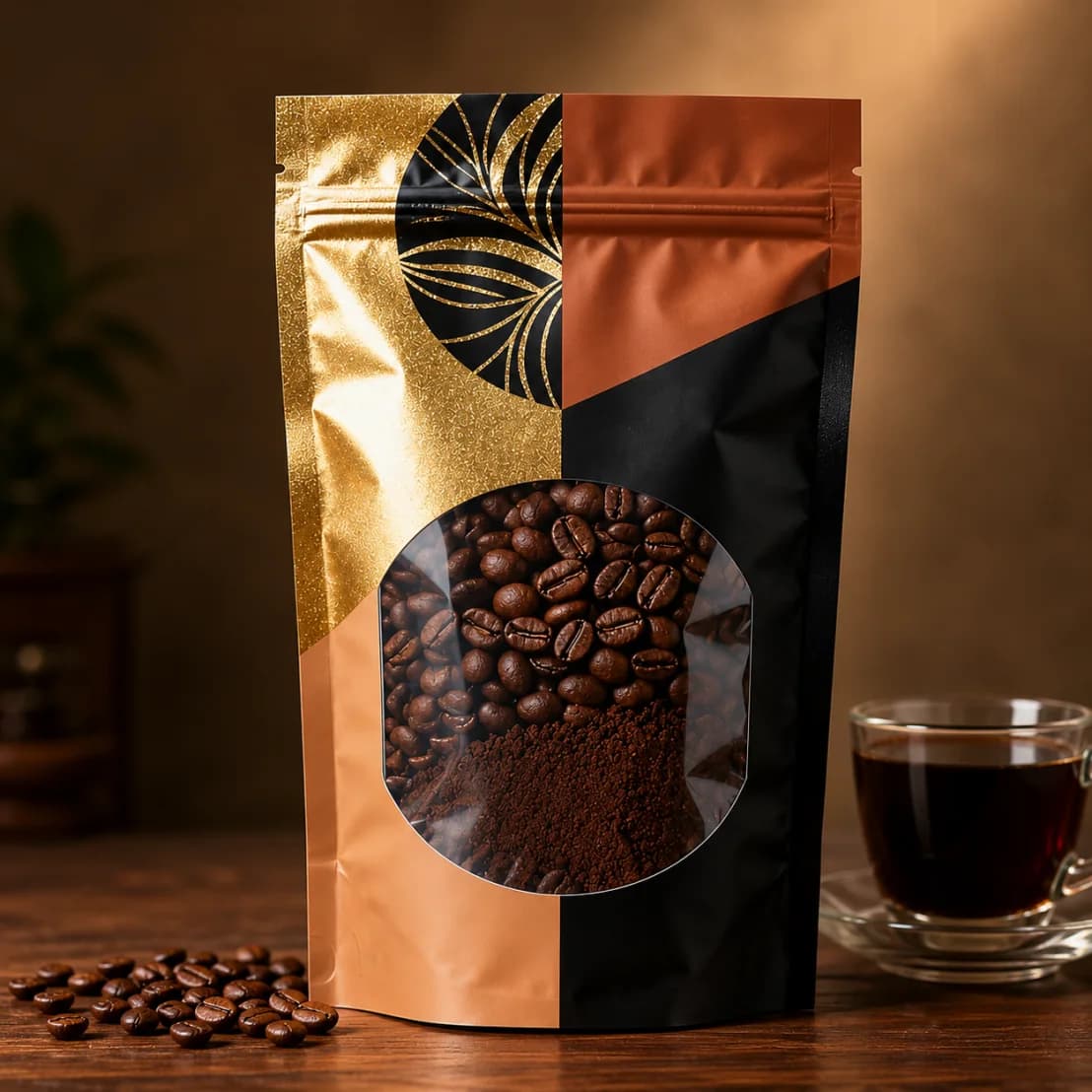
Food packaging can be produced in formats such as stand-up pouches, flat-bottom pouches, three-side-seal pouches, back-seal pouches, and spout pouches. Size, artwork, printing, surface finish, and functional features can be developed around the product and filling process.
This flexibility allows a brand to build a more consistent presentation without forcing every product into the same package structure.
4. Structures for different food applications
Flexible packaging is not one fixed solution. PA-based structures may be considered where toughness and low-temperature performance are important. Aluminum foil may be considered when strong light and oxygen protection is needed. PE commonly serves as a sealing layer, while validated retort-grade materials are required for suitable heat-processing applications.
The final structure should be confirmed for the food, filling conditions, storage temperature, distribution method, and intended shelf life.
5. Convenient opening, carrying, and storage
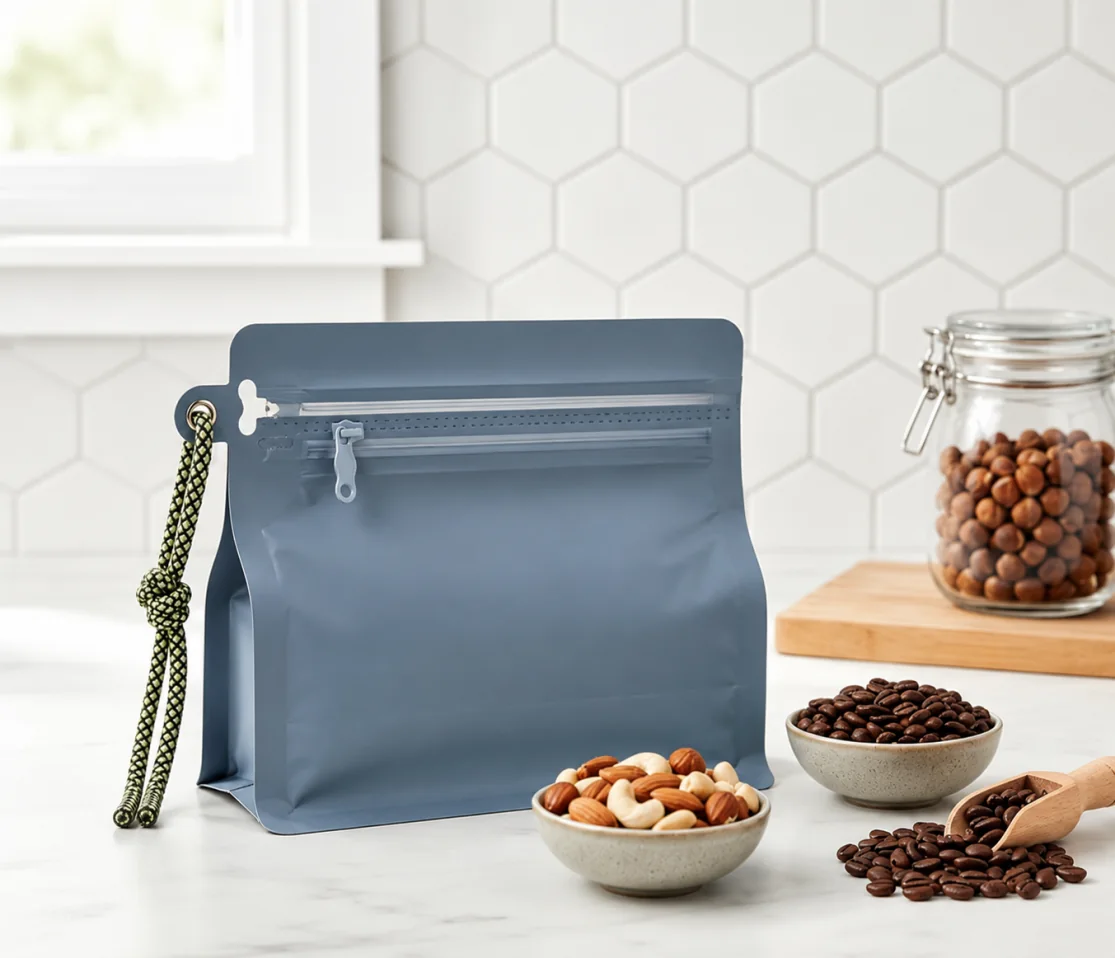
Features such as resealable zippers, tear notches, stable bottom gussets, handles, and spouts can make a package easier to open, carry, pour, and store. The available features depend on the pouch format and intended application.
For snacks, nuts, coffee, and products used over multiple occasions, reclosure can improve everyday convenience after the package is opened.
6. Opportunities for material efficiency
The packaging industry continues to work on material reduction, lighter structures, and designs that may support more practical end-of-life pathways. Flexible packaging can use less packaging material than some rigid formats, but that does not automatically make every laminate recyclable or environmentally preferable.
Any environmental claim should be based on the confirmed material structure, available collection and recycling system, and applicable market guidance. Product protection must remain part of the decision because packaging failure and food waste also carry impacts.
How to decide whether flexible packaging is suitable
Not every food should use the same package. Share the product type, package format, size, fill weight, shelf-life target, storage conditions, filling method, and distribution requirements before asking a supplier to recommend a structure.
- Define product sensitivity to moisture, oxygen, light, grease, and puncture
- Confirm filling, sealing, storage, and transport conditions
- Evaluate useful features without adding unnecessary complexity
- Test representative samples with the actual product before production approval
Conclusion
Flexible packaging can offer a useful combination of product protection, lower package weight, format flexibility, brand customization, and consumer convenience. The best result comes from matching the structure and features to the real product rather than choosing a package by appearance alone.