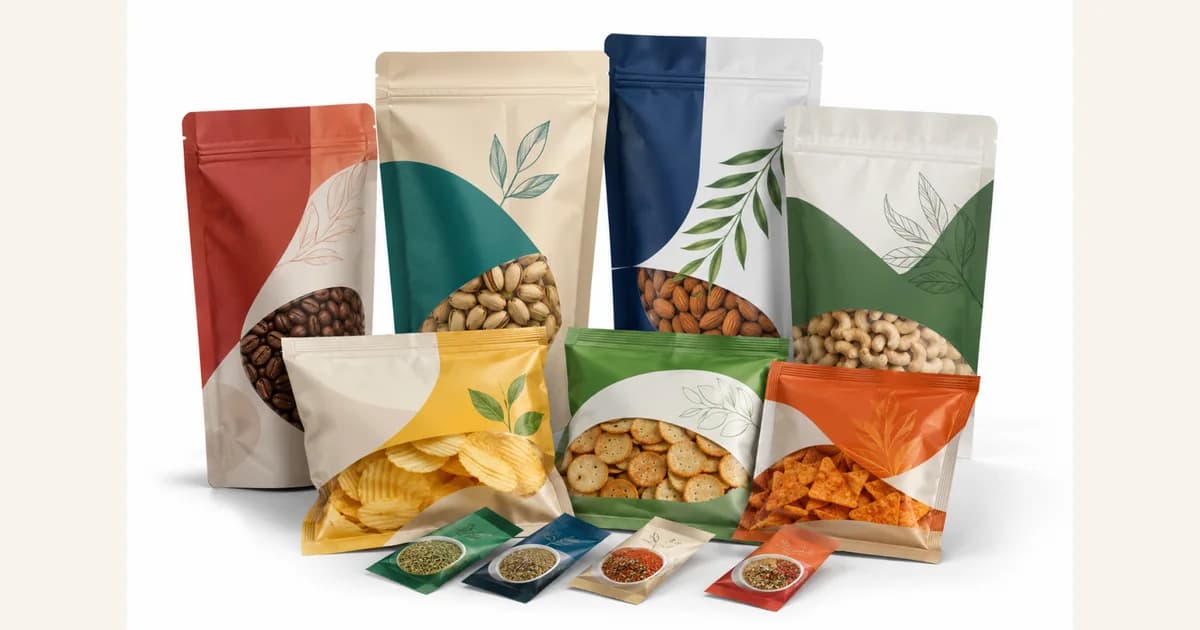
Many flexible food packaging bags are made by laminating two, three, or more film layers together.
A single material often cannot meet every requirement for protection, strength, print quality, and sealing. Different films perform different jobs, so combining them can create a more suitable package.
Why not use a single film?
One film may provide an attractive printable surface but lack dependable heat sealing. Another may seal well but provide limited stiffness or barrier performance.
A multilayer structure allows each material to focus on a defined function while the finished package performs as one system.
What is the role of each layer?
Multilayer food packaging typically uses layers selected for printing and strength, barrier or toughness where required, and heat sealing.
Outer layer
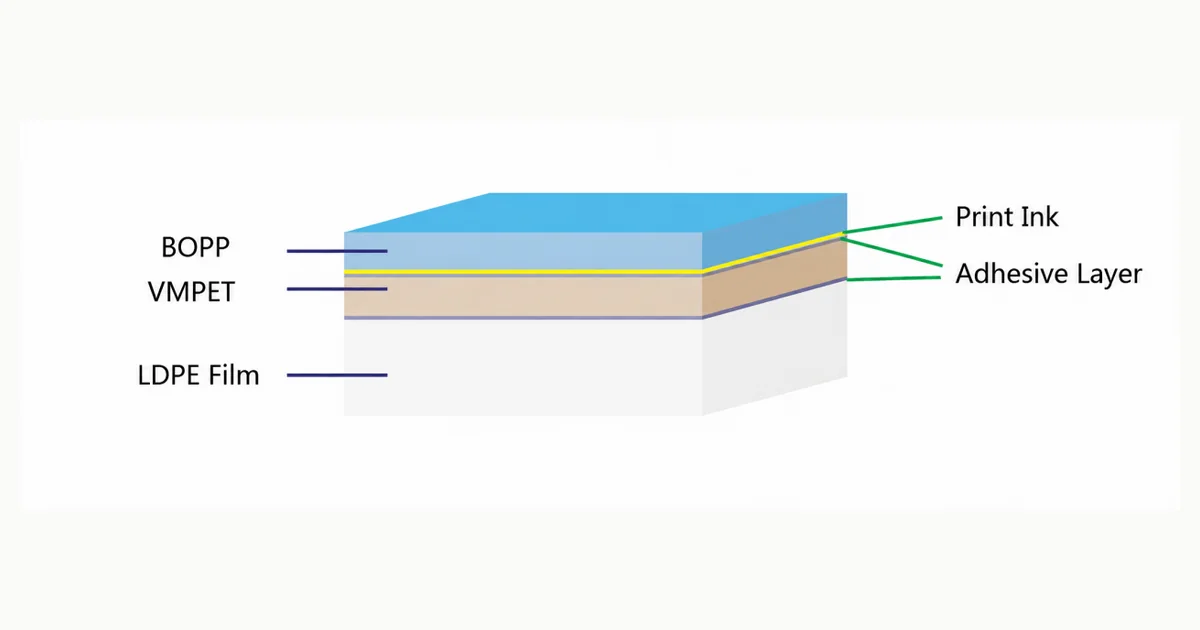
The outer layer is commonly PET or BOPP. It supports print quality, mechanical strength, appearance, and dimensional stability. This is usually the first layer consumers see.
Barrier layer
Foods sensitive to oxygen, moisture, or light may require a barrier layer such as VMPET or aluminum foil. BOPA may also be used when greater toughness and puncture resistance are required.
Not every package needs a separate barrier layer. The decision depends on the product and the complete packaging requirements.
Inner layer
The inner layer is commonly PE or another heat-sealable material. Its main purpose is to form a strong, reliable seal. Poor sealing can compromise the performance of the entire package.
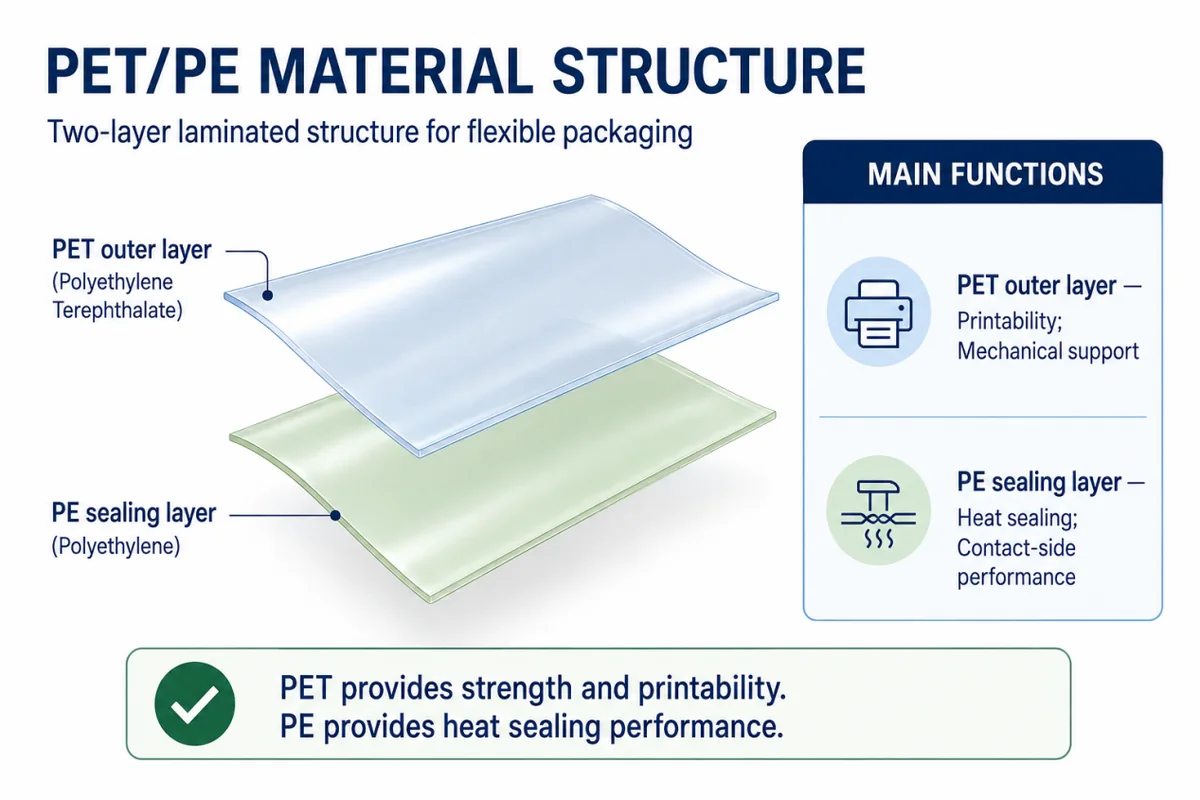
Example: PET/PE
PET/PE is a common two-layer structure. PET supports strength and printability, while PE provides heat sealing and moisture resistance.
Together, the two films form a practical structure for many dry food products.
Example: PET/VMPET/PE
For products requiring stronger barrier performance, PET/VMPET/PE may be considered. PET supports printing and strength, VMPET contributes barrier and light protection, and PE provides heat sealing.
Each layer has a specific role, yet together they form a complete packaging structure.
Why not always use more layers?
More layers do not automatically mean better packaging. Additional layers may increase material cost, thickness, production complexity, and manufacturing requirements.
If a product needs only basic moisture protection, a high-barrier multilayer structure may be unnecessary. The goal is to select the appropriate structure rather than the most complex one.
Different foods require different structures
The number of layers and the film combination should therefore be selected around the actual product.
- Snacks may require moisture and oxygen barrier performance.
- Coffee generally needs stronger protection against oxygen, moisture, and light.
- Frozen foods may require flexibility and puncture resistance.
- Powdered foods generally need moisture resistance and reliable sealing.
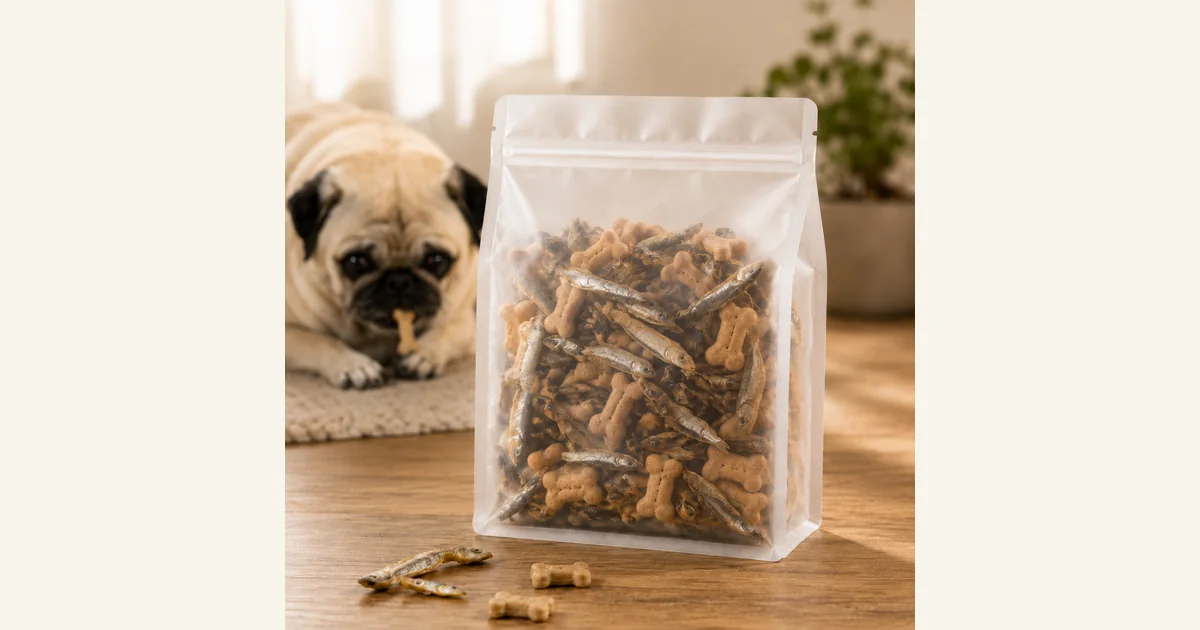
- Pet food packaging may require greater mechanical strength, particularly in larger formats.
Conclusion
Multilayer structures are used because different films serve distinct functions. One layer may support printing and strength, another may provide barrier protection, and another enables heat sealing.
The best structure is not necessarily the one with the most layers. It is the one that provides the appropriate balance of protection, strength, appearance, sealing performance, and cost for the food product.