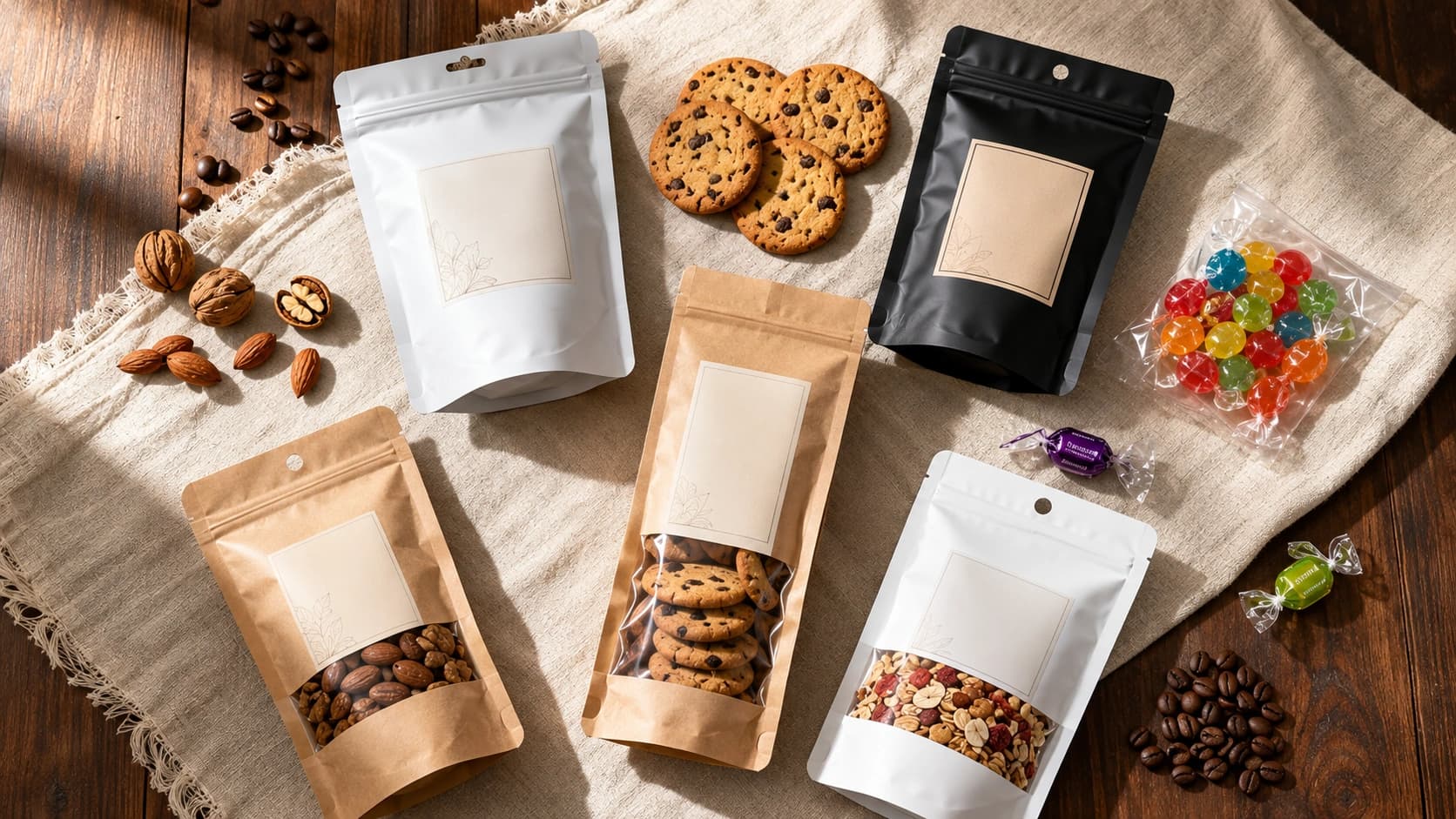
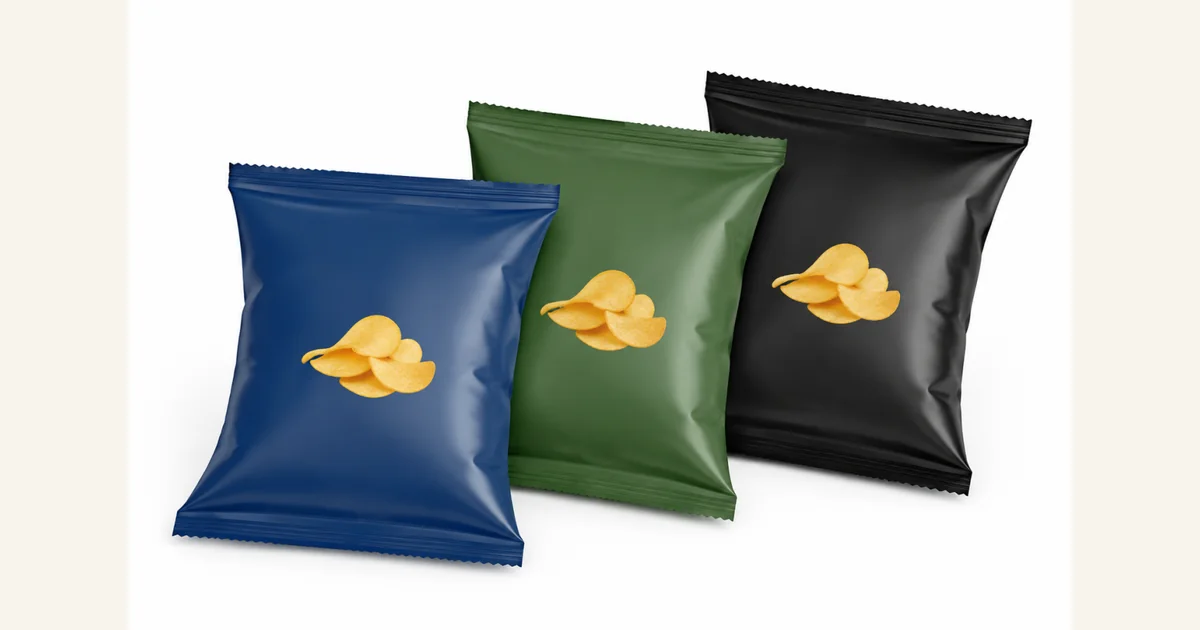
Different food products have distinct packaging requirements. Some require protection against moisture, while others are more sensitive to oxygen, light, or temperature.
Selecting an appropriate packaging material helps maintain food quality, support the intended shelf life, and improve packaging performance. The product itself should always be the starting point.
Why food type matters
Different foods possess different characteristics. Potato chips require effective moisture and oxygen barriers to help maintain crispness; coffee needs protection against oxygen, moisture, and light; and frozen foods need packaging with suitable flexibility and puncture resistance.
Consequently, no single packaging material is perfectly suited to every food product.
Common food packaging materials
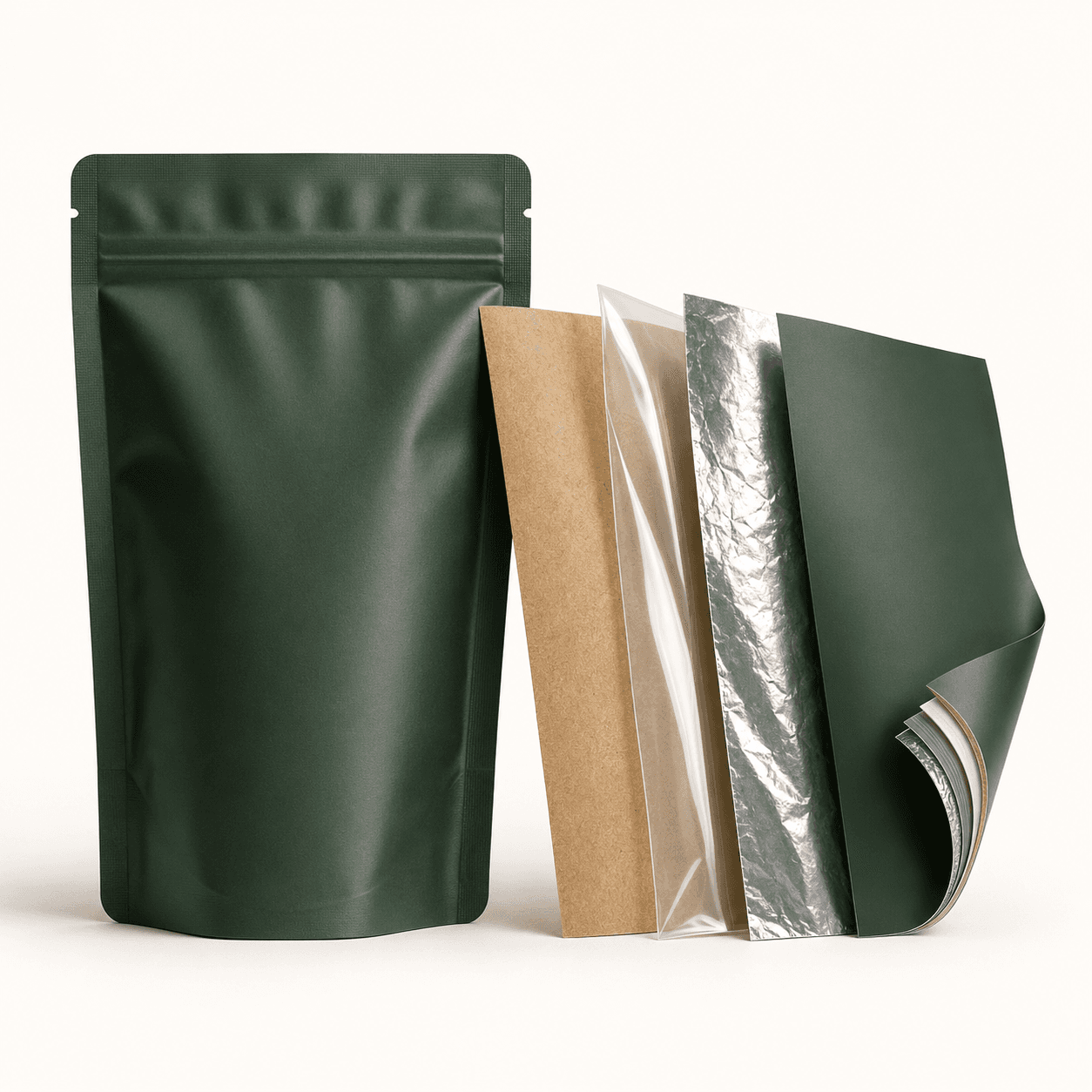
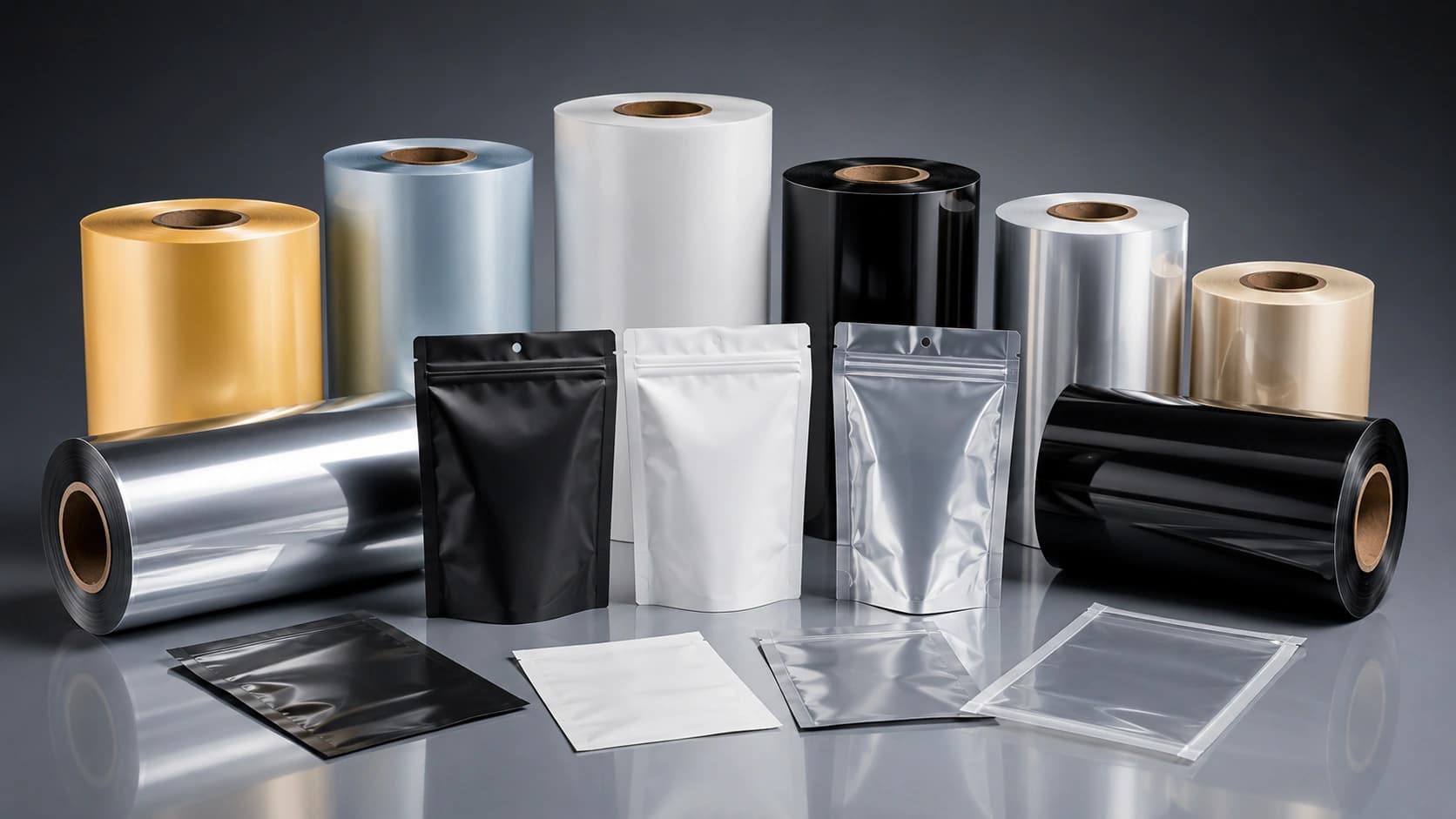
A variety of films are used in flexible food packaging. Each material contributes a different combination of printability, strength, sealing, toughness, or barrier performance.
- PET offers strength, printability, and dimensional stability and is often used as an outer layer.
- BOPP offers transparency, stiffness, moisture resistance, and printability and is commonly considered for snacks and biscuits.
- PE is widely used as an inner heat-sealing layer because of its sealing performance and flexibility.
- BOPA provides toughness and puncture resistance for frozen foods and products that place greater mechanical demands on the package.
- VMPET can improve light and oxygen barrier performance as part of an appropriate laminate.
- Aluminum foil provides a strong barrier against oxygen, moisture, and light when the complete structure is suitable for the application.
Packaging materials for specific foods
The examples below show how product characteristics influence material selection. They are starting points rather than universal specifications; the finished structure should be confirmed for the actual product and process.
Snacks and potato chips
Snacks are typically sensitive to moisture and oxygen. Common structures include BOPP/PE, PET/PE, and BOPP/VMPET/PE. A metallized film layer may be considered when the product requires stronger barrier performance.
Coffee
Exposure to oxygen, moisture, or light can cause coffee to lose aroma and quality. Structures such as PET/VMPET/PE or PET/AL/PE may be considered when higher barrier performance is required.
Rice, grains, and flour
These products primarily require moisture resistance and sufficient packaging strength. PET/PE and BOPP/PE are common choices for many dry foods.
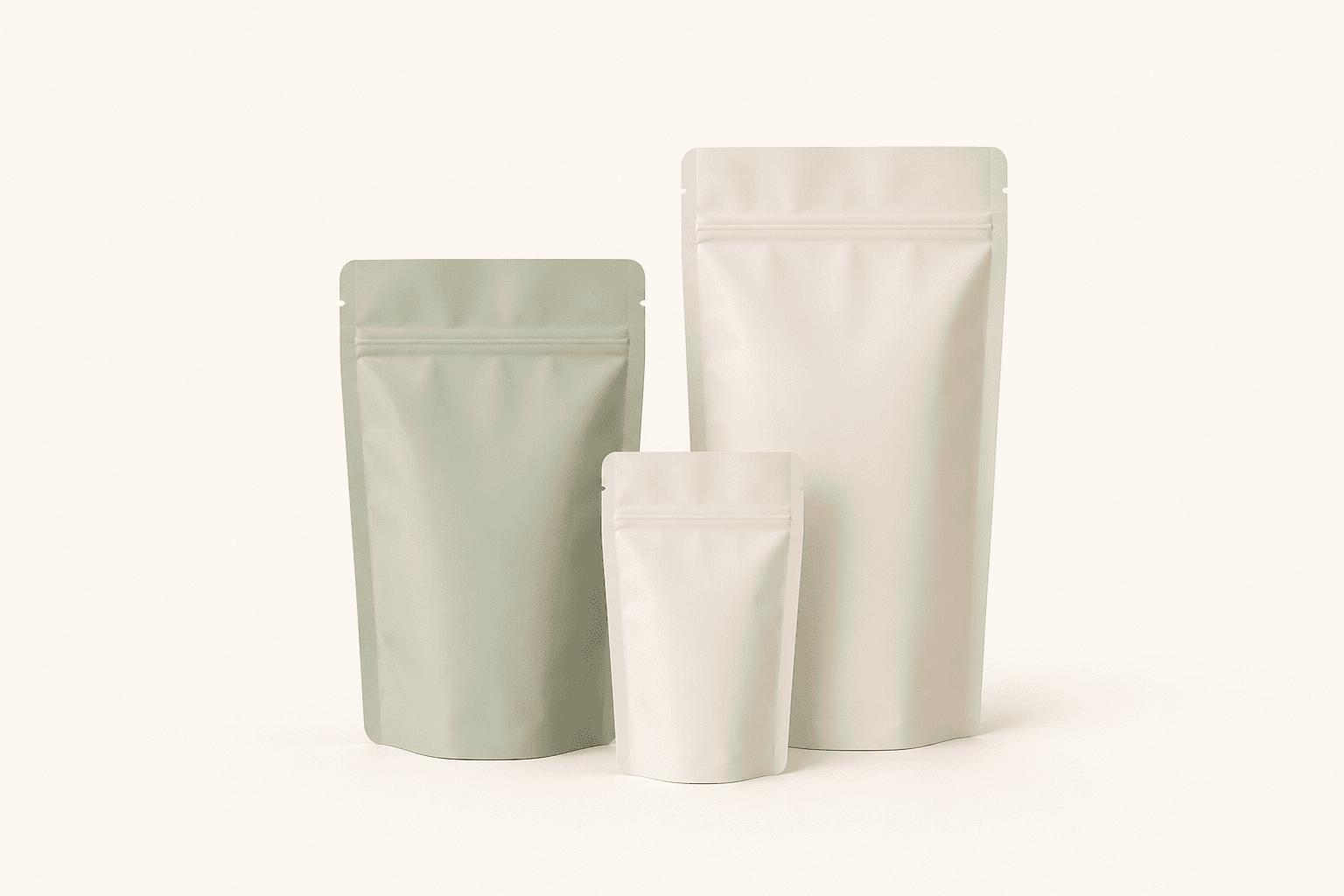
Large-format bags may require materials with greater mechanical strength to withstand product weight and transportation stresses.
Frozen foods
Frozen-food packaging requires suitable flexibility, sealing integrity, and puncture resistance. For applications demanding greater toughness, structures such as BOPA/PE and PET/BOPA/PE are often considered.
Powdered foods
Milk powder, seasoning powders, and other powdered foods can be sensitive to moisture. Appropriate moisture resistance and reliable sealing are therefore particularly important.
How to choose the right structure
Before selecting packaging materials, review the full product, packing, storage, and distribution conditions.
- Food type and product form
- Sensitivity to moisture, oxygen, and light
- Required shelf life
- Package size and fill weight
- Filling and sealing processes
- Transportation and storage conditions
- Target cost and order requirements
Conclusion
The optimal structure is not necessarily the one with the most layers or the highest barrier. An effective solution balances product protection, strength, sealing integrity, appearance, practicality, and cost.
By understanding the food characteristics, shelf-life target, packaging process, and transportation conditions, buyers can identify a more suitable packaging structure.