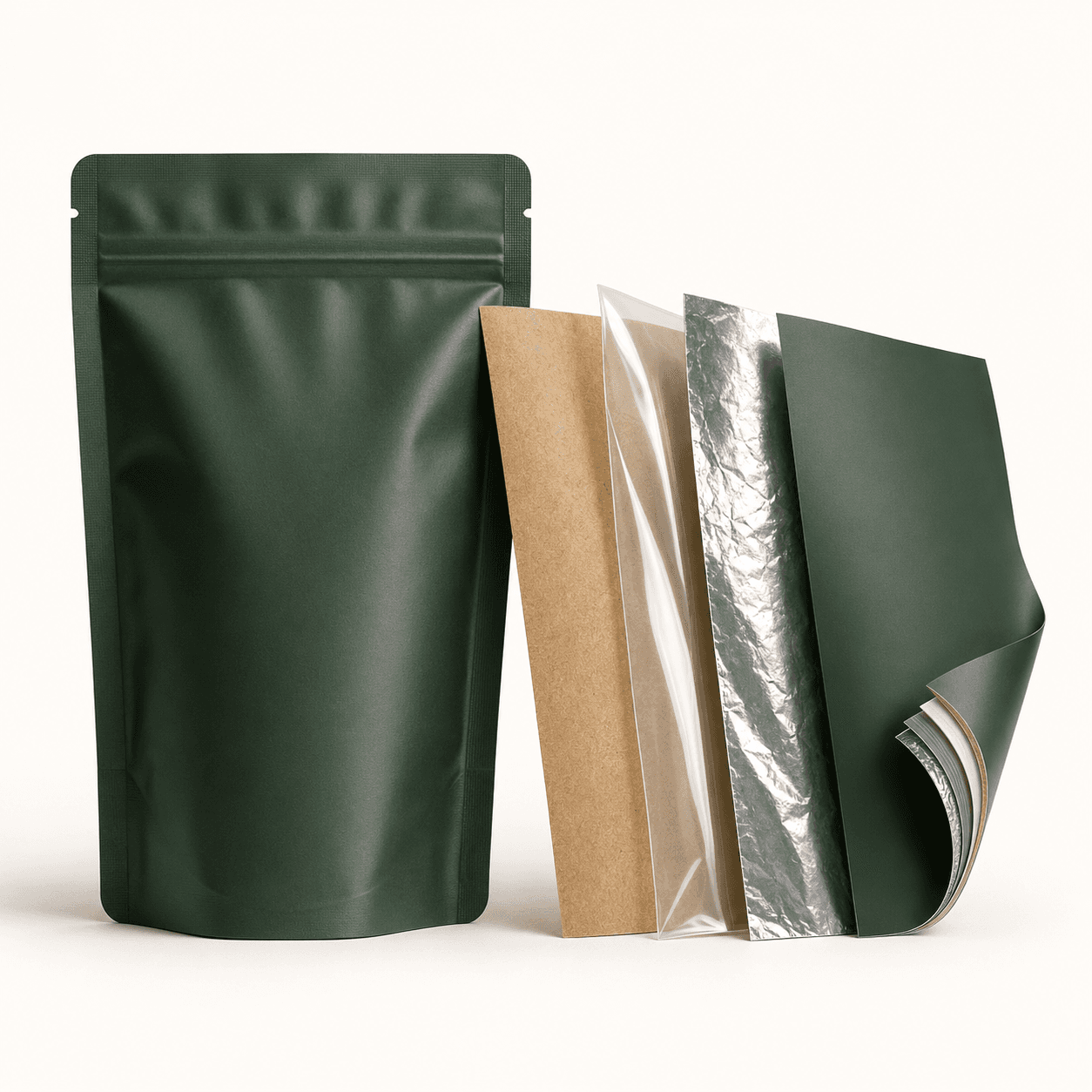
The best flexible packaging material is not the thickest film or the structure with the most layers. It is the lightest practical structure that protects the product, seals reliably on the intended equipment and supports the required shelf life.
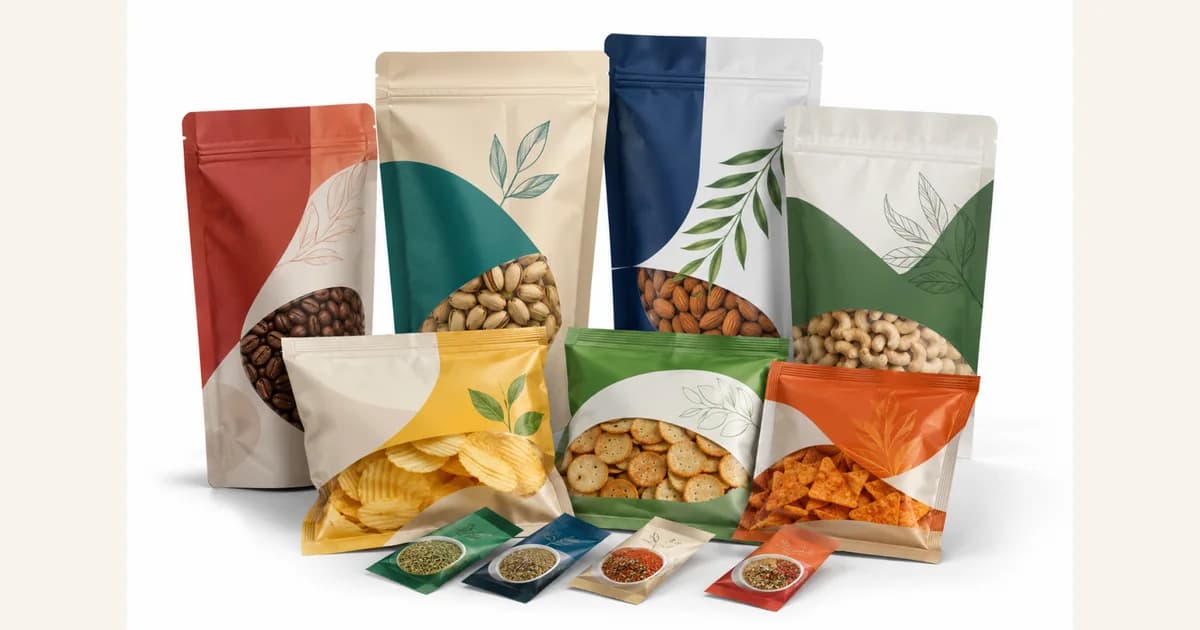
Material selection should begin with the food, filling process, distribution route and customer-use conditions—not a pouch photograph.
Start with the product, not the film
List the factors that can reduce product quality: moisture gain or loss, oxidation, light exposure, aroma loss, grease contact, acidity and sharp edges. Then define shelf life, storage temperature, humidity and distribution conditions.
A nine-month target is incomplete without environmental conditions and product acceptance criteria. A pouch may remain sealed while a snack loses crispness or coffee loses aroma.
- Product composition and sensitivity
- Fill weight and density
- Filling and sealing method
- Storage and export conditions
- Target-market requirements
Understand the job of each layer
A common laminate combines an outer printable layer, a functional barrier layer where required and an inner food-contact heat-seal layer. Each layer should have a defined purpose.
Outer layer: printing and protection
The outer layer supports printing, scuff resistance, stiffness and heat resistance during sealing. Review physical samples for color, finish, rub resistance and barcode readability.
Barrier layer: oxygen, moisture, light and aroma
Barrier can come from metallization, aluminum foil, coatings, EVOH or other technologies. OTR and WVTR results are comparable only when the method, temperature, humidity and construction are stated.
Finished-package performance can differ from untouched roll film because folds, flexing, seals and valves affect the complete package.
Inner layer: food contact and heat sealing
The inner layer touches the product and forms the seal. It must suit the food, sealing temperature, contamination risk and zipper or spout. Seal reliability depends on film, jaws, pressure, dwell time and cooling.
Common material directions
PET/PE is often considered where printability, toughness and straightforward sealing matter. Metallized structures can improve light, oxygen and aroma protection. Foil can suit demanding barrier applications but should not be chosen only because it sounds premium.
Polyolefin-focused structures may support a recyclability objective where barrier and sealing performance remain sufficient. Claims must reflect the complete package and the collection system in the target market.
Factory testing and shipment inspection
Agree on checks for film identity, thickness, print registration, dimensions, gussets and accessory placement. Performance checks may include seal strength, leakage, burst, drop, zipper cycling and barrier testing where values are contractual.
Before shipment, verify SKU quantities, random dimensions, appearance, carton labels, packing protection and retained samples. Method, sampling and acceptance limits should be written into the specification.
Conclusion
Flexible packaging material selection is a risk-management decision. Start with product failure modes, then define shelf life, filling, distribution, consumer use and compliance. The goal is a package that protects the product and runs consistently without unnecessary complexity.