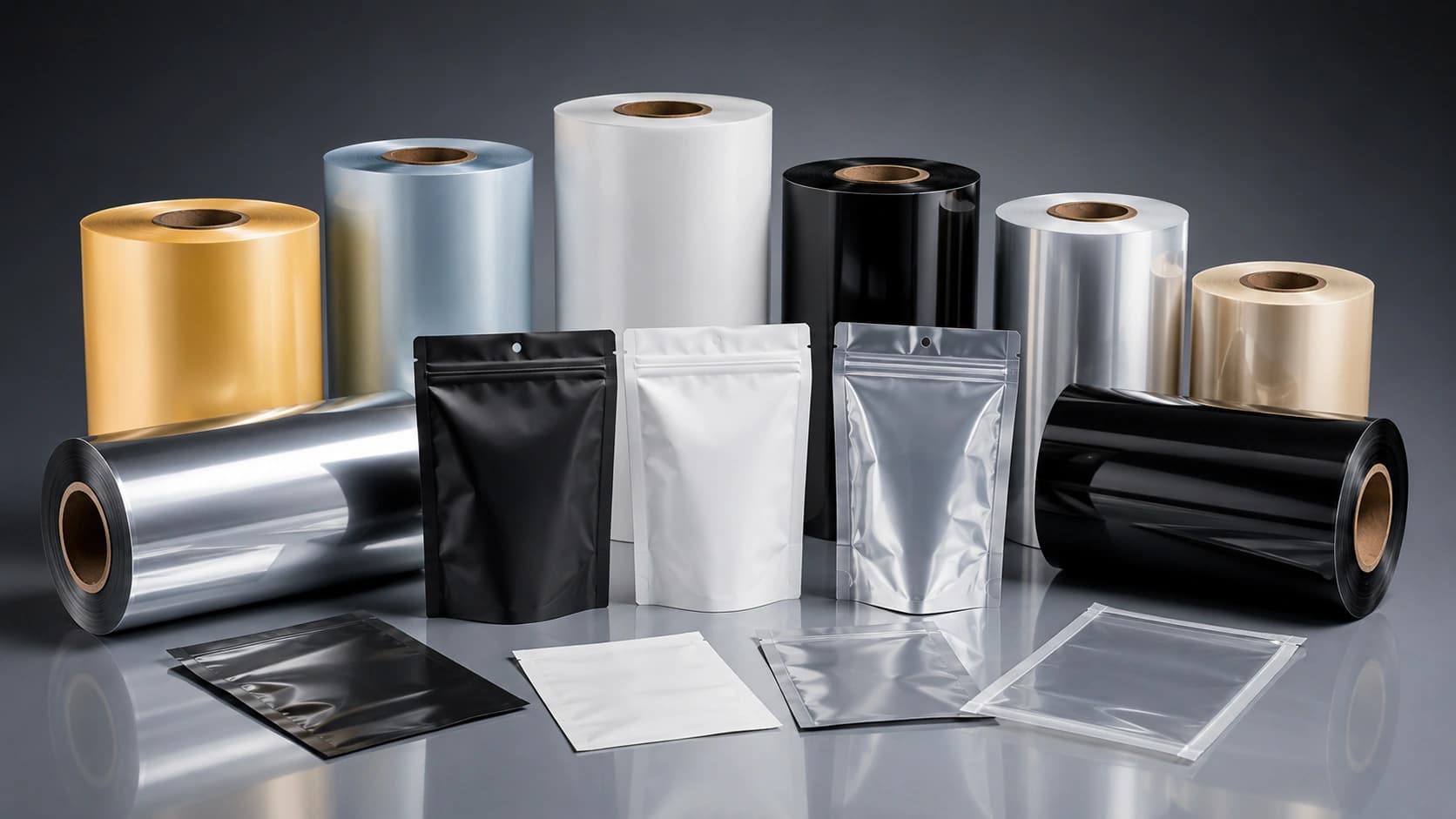
Flexible food packaging bags commonly use multilayer films in which each layer performs a specific function. Buyers may find material abbreviations such as PET, BOPP, PE, VMPET, and aluminum foil difficult to interpret in supplier quotations.
This guide explains the main materials and how outer printing, middle barrier, and inner heat-sealing layers work together.
How a multilayer packaging structure works
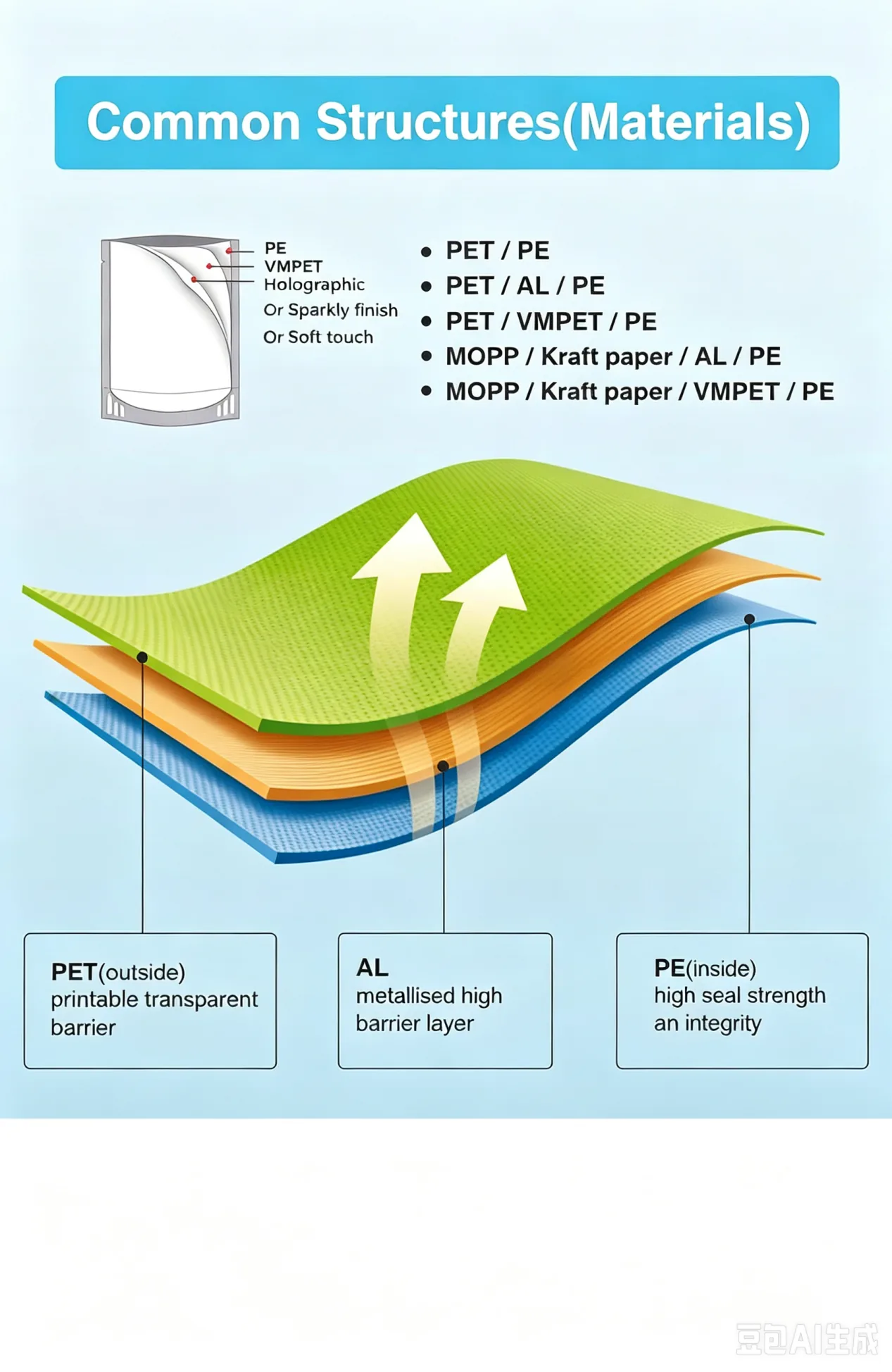
Food packaging materials generally serve three roles: an outer printing and protection layer, a middle barrier layer where required, and an inner heat-sealing layer that may contact the food.
The exact combination should be selected around the food, shelf life, filling and sealing conditions, distribution environment, and target-market requirements.
Outer printing layer: printability and protection
BOPP, or biaxially oriented polypropylene, offers good transparency and printability at a moderate cost. Because its barrier performance is limited on its own, it is commonly used as an outer layer in laminated snack and dry-food packaging.
PET, or polyester film, provides good strength, temperature resistance, stiffness, and printability. Compared with BOPP, PET generally offers greater rigidity and puncture resistance, making it another common outer-layer choice.
Middle barrier layer: oxygen, moisture, and light protection
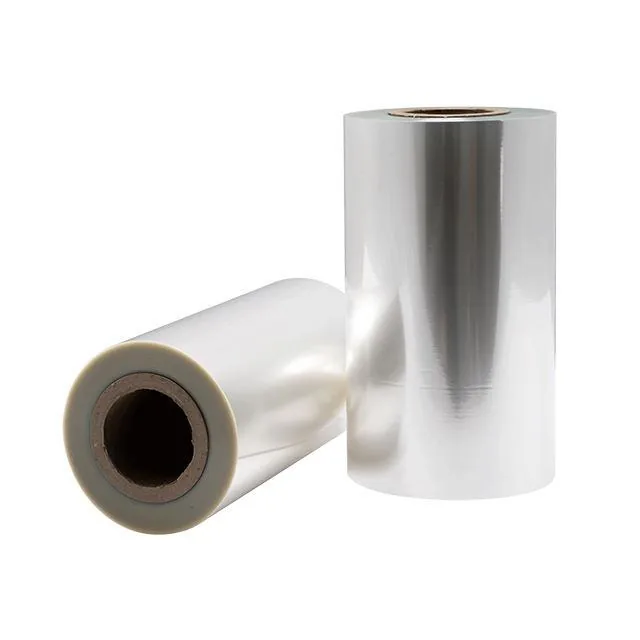
VMPET is PET film coated with a very thin aluminum layer. It can improve light, oxygen, and moisture barrier performance and is generally less expensive than aluminum foil, although the finished result depends on the complete structure.
Aluminum foil provides a very strong barrier against light, oxygen, and moisture. Repeated flexing can create pinholes that reduce performance, and foil generally costs more than VMPET.
Inner heat-sealing layer: sealing and food contact
PE, or polyethylene, is widely used as an inner heat-sealing layer because it combines flexibility with dependable heat-sealing performance.
- LDPE is soft and provides good heat-sealing properties.
- LLDPE generally provides stronger puncture resistance for applications that require additional toughness.
Other specialized functional materials
BOPA, also called nylon film, provides strong puncture and oil resistance and is commonly considered for vacuum packaging and meat products.
RCPP, or cast polypropylene for retort applications, provides high-temperature resistance for packaging intended for retort processing or sterilization. The exact processing conditions should be confirmed before selecting the structure.
Why are food packaging bags rarely made from one film layer?
A single film rarely provides high-quality printing, appropriate barrier performance, reliable heat sealing, and resistance to oil and puncture at the same time. Commercial packaging therefore often combines two or more films so that each material performs a defined job.
How to read a material structure on a quotation
A structure written as PET/PE generally means an outer PET layer laminated to an inner PE layer. The slash separates different film layers.
Do not evaluate only the outer material. For packaging that directly contacts food, the inner layer and its suitability for the intended food-contact application are equally important.