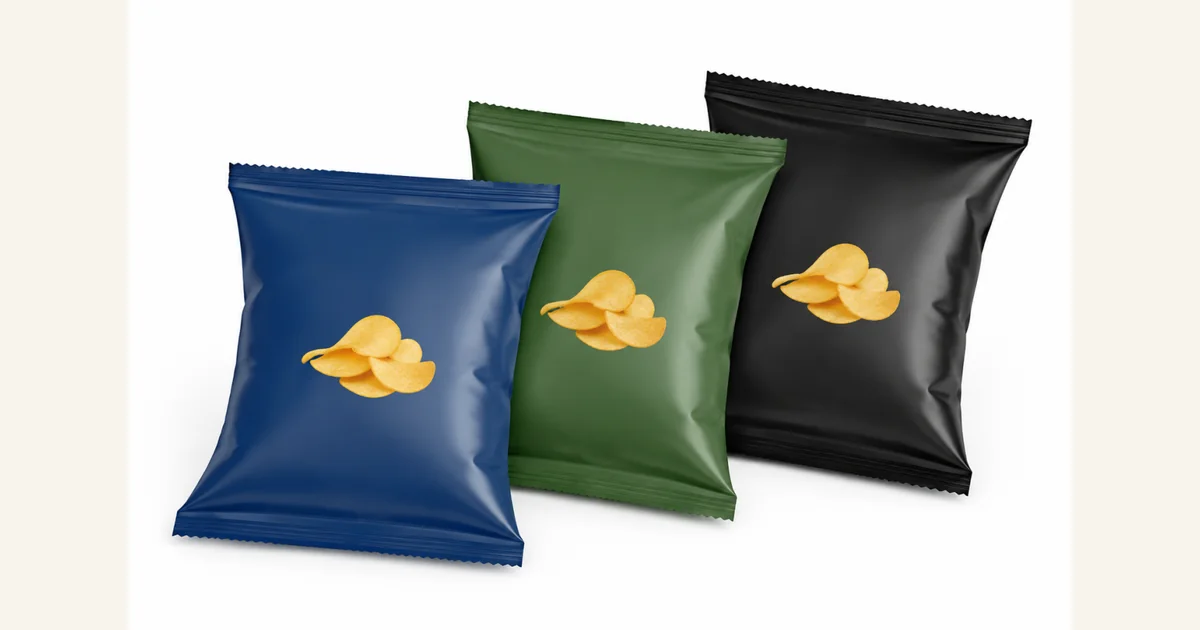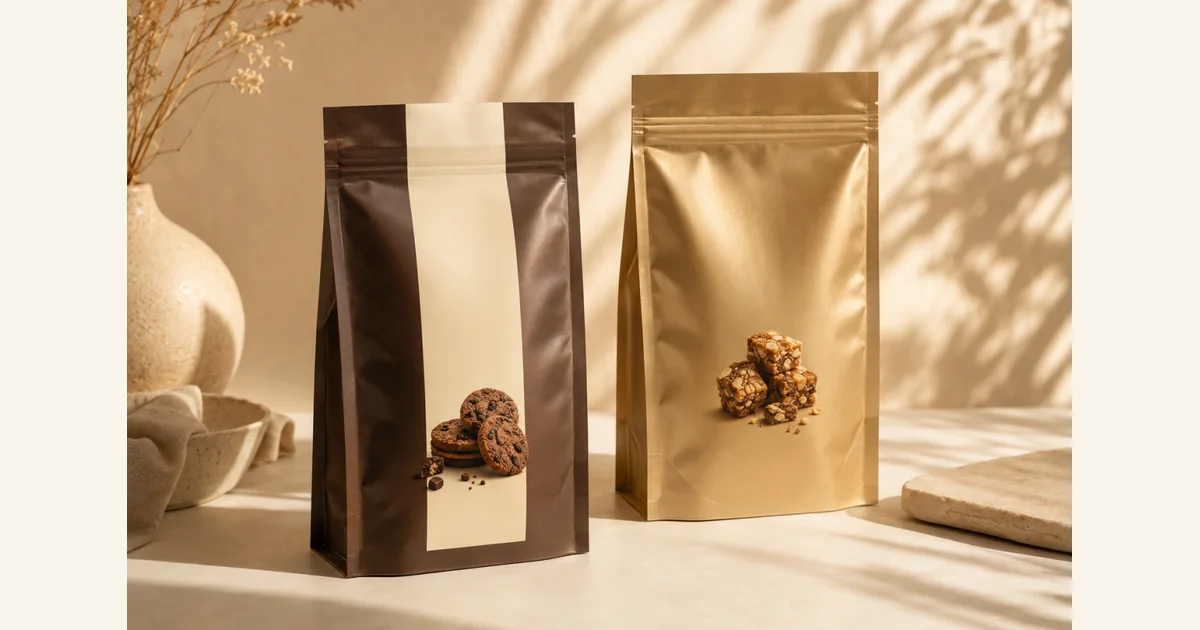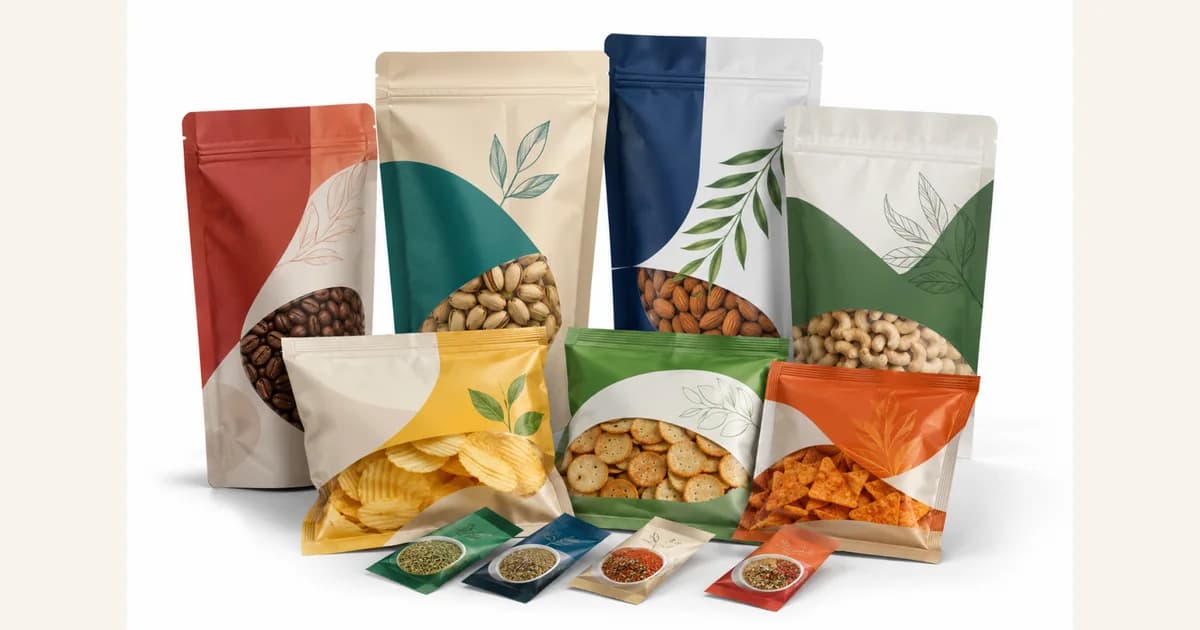
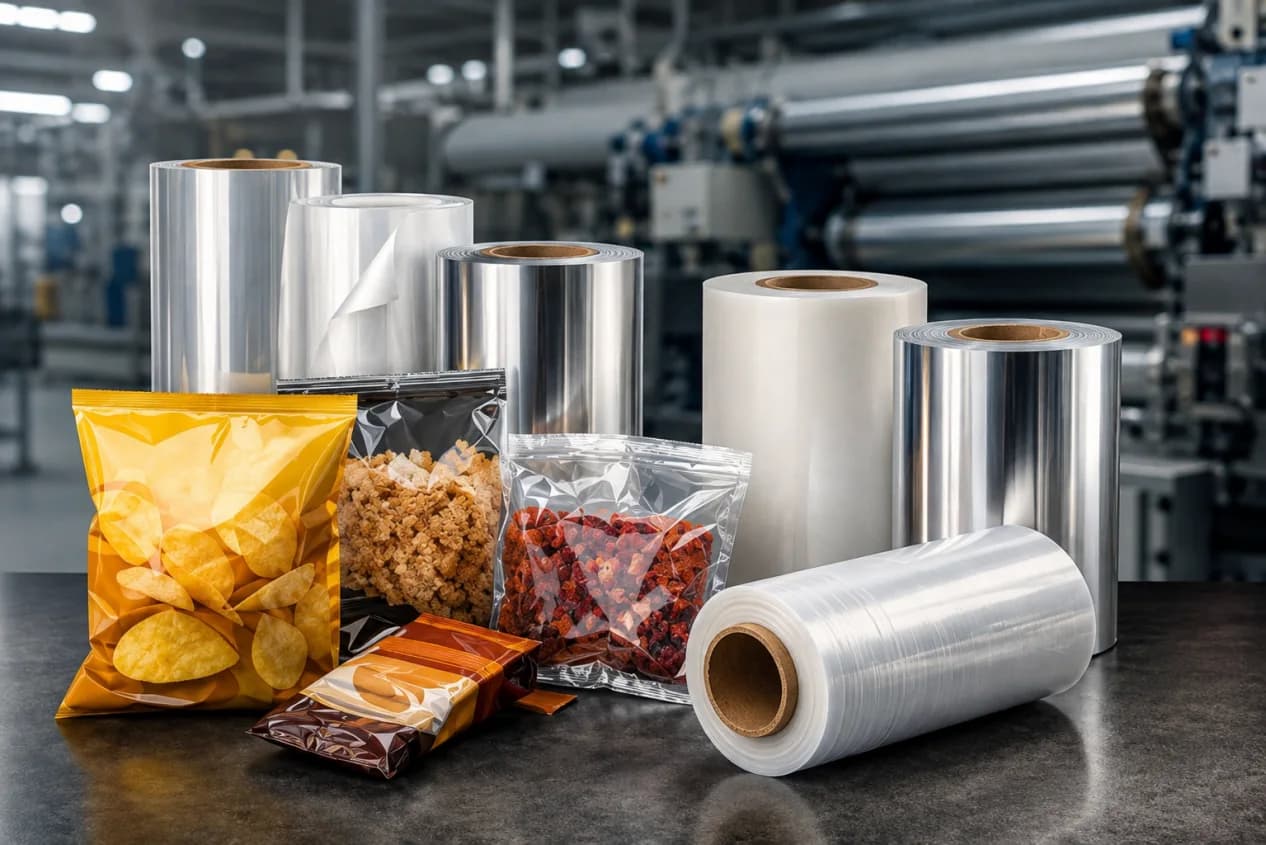
Businesses entering the food market sometimes assume that all plastic bags perform the same basic function. In practice, an ordinary carrying bag and a commercial food packaging bag are designed for very different uses.
The differences extend beyond appearance. Material selection, food-contact requirements, laminate structure, sealing performance, protective functions, printing, and target-market documentation all need to be considered when packaging food for sale.
Materials and food-contact requirements
Ordinary plastic bags serve many purposes, including shopping, carrying miscellaneous items, and packaging non-food products. They should not automatically be assumed suitable for direct food contact.
Food packaging bags require materials selected for the product, whether the inner layer contacts the food, and the regulatory requirements of the target market. Buyers should review the complete package, including relevant films, inks, adhesives, and supporting documentation, rather than judging suitability from appearance alone.
Packaging structure and protective performance
An ordinary plastic bag often uses a simple structure intended for basic carrying. A food package may use multiple laminated layers to provide functions selected for the product, such as moisture control, oxygen or aroma barrier, light protection, grease resistance, low-temperature toughness, puncture resistance, and dependable heat sealing.
For example, dry foods may prioritize moisture resistance; coffee and nuts may need stronger oxygen and aroma protection; and frozen food packaging must remain sufficiently tough under low-temperature handling. No single structure is appropriate for every product.
Printing and brand presentation
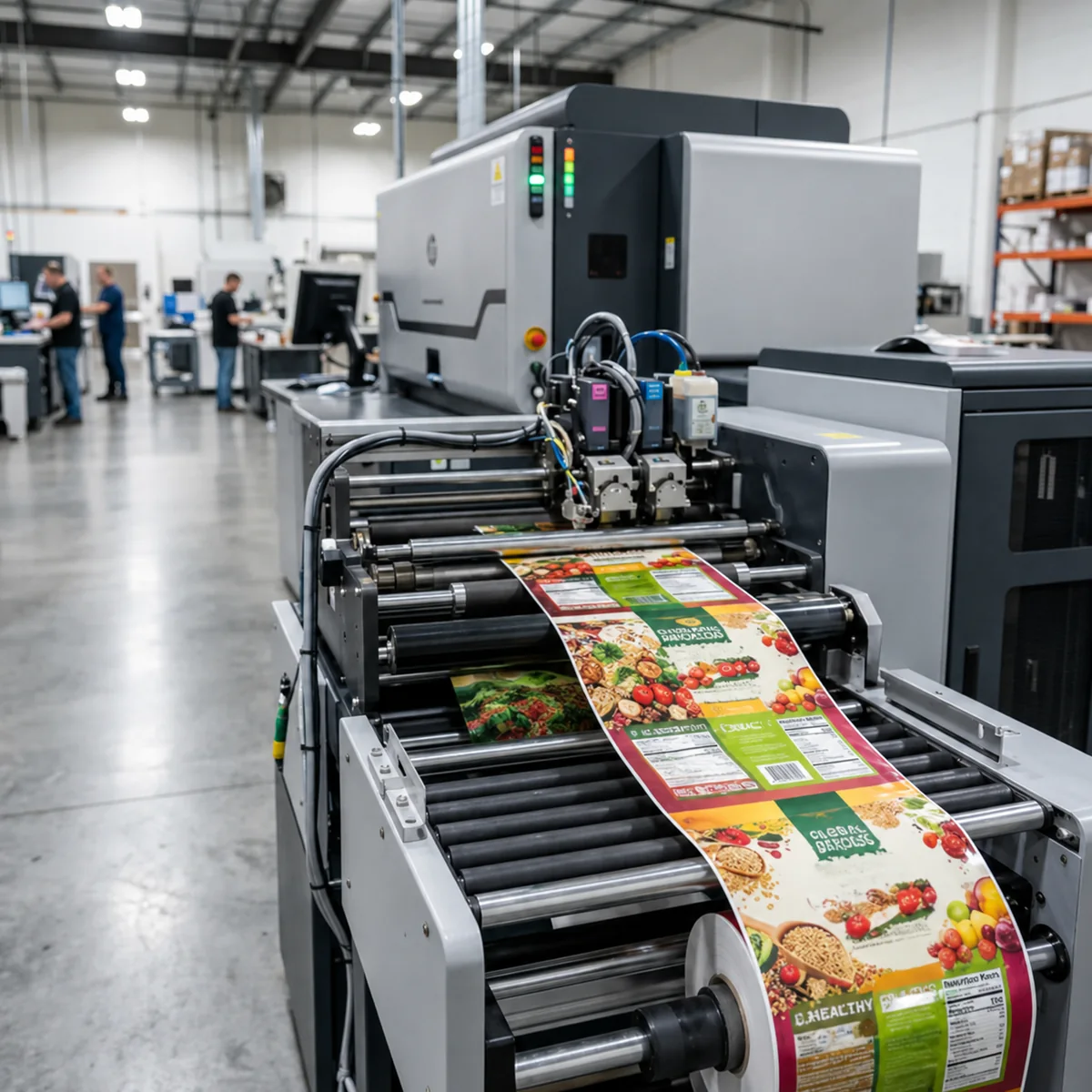
Basic carrying bags generally place limited emphasis on product communication. Commercial food packaging can be customized with approved artwork, product information, brand colors, graphics, and surface finishes.
Clear printing can help buyers communicate product details and create consistent shelf presentation. Artwork review, color expectations, print method, and final approval should be agreed before production.
Different use cases
Ordinary plastic bags are primarily designed for everyday carrying or non-food uses. Food packaging bags are selected around a specific product and its storage, transport, filling, and consumer-use conditions.
- Snacks, nuts, coffee, tea, and dried foods
- Frozen food, meat products, and selected prepared foods
- Seasonings, powders, sauces, and other product-specific applications
Questions to ask before purchasing food packaging
Price is one factor, but it should be compared only after the package requirements are defined. Before ordering, confirm the following points with the supplier.
- Is the complete structure appropriate for the food and direct-contact conditions?
- What barrier, sealing, strength, and storage performance does the product require?
- Which target-market documents or tests need to be reviewed?
- Has the bag been evaluated with the actual filling, sealing, and distribution process?
Conclusion
Food packaging bags and ordinary plastic bags are not interchangeable. Commercial food packaging should be selected around the product, food-contact requirements, barrier needs, physical performance, and intended market. Defining those requirements early helps reduce quality and compliance risks.