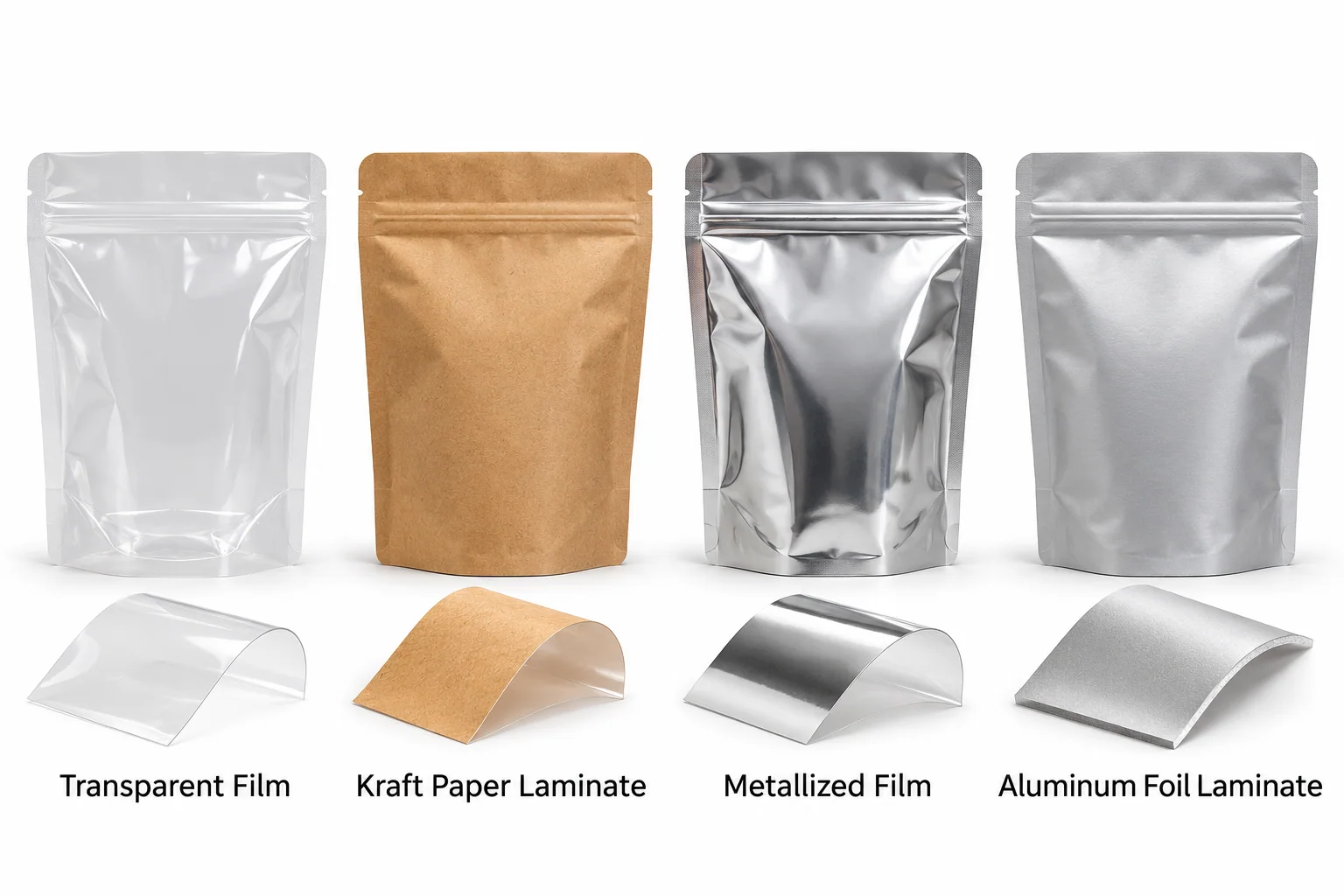
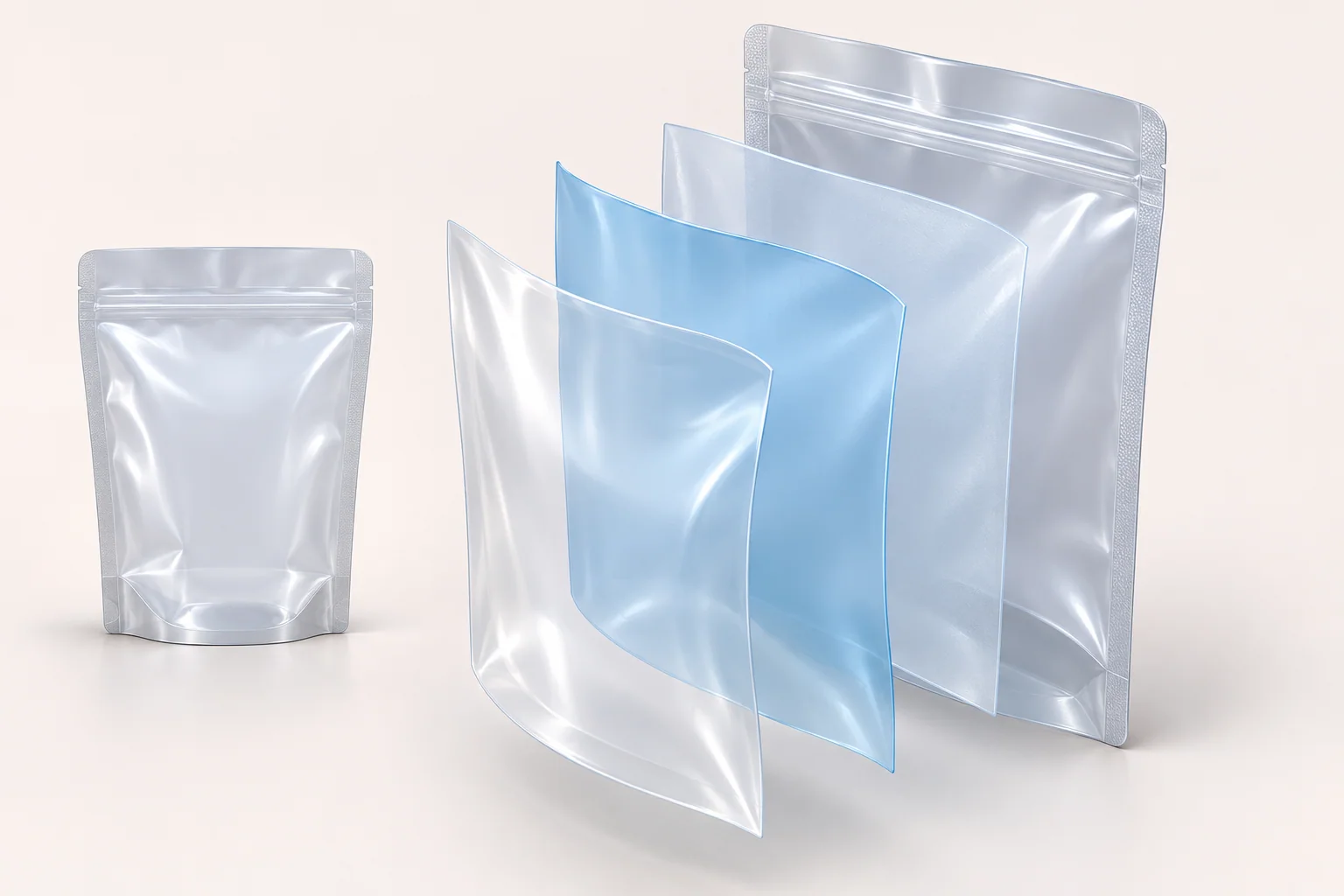
Mono-material recyclable pouches are designed so that most of the flexible package belongs to one polymer family, usually polyethylene (PE) or polypropylene (PP). They are an important route for brands seeking packaging that is more compatible with flexible-plastic recycling systems. They are also easy to misunderstand.
“Mono-material” does not necessarily mean one physical film layer. A pouch may use several PE-based layers, each performing a different function. “Designed for recycling” also does not mean the package will be collected and recycled everywhere. Actual recyclability depends on the complete package, local collection and sorting infrastructure, reprocessor acceptance, residue, size, color, attachments, and the rules behind the claim.
For a buyer, the practical question is not simply, “Can you supply a recyclable pouch?” It is: Can a PE- or PP-based structure protect this product, run on our filling line, survive distribution, meet the relevant design-for-recycling criteria, and support a claim we can substantiate in the destination market?
This guide provides a procurement framework for answering that question.
Quick Answer: What Is a Mono-Material Recyclable Pouch?
A mono-material pouch is engineered with one dominant polymer family and with inks, adhesives, coatings, closures, and other components selected to minimize interference with the intended recycling stream. Common directions include mono-PE and mono-PP structures.
A credible specification should identify:
Treat recyclability as a design and validation project, not as a material name printed on a quotation.
- the dominant polymer family and its proportion in the complete package;
- all layers, coatings, inks, adhesives, and additives;
- zipper, spout, valve, label, or other attachments;
- product-protection and filling requirements;
- the design-for-recycling guideline or assessment method being used;
- the markets where the intended claim will appear;
- evidence supporting performance and recyclability statements.
Mono-Material Does Not Mean Mono-Layer
Flexible packaging often needs several functions: printability, stiffness, puncture resistance, oxygen or moisture control, and a reliable inner seal. A mono-material structure can combine films or functional layers from the same polymer family to deliver those functions while remaining compatible with a target recycling stream.
For example, a PE-based structure may use an oriented PE outer web for printing and stiffness with a sealable PE inner web. A PP-based structure can likewise combine PP-family layers with different properties. The exact construction varies by product and converter.
This distinction is useful for procurement. Asking for “one layer only” may unnecessarily restrict performance. Asking for “a structure designed around one recycling-compatible polymer family, with all non-polymer components disclosed” describes the actual objective more accurately.
Mono-PE Versus Mono-PP: How Should Buyers Choose?
Neither family is universally better. Availability, recycling guidance, pouch format, machinery, product sensitivity, and local infrastructure all matter.
These are general directions, not guarantees. The filled product and full package must be evaluated together.
| Decision area | Mono-PE direction | Mono-PP direction |
|---|---|---|
| Typical strengths | sealability, toughness, established PE film options | stiffness, clarity potential, temperature performance in suitable structures |
| Typical design work | add stiffness and barrier without disrupting PE stream | maintain sealing window and toughness while meeting PP-stream guidance |
| Common uses | dry foods, household products, pet treats, some frozen or nonfood applications | snacks, dry foods, selected higher-temperature or stiffness-led uses |
| Buyer must verify | barrier, machinability, print surface, closure compatibility | seal initiation, toughness, barrier, component compatibility |
| Recycling question | compatibility with target PE stream | compatibility with target PP stream and local acceptance |
When Is a Mono-Material Pouch a Good Candidate?
The transition is often more straightforward when the product has moderate barrier needs, the pouch can be emptied reasonably well, and standard compatible closures are available. Dry snacks, grains, powdered products, pet treats, household refills, and selected frozen products may be candidates, depending on their actual sensitivity and distribution.
The project becomes more demanding when the product requires very high oxygen or aroma protection, long shelf life under harsh conditions, aggressive chemical resistance, high-temperature processing, strong light barrier, or unusually high puncture performance. A mono-material design may still be possible, but the team should not promise equivalence before testing.
Start with a written product profile:
- moisture and oxygen sensitivity;
- aroma retention or odor transmission concerns;
- oil, acid, alcohol, surfactant, or chemical compatibility;
- required shelf life and storage conditions;
- filling temperature and sealing method;
- distribution route and compression or drop risk;
- consumer opening, reclosure, dispensing, and emptying behavior;
- destination markets and recycling-claim requirements.
The Performance Trade-Offs Buyers Must Evaluate
Barrier
Traditional high-performance laminates may combine different polymer families or metalized layers because each contributes a specialized property. Moving to mono-material can require new barrier coatings, oriented films, or thicker functional layers. The question is whether the new structure provides enough protection for the required shelf life, not whether its laboratory value looks impressive in isolation.
Ask for relevant oxygen- and water-vapor-transmission information under stated test conditions. Then validate with the actual product. Temperature, humidity, flexing, seals, and package geometry can affect real-world performance.
Stiffness and Shelf Appearance
Some conventional laminates feel stiff and hold a sharp shape. A new PE-based structure may feel different even when it protects the product adequately. Oriented mono-material films can improve stiffness, but forming, creasing, and seal behavior still need review.
Use filled samples for shelf presentation, not empty-film comparison alone. The consumer experiences the complete filled package.
Heat Resistance and Seal Window
The filling line needs a stable operating window: enough heat and dwell to make consistent seals without distortion, shrinkage, or damage to the printed surface. Mono-material structures can have a narrower or simply different seal window from the current laminate.
Run line trials at planned speeds. Record temperature, pressure, dwell time, cooling, jaw condition, and failure observations. A successful hand seal does not prove production machinability.

Puncture, Drop, and Flex Durability
Sharp product edges, large fill weights, freezing, and e-commerce distribution can stress the pouch. Assess puncture resistance, drop behavior, flex cracking, gusset durability, zipper attachment, and seal integrity after conditioning. Testing should reflect the actual package size and filled weight.
Optics and Printing
Transparency, haze, gloss, matte appearance, white opacity, and color response may differ from the current structure. Printing and coatings also influence recycling compatibility. Establish appearance priorities early so the technical team is not asked to add incompatible decoration after the structure is qualified.
Request a Recyclability Review
Send FULL PACKING your current material structure, product, fill weight, pouch format, shelf-life target, filling conditions, and destination market. We can organize the performance questions and identify what needs to be confirmed before a mono-material trial.
Components That Can Change the Recyclability Assessment
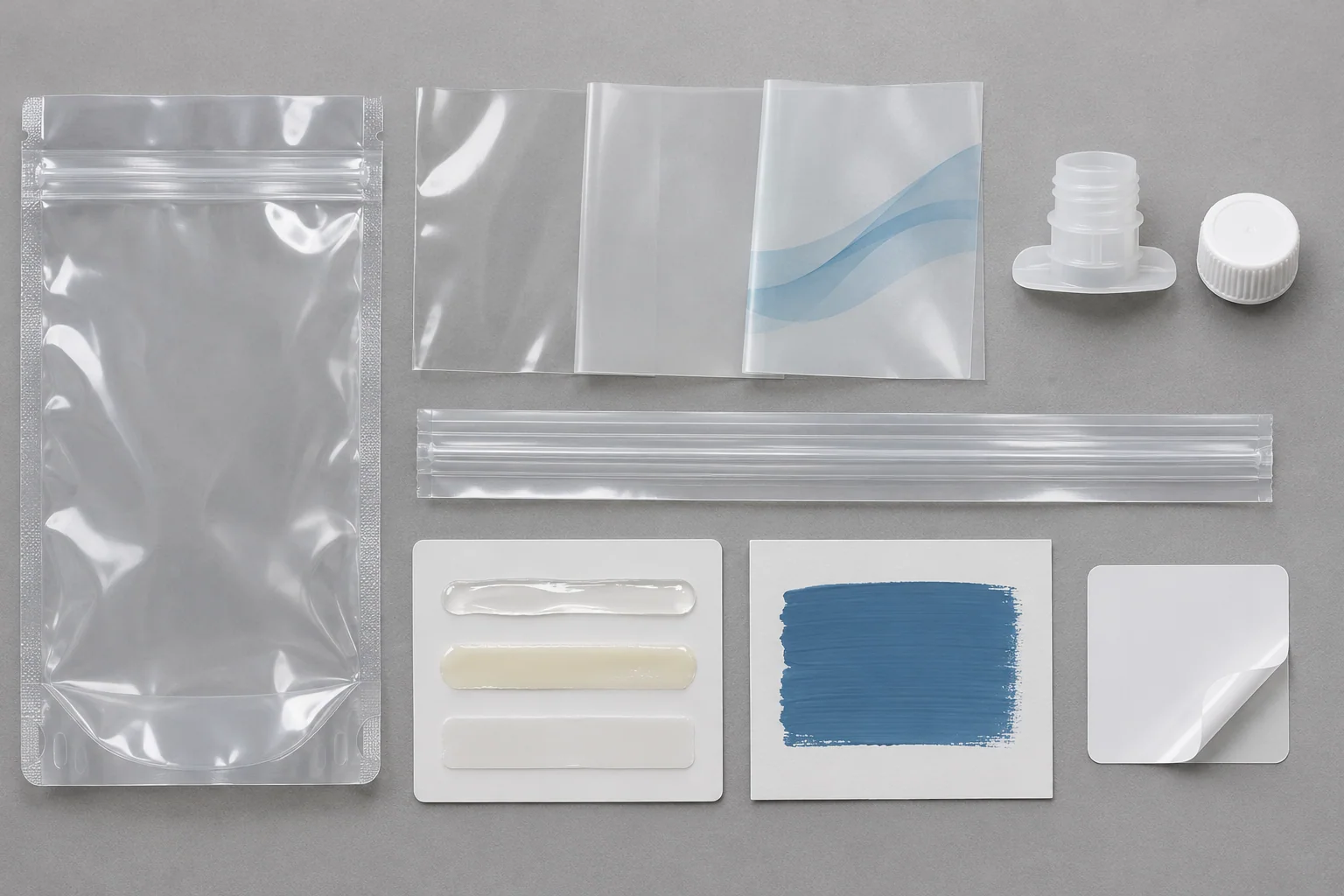
The main films are only part of the package. Design-for-recycling guidance evaluates the complete construction.
Adhesives and Tie Layers
Laminating adhesives and tie materials can affect compatibility even when the principal films belong to one polymer family. Buyers should request a full structure declaration and ask how non-target components are treated under the selected guideline.
Barrier Coatings and Metallization
Coatings can improve oxygen, moisture, or aroma performance, but their chemistry and quantity matter. Metalized appearance or foil-like barriers may change sorting or reprocessing behavior. Confirm whether the proposed barrier is accepted, conditionally compatible, or disruptive under the relevant assessment.
Inks, Lacquers, and Color
Large ink coverage, dark colors, metallic inks, and protective lacquers can affect recyclate quality or sorting. RecyClass and CEFLEX guidance both emphasize the whole decorative system. Minimize unnecessary ink and specify the print system as part of the package, not as a separate artwork decision.
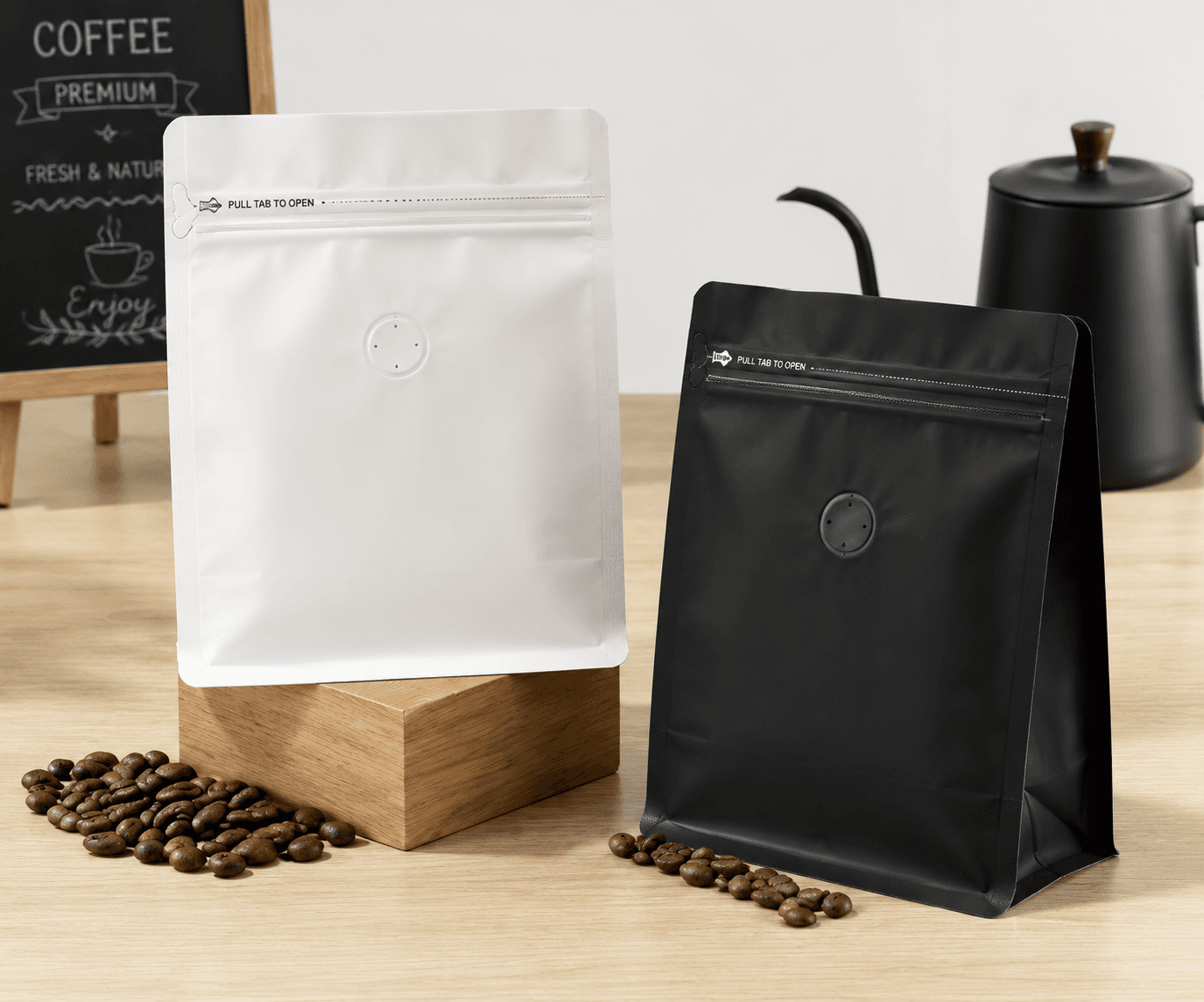
Zippers, Spouts, Caps, and Valves
A PE zipper on a PE pouch may support compatibility, but the final answer depends on composition, mass, attachment, and assessment rules. The same principle applies to PP fitments. Mixed-material closures can sometimes be tolerated within defined limits, but they should never be assumed harmless.
Labels and Sleeves
Label face stock, adhesive, coverage, and removability matter. A label introduced late in the project can undermine an otherwise compatible design. Include promotional, logistics, and regulatory labels in the design review.
Product Residue and Emptying
Packaging that retains a large amount of product is less likely to enter recycling in a clean, usable condition. Spout geometry, corners, viscosity, and instructions can affect emptying. Design for convenient use and practical evacuation, especially for sauces, concentrates, and household refills.
A Six-Step Validation Plan
Step 1: Define the Reference Package
Document the existing structure, dimensions, pouch format, closure, filling settings, shelf life, failure history, and quality criteria. Without a baseline, the word “equivalent” has no measurable meaning.
Step 2: Select the Target Recycling Stream
Choose PE or PP based on available designs, intended markets, local infrastructure, and applicable guidance. Do not start with a claim and search for supporting evidence afterward.
Step 3: Screen the Complete Structure
Review films, barriers, adhesives, inks, coatings, closures, labels, and accessories against the chosen design-for-recycling guideline. Record any conditionally compatible elements and their limits.
Step 4: Conduct Factory and Filling-Line Trials
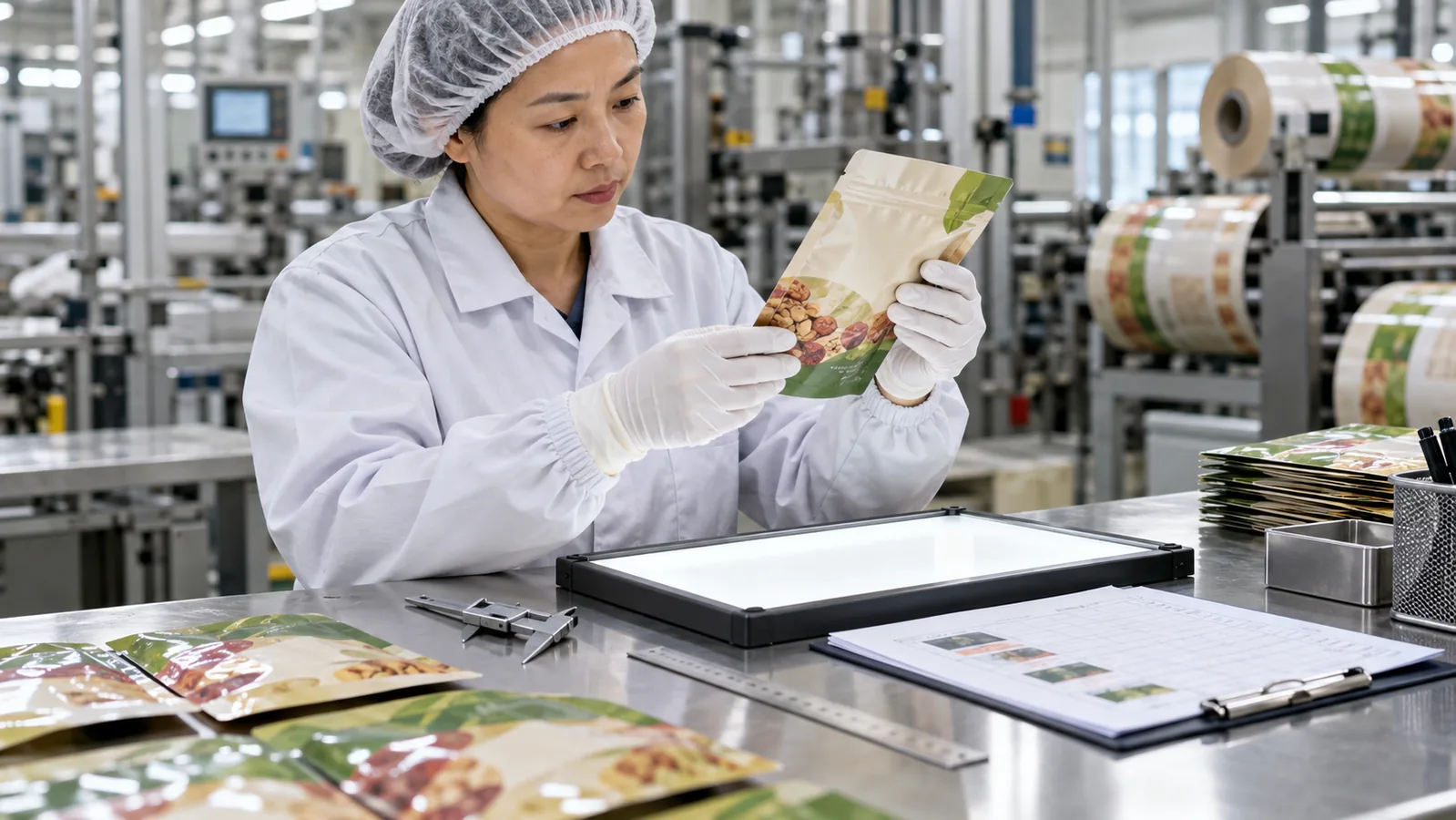
During factory testing, check print quality, dimensions, seal formation, zipper or spout attachment, leakage, and converting consistency. During installation preparation or filling-line setup, establish machine settings and examine tracking, forming, filling contamination risk, sealing, cutting, coding, and rejection rates.
Use production-representative material where possible. Record settings so the trial can be repeated.
Step 5: Test the Filled Package
Plan shelf-life work with the actual product. Include relevant barrier measurements, seal-strength or leak testing, drop and compression checks, temperature conditioning, and distribution simulation. Acceptance criteria should reflect customer requirements and credible worst-case conditions.

Step 6: Confirm Claims and Production Controls
Before launch, verify the claim wording for each market and preserve evidence. Approve the production specification, component suppliers, artwork, inspection plan, and change-control process. A material substitution that seems minor may change both performance and recyclability.
How to Migrate From a Conventional Laminate
Many brands begin with a PET/PE, PET/metalized film/PE, or other mixed-material laminate. A responsible migration does not simply replace the outer layer and keep every other expectation unchanged.
Use this sequence:
A staged launch may be appropriate. For example, a brand can begin with one product whose barrier needs are manageable, learn from production and customer use, and then evaluate more demanding SKUs.
- identify why each current layer exists;
- separate essential performance from aesthetic preferences;
- define the minimum acceptable barrier and mechanical criteria;
- evaluate a PE- or PP-family concept;
- review every component against the target guideline;
- make unprinted trial pouches for size and filling work;
- run printed, production-representative trials;
- complete shelf-life and distribution validation;
- confirm claim language and evidence;
- lock the specification and change-control procedure.
How to Write Recyclability Claims Carefully
Avoid absolute language such as “100% recyclable everywhere” unless it can be substantiated under the laws, infrastructure, and assessment rules of every market where it appears. In most cases, more precise wording is needed.
Distinguish among:
Legal requirements and claim standards change by market. Packaging, sustainability, and legal teams should review artwork before release. Keep the assessment report, specification, bill of materials, supplier declarations, and version history.
- mono-material: a statement about material design;
- designed for recycling: a design intent assessed against stated guidance;
- technically recyclable: evidence from a recognized methodology or test;
- widely recyclable: a claim involving real collection and access;
- contains recycled content: a different attribute requiring its own evidence.
What to Include in an RFQ
A useful request for quotation should include:
Ask the supplier to state assumptions and exceptions. “Recyclable material available” is not a complete technical response.
- product description and ingredients relevant to compatibility;
- fill weight or volume and package dimensions;
- current material structure, if available;
- desired PE or PP recycling stream;
- shelf-life target and storage conditions;
- oxygen, moisture, light, aroma, or chemical sensitivity;
- filling temperature, line type, speed, and seal method;
- pouch format, zipper, spout, valve, handle, and tear feature;
- printing, color, window, and surface-finish requirements;
- shipment route and case-packing method;
- destination markets and intended claim;
- requested test data, declarations, and inspection records;
- annual volume, quantity per SKU, and launch timing.
Shipment Inspection for a Mono-Material Project
Shipment inspection should confirm that the approved sustainable design is what was produced. Check roll or pouch identification, dimensions, print version, closure and fitment, seal appearance, quantity, packing, and traceability. Review the material or conformity documents agreed in the purchase order.
Where appropriate, retain production samples from each lot. The aim is not merely to find visible defects; it is to preserve evidence that the commercial shipment matches the structure that was tested and assessed.
Common Mistakes to Avoid
Choosing the Claim Before the Structure
Marketing language cannot define technical feasibility. Begin with product protection and target recycling stream, then select defensible wording.
Testing Empty Pouches Only
Empty samples cannot reveal product interaction, fill-line contamination, long-term barrier performance, or distribution failures.
Ignoring Accessories
A small closure, label, valve, or coating can change the assessment. Review the bill of materials as a whole.
Assuming “PE” or “PP” Is Enough
Polymer family names do not describe orientation, density, coatings, additives, seal behavior, or recycling compatibility. Obtain a defined structure.
Treating Recyclability as Guaranteed Collection
A technically compatible design may still lack local collection or reprocessing. Make market-specific claims and give consumers accurate disposal instructions where permitted.
Frequently Asked Questions
Are mono-material pouches truly recyclable?
They can be designed for compatibility with a PE or PP recycling stream, but actual recyclability depends on the full package and local system. Review the structure under a recognized guideline and avoid universal claims.
Is a mono-material pouch made from only one layer?
Not necessarily. It may contain multiple functional layers from the same polymer family, plus limited inks, adhesives, coatings, and components.
Is mono-PE better than mono-PP?
Neither is universally better. Choose according to product protection, filling process, mechanical performance, recycling guidance, component compatibility, and market infrastructure.
Can a mono-material pouch provide high barrier?
Barrier can be improved through oriented films and compatible coatings, but the achievable performance depends on the structure. Validate oxygen, moisture, aroma, and shelf-life requirements with the actual product.
Can mono-material pouches include a zipper or spout?
Yes, compatible closures and fitments are available for some designs. Their polymer, mass, attachment, function, and acceptance under the target guideline must be checked.
Do I need to change my filling machine?
Not always, but sealing settings, cooling, tension, or line speed may need adjustment. Run a controlled line trial before commercial production.
What evidence should a supplier provide?
Depending on the project, request a material specification, bill of materials or composition statement, relevant compliance declarations, performance data, design-for-recycling assessment information, trial records, and production traceability.
Can I print a recycling logo on the pouch?
Only when the logo program’s rules and market requirements are met. Qualification, licensing, consumer access, and claim wording vary. Obtain current market-specific advice before artwork approval.
Conclusion
Mono-material recyclable pouches can be a practical improvement when product protection, manufacturing, consumer use, and recycling design are evaluated together. The best projects do not replace a laminate based on a label alone. They define the reference package, select a target stream, screen every component, run factory and filling trials, validate shelf life and distribution, and document the claim.
The result should be a package that does its first job—protecting the product—while being more compatible with an identified recycling pathway. If the evidence does not yet support every SKU, a phased transition is more credible than an unsupported universal promise.
Technical References
Design-for-recycling criteria, collection systems, and environmental-claim rules vary by market and change over time. Confirm current requirements for each destination before making claims.