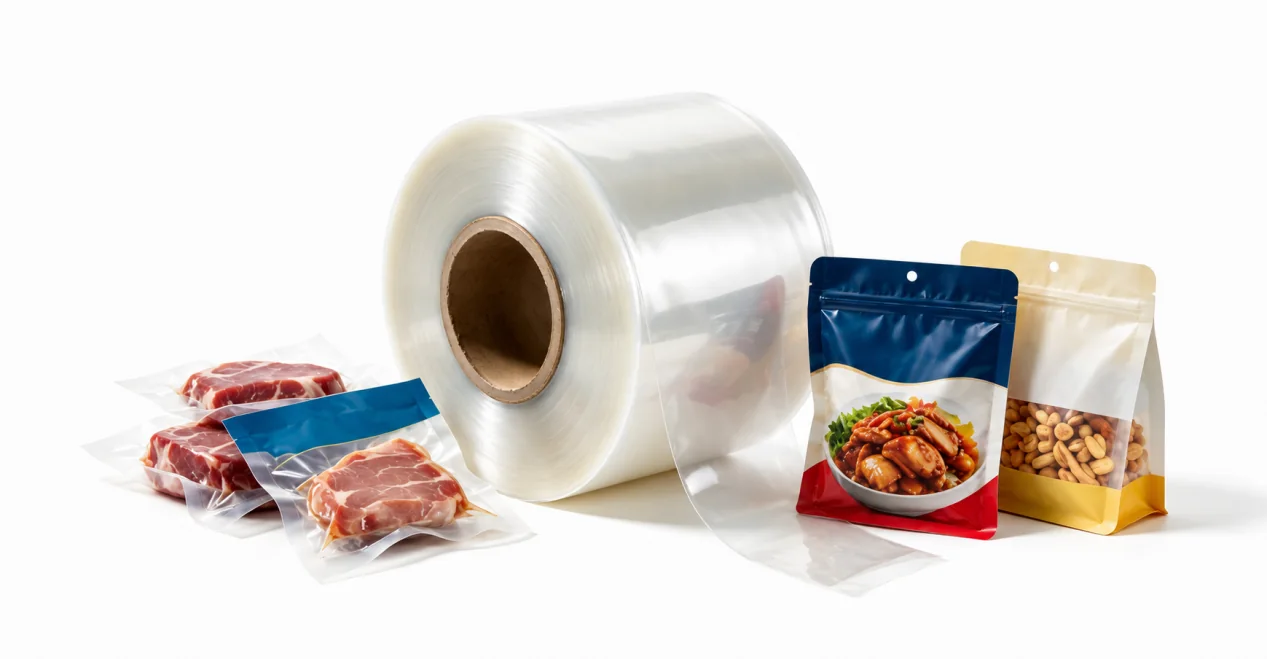
BOPA film costs more than common BOPP or PET films, yet it remains important in food packaging applications where toughness, puncture resistance, flexibility, and gas barrier support are required.
The material is normally used as one layer in a laminate. Its role and suitability must be evaluated together with the sealant, barrier layers, adhesive, ink, filling process, storage conditions, and expected shelf life.
What is BOPA film?
BOPA stands for biaxially oriented polyamide. It is produced from nylon, or polyamide, resin through a biaxial stretching process and is commonly called nylon film in the food packaging industry.
BOPA is valued for mechanical toughness and flexibility. It is rarely used alone because it does not provide the heat-seal layer required by most finished pouches. Instead, it is laminated with PE, CPP, or other functional materials.
Key advantages of BOPA film
BOPA contributes several useful properties to a food packaging laminate. Actual performance depends on film grade, humidity, orientation, thickness, and the complete structure.
- Gas barrier support that can help reduce oxygen exposure and aroma loss in a suitable laminate
- High mechanical strength and puncture resistance for products with bones, hard edges, or demanding transport conditions
- Good flexibility for vacuum packaging and products with irregular shapes
- Useful low-temperature toughness for selected frozen-food packaging applications
- Temperature performance that can support selected heat-processing structures when the complete laminate is designed and validated for the process
Typical food packaging applications
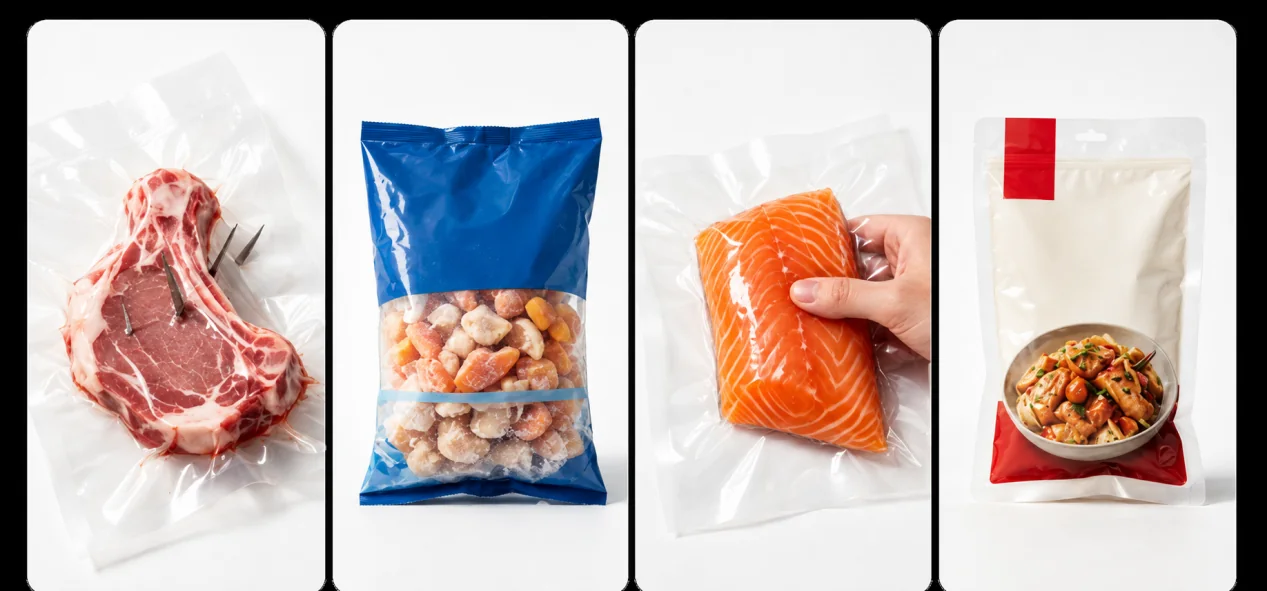
BOPA is considered for products and processes where the package must resist puncture, remain flexible, or support stronger gas barrier requirements. The complete material structure should be confirmed through product and process evaluation.
- Vacuum packaging for rice, meat, soy products, and prepared foods
- Frozen seafood, meat products, dumplings, and other frozen foods
- Selected retort or thermal-process pouches designed for the required process
- Bone-in meat products such as chicken wings, ribs, and ham
- Liquid or semi-liquid food laminates requiring strength and flexibility
- High-barrier structures combined with aluminum foil, EVOH, or another barrier layer
How is BOPA laminated with other materials?
BOPA usually serves as a middle or outer layer. PE and CPP can provide heat-sealing performance, while aluminum foil, EVOH, or other layers may be added when stronger light, oxygen, or aroma protection is required.
The examples below describe common material directions, not universal specifications. The final structure must be selected for the actual product, filling method, sealing process, storage environment, and target shelf life.
- BOPA/PE for selected vacuum and frozen-food packaging
- BOPA/CPP for suitable thermal-process laminates
- PET/BOPA/AL/PE for selected high-barrier, mechanically demanding packaging
- BOPA/EVOH/PE where enhanced gas and aroma barrier is required
Why is BOPA needed in food packaging?
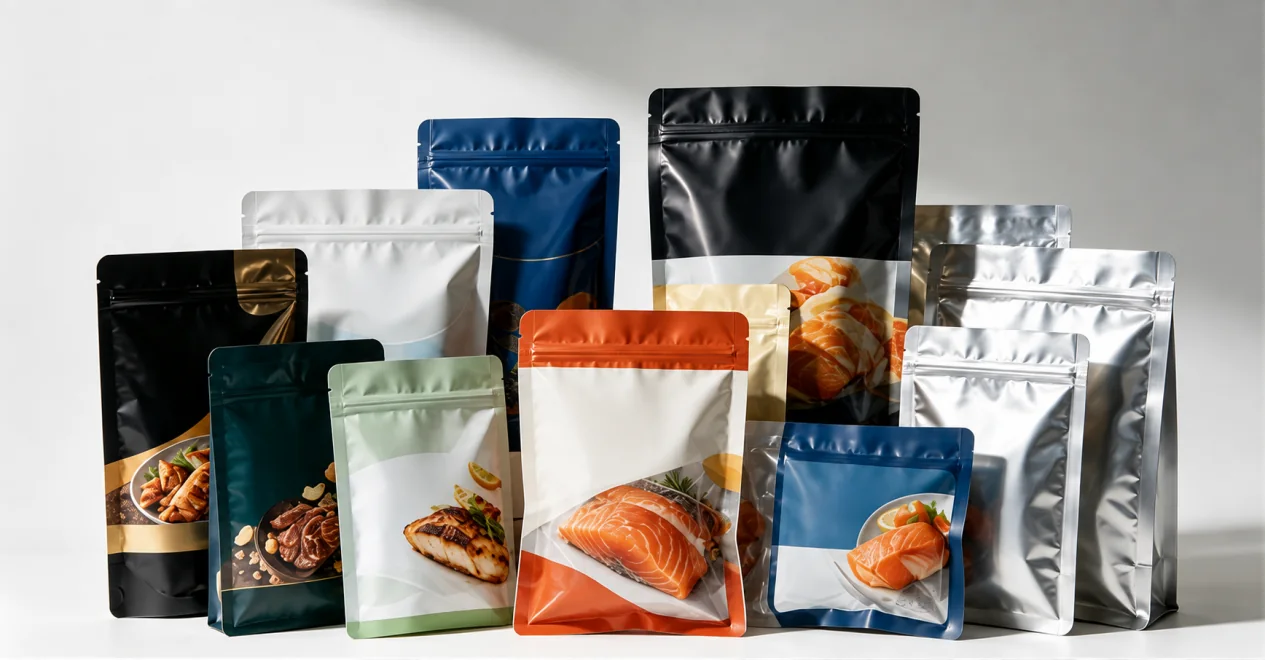
Food packaging must do more than contain a product. It may need to limit oxygen exposure, resist puncture from bones or hard pieces, remain intact during freezing or processing, and retain product aroma during storage.
BOPA contributes toughness, puncture resistance, flexibility, and gas barrier support to laminates designed for these requirements. Its higher cost can be justified when these functions reduce the risk of package damage or product deterioration.
What should buyers confirm before selecting BOPA?
Before confirming a BOPA structure, provide the packaging supplier with the product composition, pack size, filling temperature, sealing method, thermal process if any, frozen or ambient storage conditions, transport risks, and target shelf life.
Samples should be evaluated with the actual product and filling process. Where retort, vacuum, leakage, puncture, or barrier performance is critical, agree on the relevant test method and acceptance criteria before production.
Conclusion
BOPA film is used in food packaging because it provides a combination of toughness, puncture resistance, flexibility, and gas barrier support that common outer films may not provide on their own.
It is most effective when used as part of a laminate designed around the real product and process. Buyers should confirm the complete structure and testing requirements rather than selecting nylon film by name alone.