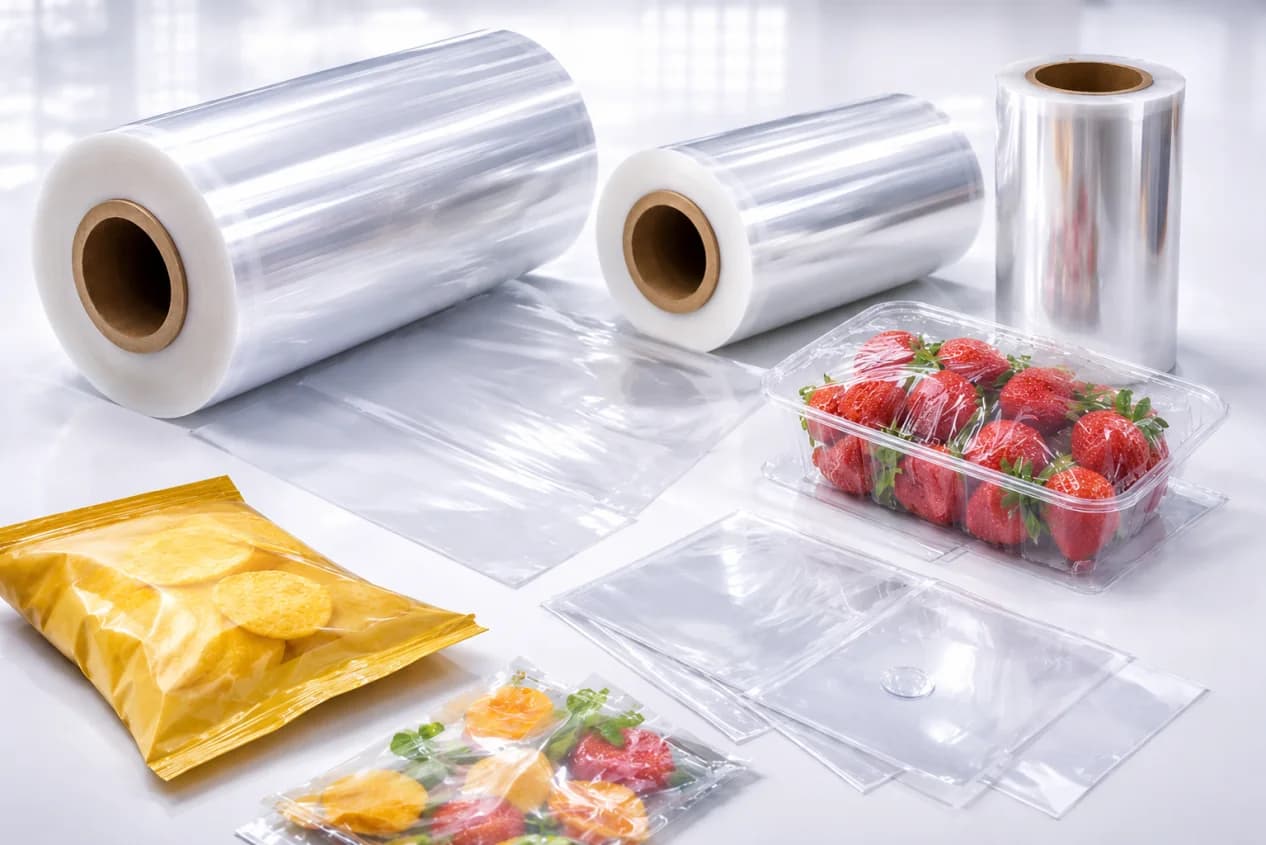
In food packaging, a film's transparency, gloss, moisture resistance, mechanical strength, and printability all influence the finished pack. The material must also work with the selected printing, laminating, sealing, and filling processes.
OPP, especially biaxially oriented polypropylene film, is widely used for biscuits, confectionery, snacks, bread, tea, and other dry-food applications because it combines visual clarity, stiffness, moisture resistance, and practical converting performance.
What are OPP and BOPP films?
OPP stands for oriented polypropylene film. The most common form used in flexible food packaging is BOPP, or biaxially oriented polypropylene film. During manufacture, polypropylene is extruded into film and stretched in two directions to improve its strength, stiffness, dimensional stability, clarity, and moisture resistance.
A single BOPP layer has limited heat-sealing performance. For many finished food packages, it is laminated with a sealing film such as PE or CPP so that the structure can combine appearance and printability with a reliable inner seal layer.
- High transparency and gloss for product presentation
- Useful stiffness and dimensional stability
- Good resistance to water vapor for many dry foods
- A suitable surface for printing after appropriate treatment
Common types of BOPP film
BOPP is available in several forms. The appropriate version depends on the required appearance, barrier performance, sealing system, and converting process.
Transparent BOPP
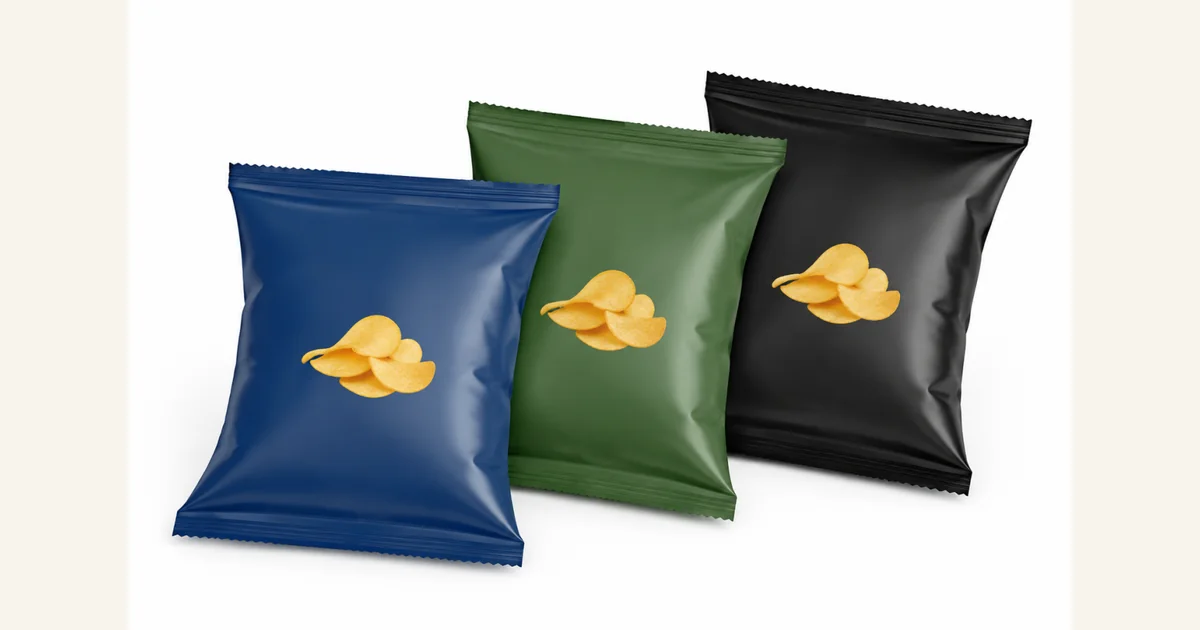
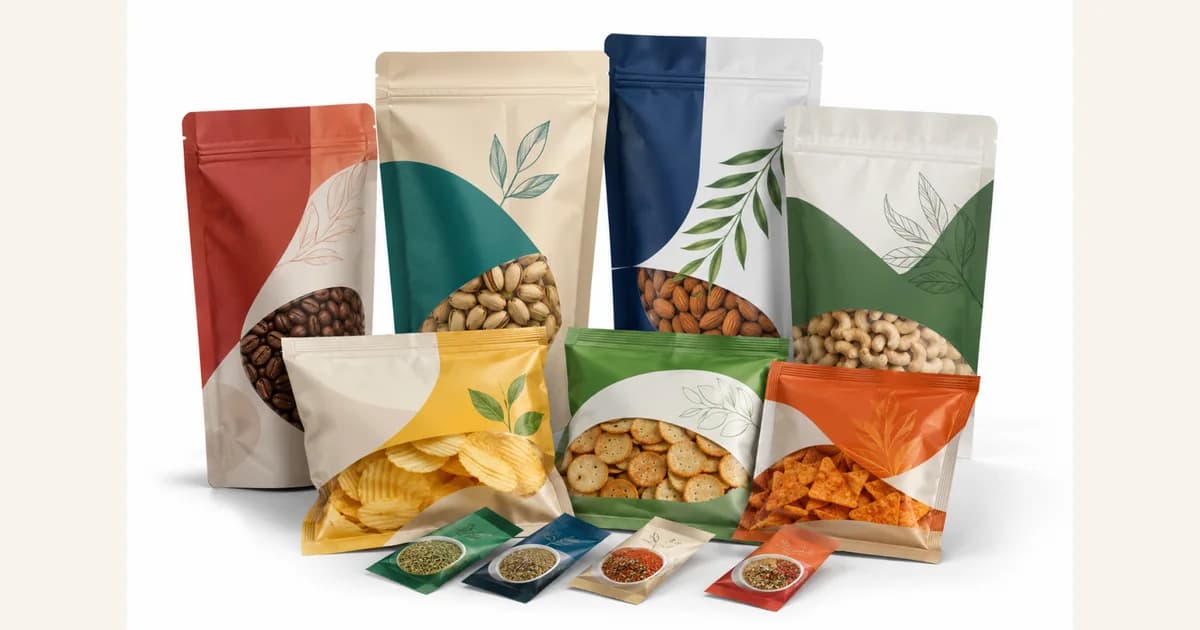
Transparent BOPP provides a clear, glossy surface and is often used where buyers want to show the product or create a bright printed appearance. Typical applications include biscuits, candies, snacks, and bakery products.
Laminated BOPP
BOPP can be laminated with PE, CPP, metallized film, or other functional layers. Lamination adds heat-sealing capability and can improve strength or barrier performance according to the product requirements.
Metallized and matte BOPP
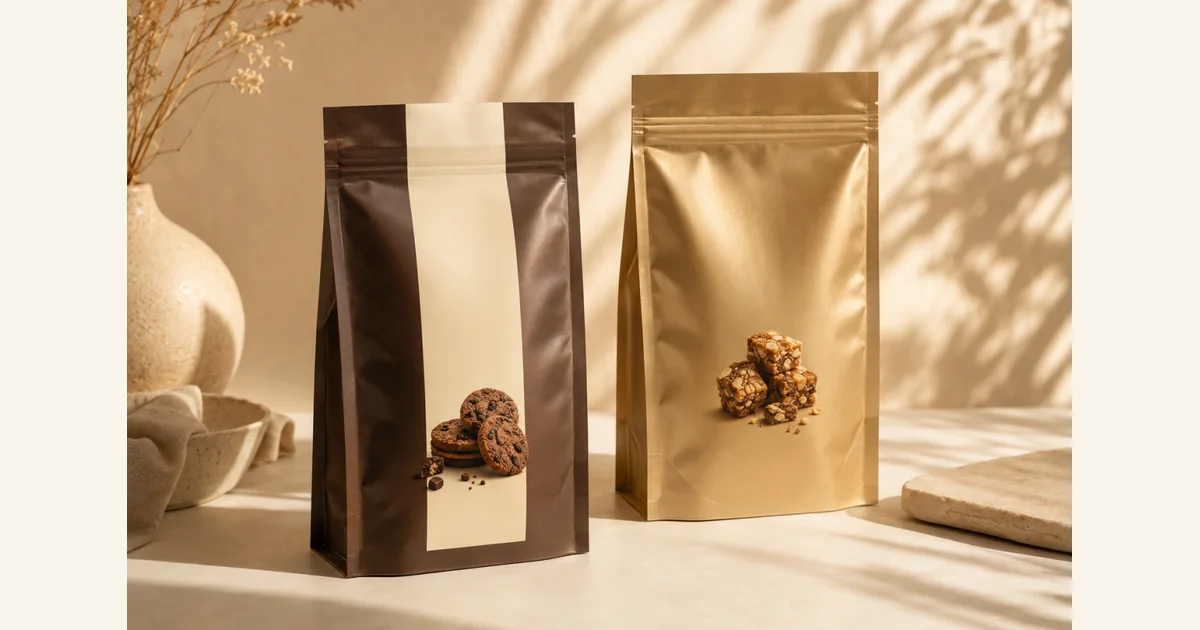
Metallized BOPP provides a metallic appearance and improved light and gas barrier compared with standard clear BOPP. Matte BOPP creates a lower-gloss surface for brands seeking a more subdued visual finish. Both options still need to be evaluated as part of the complete laminate.
Why is BOPP used in food packaging?
BOPP offers an effective balance of appearance, converting performance, and cost for many ambient and dry-food applications. Its clarity and gloss can improve shelf presentation, while its stiffness supports handling and high-speed packaging operations.
The film also offers useful moisture resistance and printability. Actual print results depend on surface treatment, ink, artwork, printing method, and process control.
Limitations and selection considerations
Standard BOPP has limited oxygen barrier performance, and single-layer film is not suitable for every sealing or thermal process. Products requiring stronger oxygen, aroma, or light protection normally need a carefully selected multilayer structure.
BOPP should not be selected for a high-temperature or retort process without confirming that the complete film structure, adhesive, ink, and seal layer are appropriate for the actual processing conditions.
- Transparency, haze, and gloss
- Film thickness, strength, and stiffness
- Heat-sealing requirements
- Coefficient of friction and packaging-line speed
- Required moisture, oxygen, aroma, and light barrier
Additives and masterbatches in OPP film
Functional additives and masterbatches can be used with the base polypropylene resin to adjust processing and film properties. Their selection should consider functionality, addition rate, dispersion, visual appearance, and applicable food-contact requirements.
- Slip masterbatch adjusts surface friction for processing and packaging efficiency
- Anti-block masterbatch reduces adhesion between film layers during unwinding
- Antistatic masterbatch reduces static buildup during production and packing
- White and color masterbatches create opacity, whiteness, or a selected color effect
Conclusion
BOPP is a widely used flexible food packaging film because it provides clarity, gloss, stiffness, moisture resistance, and printability. The final decision should be based on the complete package: product characteristics, shelf-life target, filling process, sealing conditions, equipment, barrier needs, and commercial requirements.
When BOPP is used in a laminate, each layer and additive should be selected for a defined purpose rather than treated as a standard structure for every product.