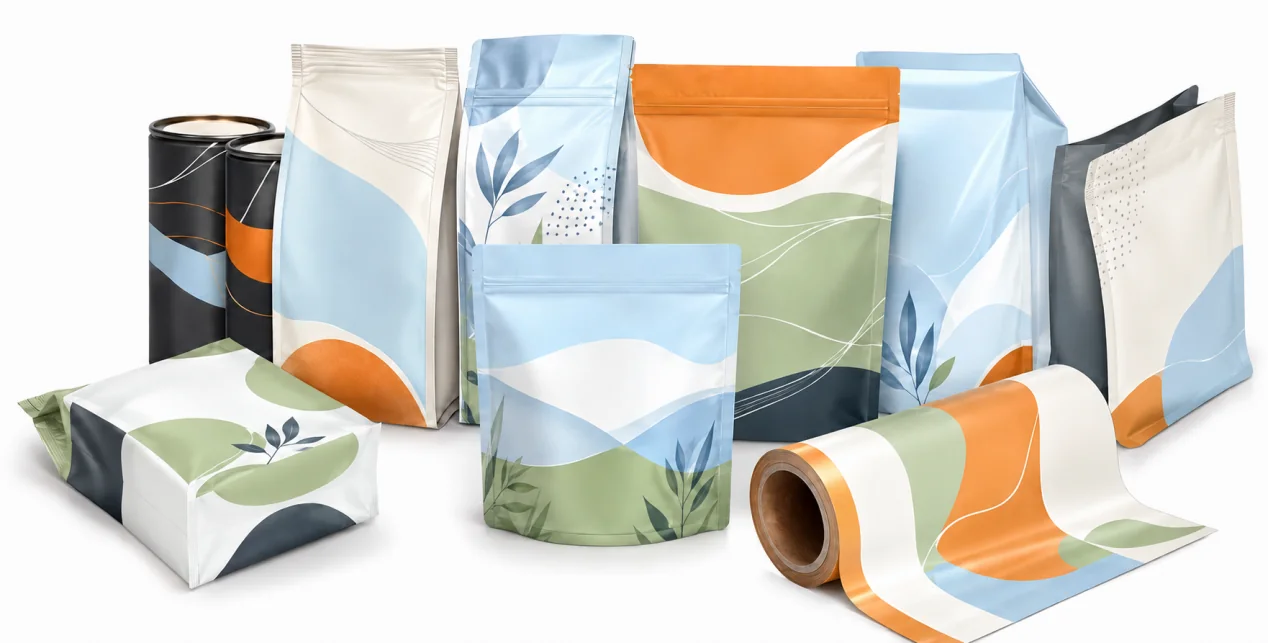
BOPP and PET are two common outer films in flexible food packaging. Both can provide a clear, printable surface, but their moisture resistance, mechanical strength, temperature performance, dimensional stability, and cost characteristics are different.
Neither film is automatically the better choice. The correct material depends on the food, required shelf life, printing and laminating process, packaging equipment, sealing system, storage conditions, and total package design.
What are BOPP and PET films?
BOPP is biaxially oriented polypropylene film. It is known for clarity, gloss, moisture resistance, stiffness, processability, and a practical cost-performance balance. It is widely used as a printed or functional layer in flexible food packaging.
PET is polyethylene terephthalate film, often called polyester film. It offers high mechanical strength, dimensional stability, useful temperature resistance, and a stable printing surface. PET is frequently selected where converting stability and overall laminate strength are important.
Key performance differences between BOPP and PET
Film grades and treatments vary, so the final specification should be confirmed with the supplier. The following comparison describes common selection directions rather than guaranteed performance values for every grade.
- Transparency and appearance: both films can provide a clear, printable surface; results depend on film grade and treatment
- Moisture resistance: BOPP is commonly selected where water-vapor resistance is an important requirement
- Oxygen barrier: standard PET is often stronger than standard BOPP, but high-barrier products may still need an additional barrier layer
- Mechanical strength: PET generally offers higher tensile strength and dimensional stability
- Temperature performance: PET is commonly selected when the laminate must tolerate greater processing or service temperatures
- Cost: BOPP can offer a more economical direction when it satisfies the full package requirements
- Printability: both materials can print well after suitable surface treatment and process control
Common food packaging applications for BOPP
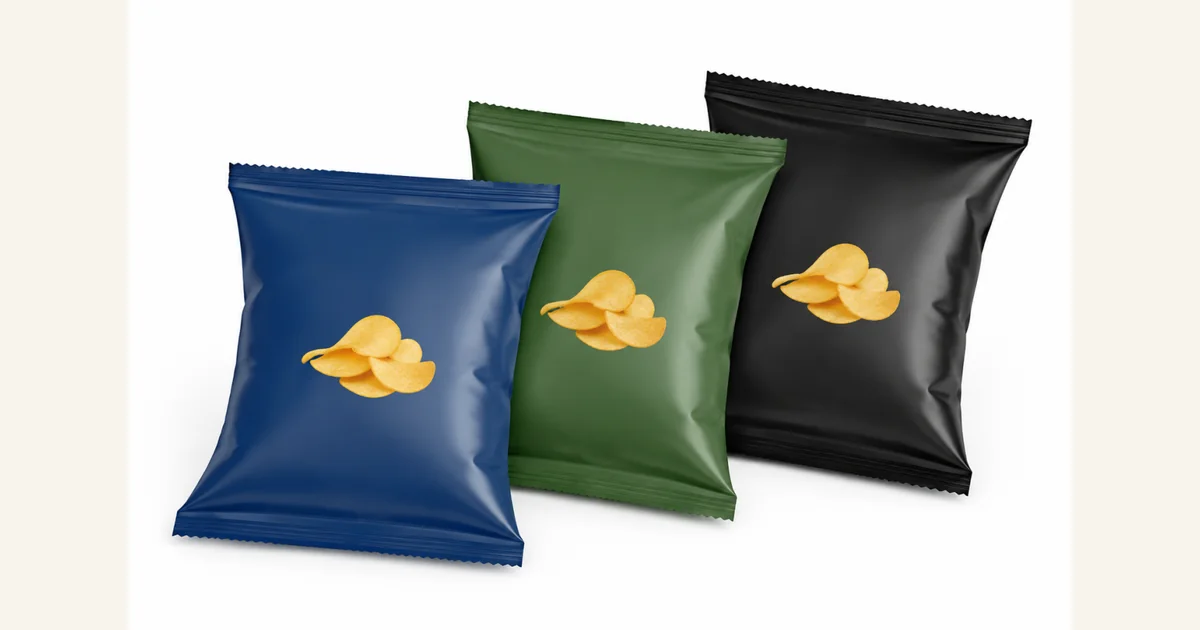
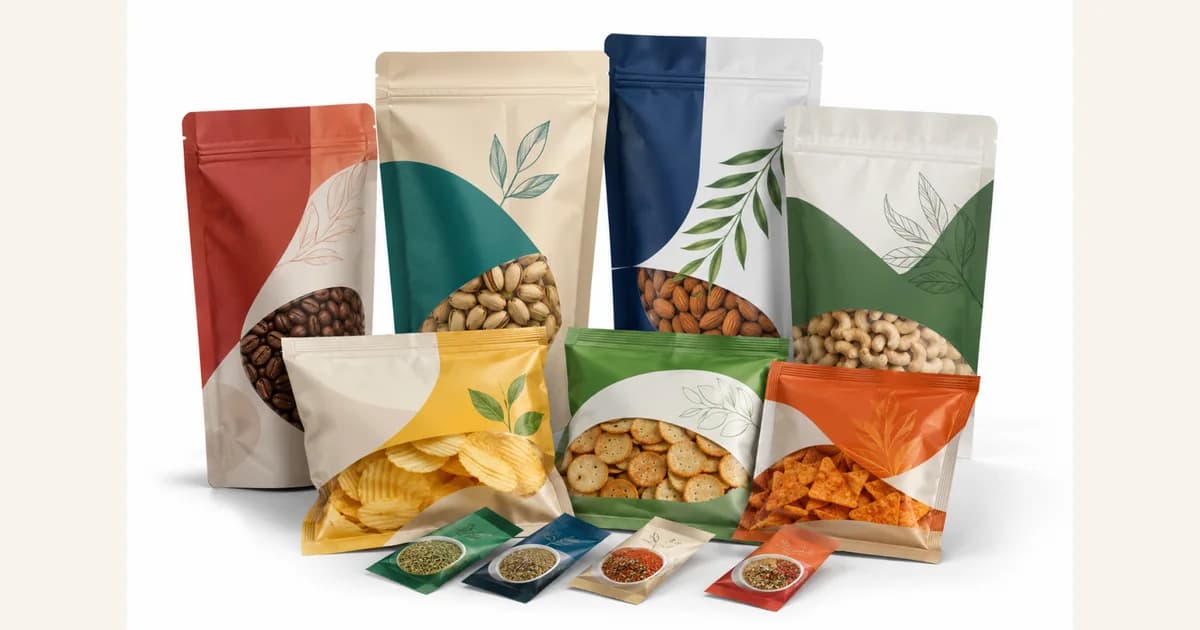
BOPP is widely used for biscuits, confectionery, bread, pastries, puffed snacks, convenience foods, tea, and coffee. It is a common direction when shelf appearance, moisture resistance, and cost control are priorities.
Because a single BOPP layer has limited sealing and barrier performance, the finished package often uses a laminate such as BOPP/PE or BOPP/CPP. Metallized options can be considered when additional light or gas barrier is required.
Common food packaging applications for PET
PET is frequently used as an outer printing layer in vacuum packaging, prepared-food packaging, selected thermal-process laminates, and structures that require greater mechanical strength or dimensional stability.
It can be laminated with PE, CPP, aluminum foil, nylon, EVOH, or metallized films according to sealing, toughness, and barrier requirements. Suitability for a specific process must be confirmed for the complete laminate, not inferred from the PET layer alone.
How should buyers choose between BOPP and PET?
BOPP is often a practical choice when moisture resistance, clarity, gloss, and cost are the main priorities for an ambient product. PET may offer advantages when the package requires higher strength, dimensional stability, or temperature resistance.
For vacuum packaging, high-barrier packaging, or heat-processed products, buyers should define the complete structure around the actual food, shelf life, filling method, sealing conditions, transport environment, and regulatory requirements.
BOPP and PET are not mutually exclusive choices
Flexible packaging structures combine materials because no single film provides every required function. A BOPP/PE laminate can combine BOPP appearance and moisture resistance with a PE sealing layer. A PET/PE laminate can combine PET strength and dimensional stability with PE heat sealing.
Where stronger barrier performance is required, the structure may add aluminum foil, metallized film, EVOH, or another functional layer. The suitability of any example structure depends on the product and process.
Conclusion
BOPP offers useful moisture resistance, clarity, gloss, and cost efficiency for many standard food packaging applications. PET provides greater mechanical strength, dimensional stability, and temperature performance for more demanding laminate requirements.
The best decision comes from evaluating the complete package rather than comparing one film property in isolation. Confirm the product, filling process, sealing system, barrier target, storage conditions, and expected shelf life before selecting the structure.