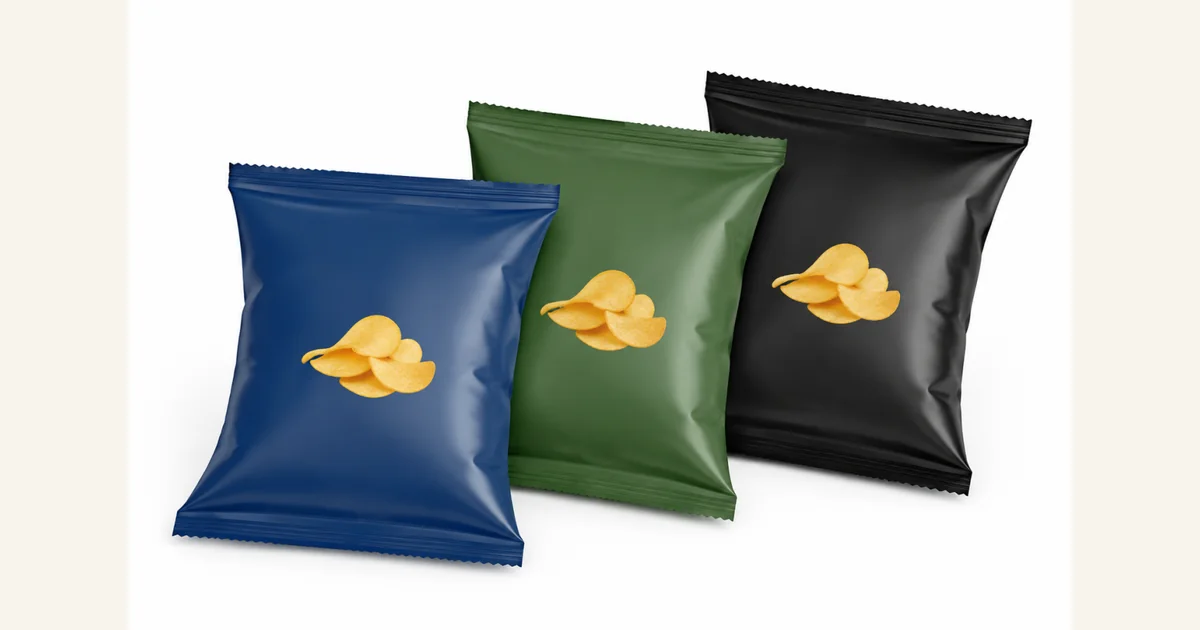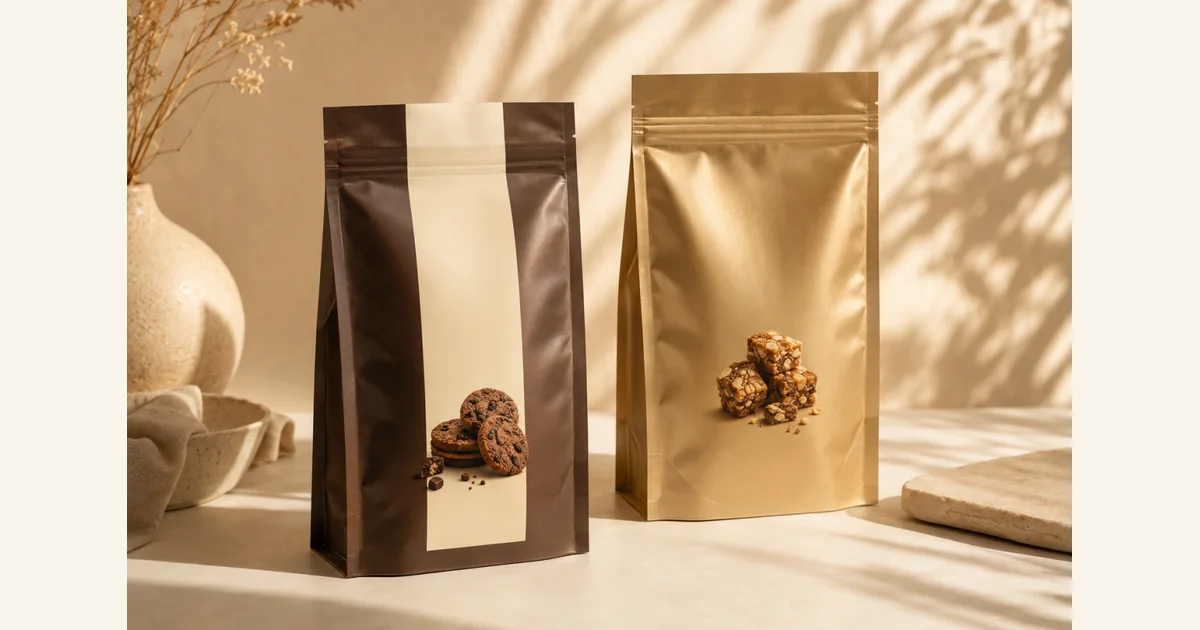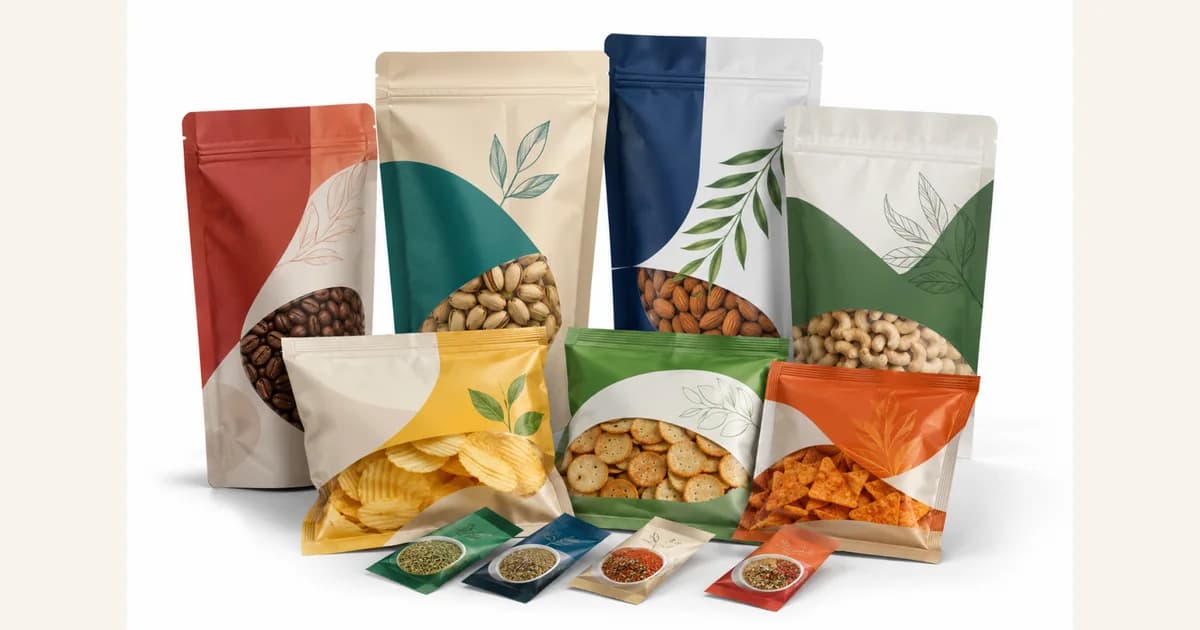
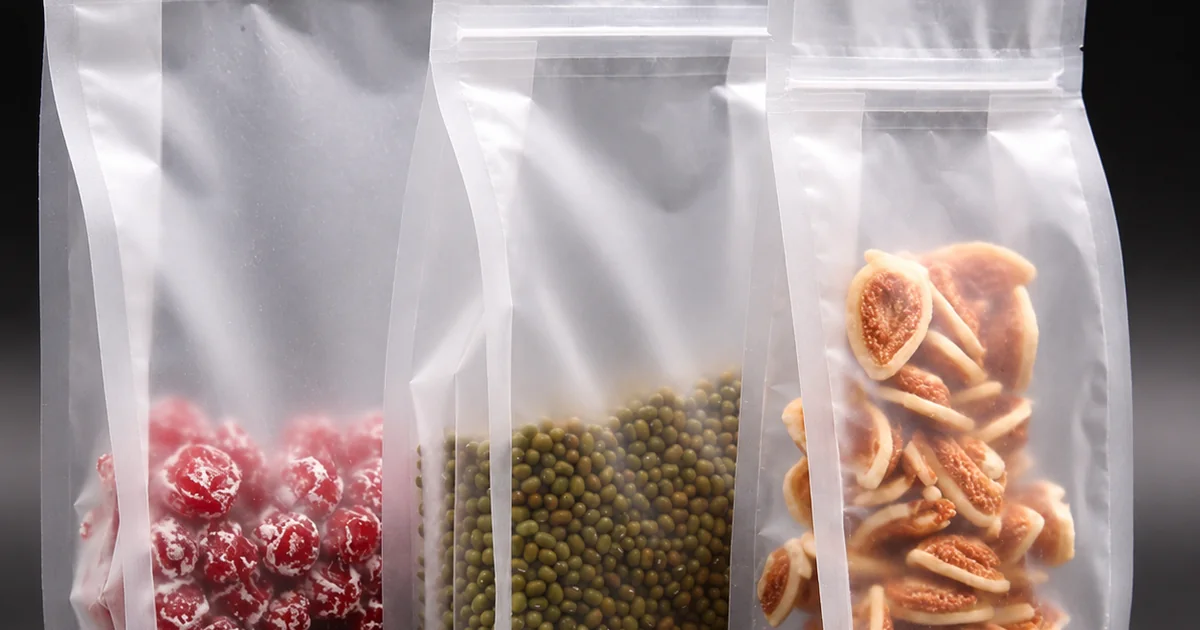
Polyethylene, or PE, film is one of the most common and fundamental materials used in flexible food packaging. Its applications range from bread bags and frozen-food packaging to the heat-sealable inner layers of laminated packaging bags.
The correct PE grade depends on the product, sealing process, storage conditions, required strength, and applicable food-contact requirements. This guide explains the principal PE film types, their functions, and common food packaging applications.
What is PE film?
PE stands for polyethylene, a polymer produced from ethylene. Depending on density and molecular structure, the PE films most frequently considered for food packaging include LDPE, LLDPE, and HDPE.
PE is commonly selected as a sealant or product-contact layer in a laminate. The finished package must be designed around the actual food, filling method, heat-sealing conditions, storage environment, and target shelf life.
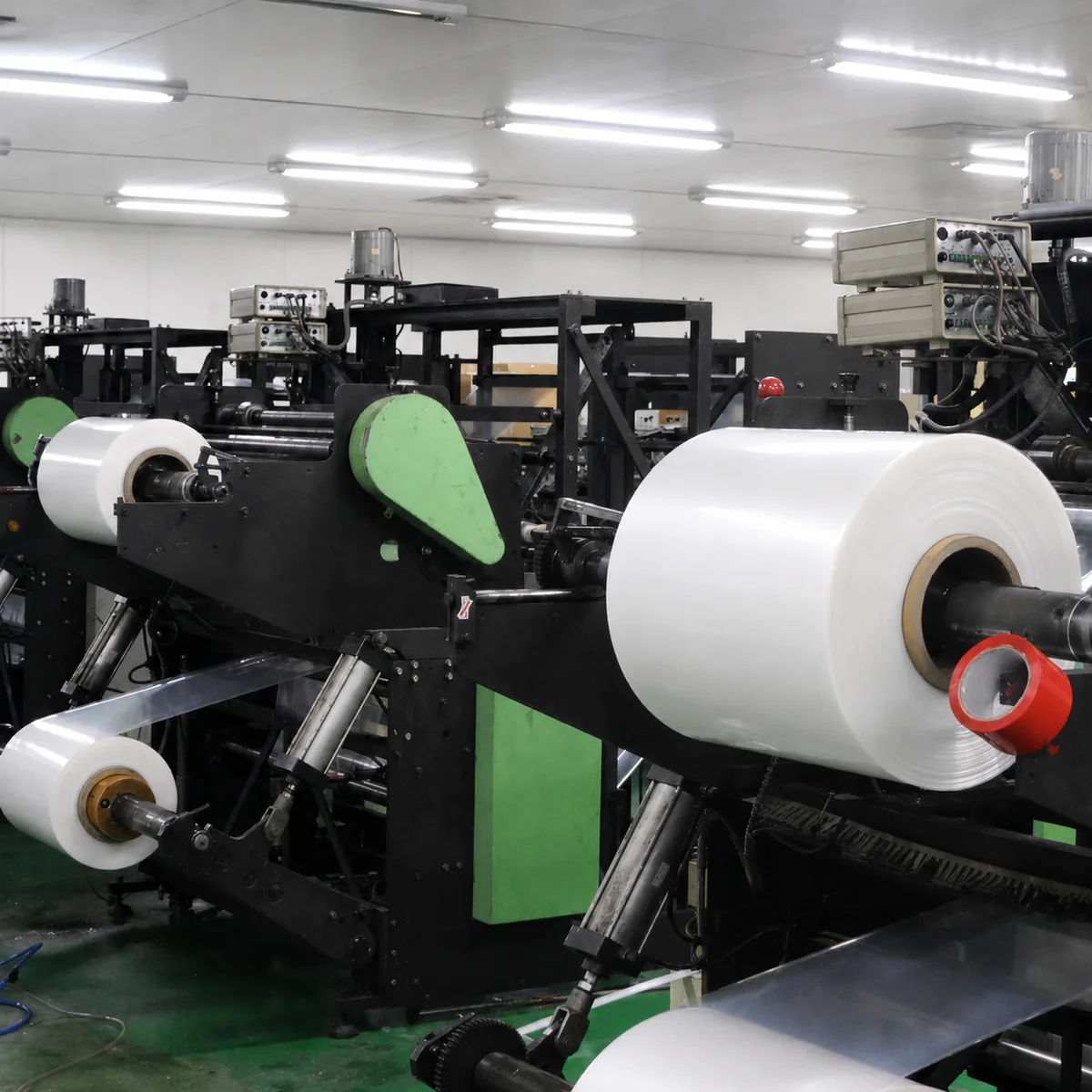
Common types of PE film used in food packaging
LDPE, LLDPE, and HDPE have different balances of softness, stiffness, sealing behavior, and mechanical strength. Film formulation and grade also influence performance, so these descriptions are selection directions rather than guaranteed values for every film.
LDPE film
Low-density polyethylene is known for softness, useful transparency, flexibility, and heat-sealing performance. It is frequently used for clear food bags and as an inner sealing layer in laminated packaging.
LLDPE film
Linear low-density polyethylene can provide greater strength and puncture resistance than conventional LDPE. It is considered for frozen-food packaging and other applications where toughness and mechanical performance are important.
HDPE film
High-density polyethylene offers greater stiffness and useful moisture resistance. Selected HDPE grades are used for certain food bags and packaging structures where a firmer film is required.
Key functions of PE film in food packaging
PE is valued because it can support several essential packaging functions. Its suitability still depends on the specific grade, thickness, package structure, and converting conditions.
- Heat sealing: PE is widely used as an inner sealant layer in laminated food packaging
- Moisture resistance: PE can help reduce water-vapor transfer for dry and frozen products
- Flexibility: suitable grades retain toughness during handling and selected low-temperature applications
- Food contact: compliant grades may be used for direct-food-contact layers where applicable requirements are met
- Cost efficiency: PE can provide a practical balance of sealing, flexibility, and commercial performance
Typical applications of PE film
The film type and complete packaging structure should be matched to the product and process. Common application directions include the following.
- Bread and bakery packaging using clear, flexible PE films
- Frozen dumplings, meat, seafood, and other frozen-food packaging requiring low-temperature toughness
- Laminated snack, biscuit, instant-noodle, tea, and coffee packaging where PE provides the sealant layer
- Selected liquid-food structures designed around sealing, drop resistance, and product compatibility
- Produce and food-wrap applications using an appropriate compliant PE grade
How to choose the right PE film
LDPE is commonly considered when flexibility, transparency, and heat sealing are priorities. LLDPE may be preferred where higher strength or puncture resistance is required, while HDPE is considered where greater stiffness is useful.
PE alone has limited oxygen barrier and stiffness compared with some other packaging films. When additional protection is needed, it can be laminated with BOPP, PET, BOPA, VMPET, aluminum foil, or another functional layer selected for a defined purpose.
- Product composition, oil content, and moisture sensitivity
- Filling temperature and sealing conditions
- Frozen, ambient, or other storage conditions
- Package size, product weight, and puncture risks
- Required oxygen, moisture, aroma, and light barrier
Conclusion
PE film plays a central role in food packaging because it can provide heat sealing, moisture resistance, flexibility, and practical cost performance. LDPE, LLDPE, and HDPE each offer a different balance of properties.
The final selection should be based on the complete package rather than the film name alone. Confirm the actual product, filling process, storage environment, strength requirements, and target shelf life before approving a PE grade or laminate structure.