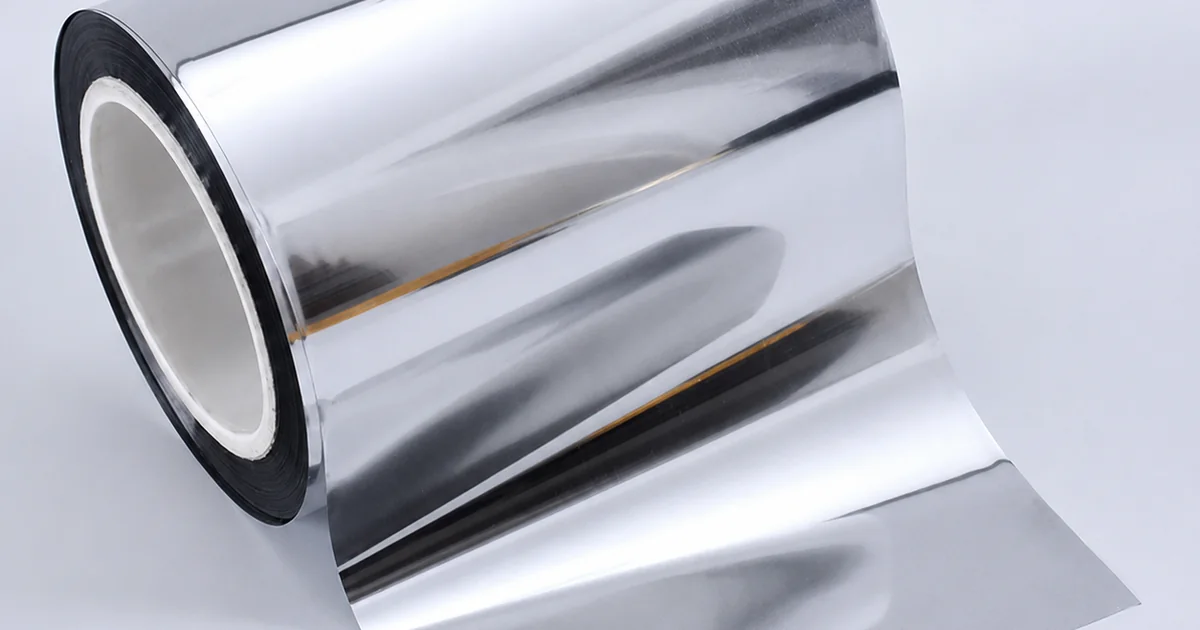
VMPET and aluminum foil are common barrier materials in flexible food packaging. Although both can create a metallic appearance and improve protection, they differ in structure, barrier level, flexibility, converting behavior, and cost.
There is no single correct choice for every product. The decision depends on the food, expected shelf life, filling and thermal process, transport conditions, package design, and commercial requirements.
What are VMPET and aluminum foil?
VMPET means vacuum-metallized PET. It is produced by applying a very thin aluminum coating to PET film in a vacuum metallization process. The result is a flexible film with a metallic appearance and improved barrier performance compared with standard clear PET.
Aluminum foil is solid metal foil produced by rolling aluminum. In an appropriate laminate, it can provide very strong protection against oxygen, water vapor, and light. Its actual performance depends on foil gauge, pinhole condition, lamination quality, and the complete package structure.
- VMPET: PET film with a thin aluminum coating
- Aluminum foil: a solid aluminum layer used within a laminate
Key differences between VMPET and aluminum foil
The following comparison describes common material directions. Final performance must be confirmed for the selected film grade, thickness, adhesive, sealant, printing system, and finished laminate.
Oxygen, moisture, and light barrier
VMPET can provide useful oxygen, moisture, and light barrier for many snack, coffee, tea, and dry-food structures. Its performance depends on metallization quality, film condition, and the complete laminate.
Aluminum foil generally provides a stronger barrier and complete light blocking when an appropriate foil grade and laminate are used. It is considered for products with demanding shelf-life or light-sensitivity requirements.
Flexibility and folding behavior
VMPET is flexible and generally offers better fold endurance than aluminum foil. Aluminum foil can crease, and repeated folding or severe handling may contribute to pinholes. Package format and distribution conditions should therefore be considered during material selection.
Appearance and cost
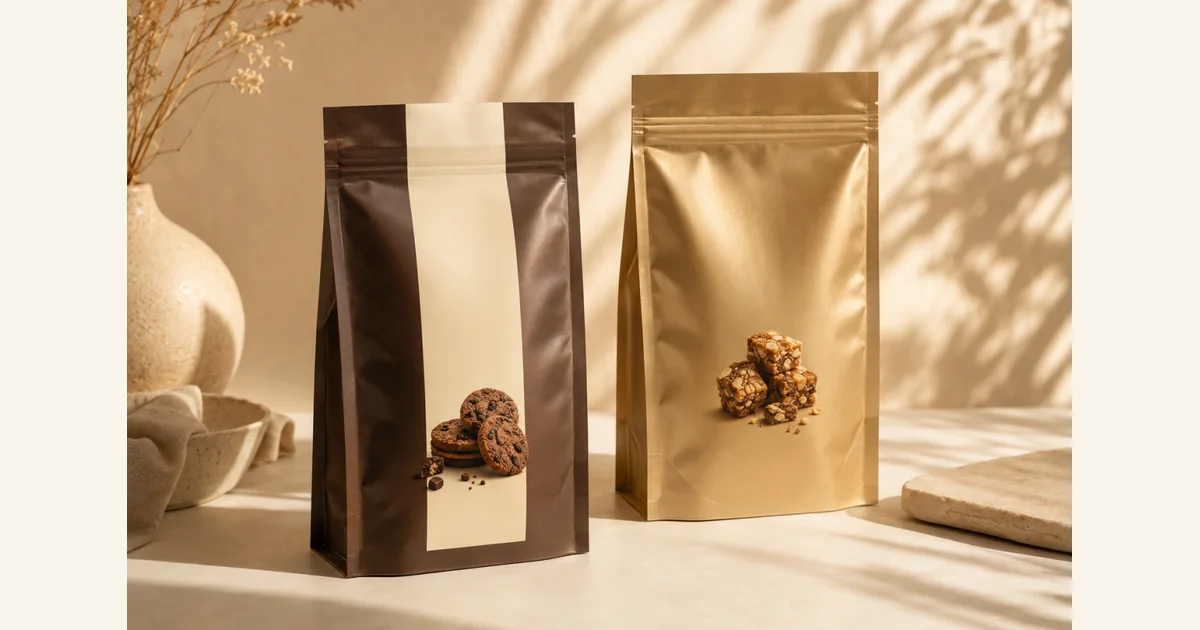
VMPET provides a bright, uniform metallic appearance and is normally more economical than aluminum foil. Aluminum foil offers complete opacity and a distinct metal layer, but usually carries a higher material cost.
Typical applications of VMPET
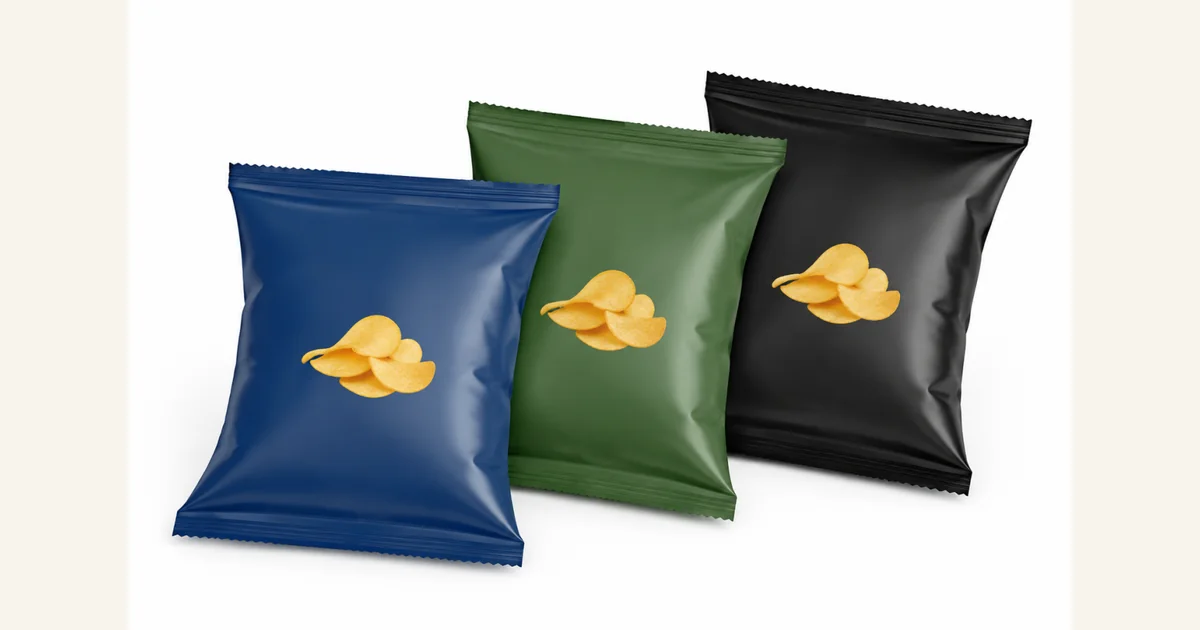
VMPET offers a practical balance of appearance, flexibility, barrier support, and cost for many dry-food packages.
- Puffed snacks and convenience foods
- Biscuits, confectionery, and chocolate packaging
- Tea and coffee packaging
- Packages requiring a metallic visual effect
- Applications where a moderate-to-high barrier direction is sufficient after full-structure evaluation
Typical applications of aluminum foil
Aluminum foil is considered for demanding high-barrier applications. Suitability for retort or another thermal process must be established for the complete laminate under the actual processing conditions.
- Foods that are highly sensitive to oxygen or light
- Selected long-shelf-life food packaging
- High-barrier vacuum packaging
- Appropriately designed and validated retort structures
- Products with high oil content or strong aroma-protection requirements
How to choose between VMPET and aluminum foil
VMPET is often considered when cost control, metallic appearance, flexibility, and a useful barrier direction are priorities. Aluminum foil is considered where a stronger oxygen, moisture, and light barrier is required and the package can accommodate its converting and handling characteristics.
The correct choice should be based on measured requirements rather than appearance alone. Provide the supplier with the food composition, filling method, storage conditions, transport risks, and target shelf life before confirming the structure.
- Required oxygen, moisture, aroma, and light barrier
- Expected shelf life and storage conditions
- Package flexibility and transport handling
- Thermal processing and sealing requirements
- Appearance, total package cost, and recyclability goals for the complete structure
Conclusion
VMPET provides a useful combination of metallic appearance, flexibility, barrier support, and cost efficiency. Aluminum foil can provide stronger protection against oxygen, moisture, and light in a properly designed laminate.
Neither material should be selected in isolation. The optimum structure depends on the product, filling and processing conditions, shelf-life target, package format, distribution environment, and total cost requirements.